


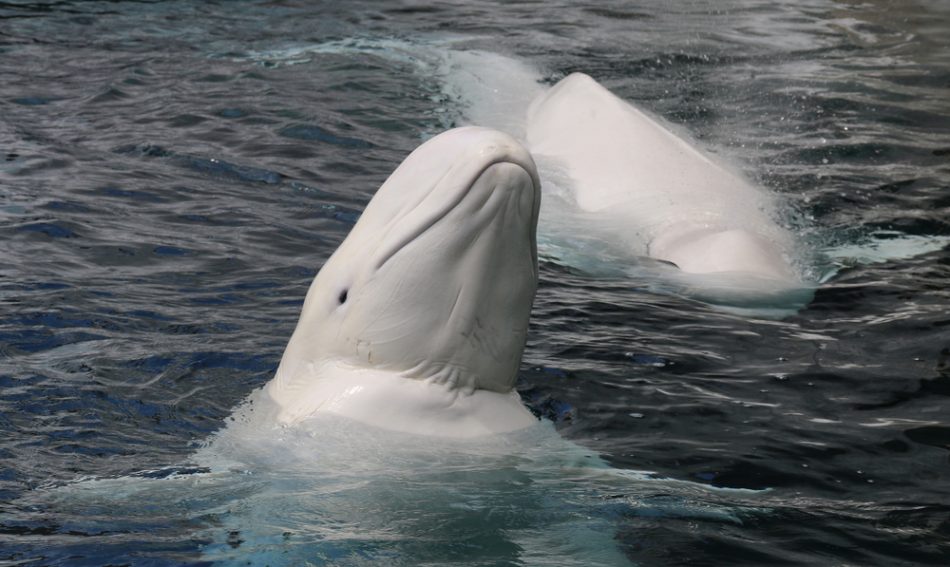
Most of us are missing our friends a lot these days. New research shows that humans aren’t the only ones that develop these feelings of loving companionship with those we meet. It turns out beluga whales also make the distinction between their immediate kin and more distant non-familial friends.
This new research, led by Florida Atlantic University’s Harbor Branch Oceanographic Institute, uses decades of whale research and studies populations of belugas from 10 locations across the Arctic from Alaska to Canada and Russia to Norway.
Beluga whales live to be 70 years old and behavioral research shows that while they spend the majority of their time in their immediate family circle, they have a complex and well established communal lifestyle. This includes social networks, support structures, cooperation, and interactions between kin and non-kin.
Their high intelligence and acute vocal capabilities allow them to maintain contact with other whales outside of their pod, even when they rarely interact. The size of their pods also varies dramatically from just 10 individuals to large herds of 2,000 or more.
The differences in size, makeup, and interaction type among belugas show that these communities of whales are far more complex than we previously thought. Much like humans, their close communities are formed by both their family ties and also their lifetime of interactions with other whales.
This shows us that belugas experience those same ties of kinship that have us missing our friends and extended family so dearly these days. This research shows their relationships are not simply based on genetic relation or chances of survival, but on deeper and more nuanced community connections.






