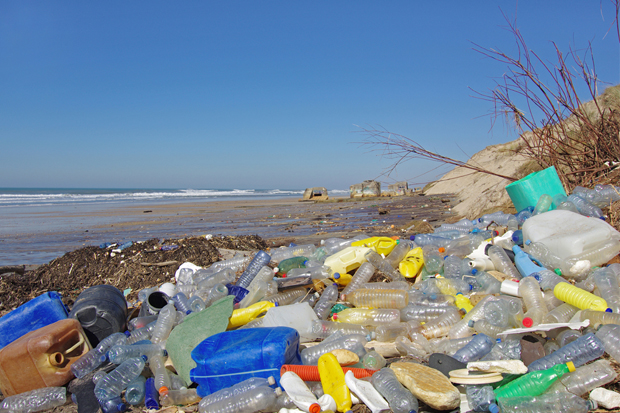
You’ve heard of the Great Pacific Garbage Patch—that blob of plastic bits floating in the ocean current—but you probably didn’t think of it as a valuable asset, one that could be mined just like any natural resource.
A lot of that plastic washes up on beaches around the world, and a new Vancouver-based startup called The Plastic Bank aims to monetize it, offering goods and services in exchange for collected plastic. It’s a little like can and bottle returns in the U.S., but it’s more cost-effective in nations without infrastructure-based recycling programs, like Peru, where the first collection center is scheduled to open this spring in Lima.
“We’re creating a process of repurposing centers where the more plastic people collect, the more they can exchange it for advancements in entrepreneurship and in education,” says David Katz, The Plastic Bank’s co-founder and president. The bank is fusing two problems, using one to solve the other.
The Plastic Bank is one of an increasing number of socially responsible for-profit companies. That’s important, says Katz, because a business is self-perpetuating. If it is successful, it’ll spawn competitors and drive still more recycling. The Plastic Bank has convinced backers of the same, raising $20,000 via crowdfunding, and are seeking more from socially conscious investors.
The plan uses plastic as currency. With an on-site 3D printing facility and an exchange system, collectors can pick up tools and raw materials they can use for other ventures.
Crucial to The Plastic Bank’s plan is its partnership with MBA Polymers, a recycler that automatically separates mixed plastic, thus making previously unusable bits fully recyclable. After all, if all that plastic had value as-is, it never would have gotten tossed in the ocean in the first place.
To sweeten the deal, The Plastic Bank is promoting its wares as “social plastic.” Social plastic is just a concept; the material itself isn’t inherently different. But if Katz and company can brand plastic this way—and convince consumers to seek it out—then the plastic picked up on beaches around the world will take on greater value. And with more value, more people will pick up more of it and the beaches will get cleaner. That way, both the collectors and the Bank will continue to make money.
“It’s important that it’s profitable, so that everybody sees that there’s value, and the more value, the less likely they are to discard that,” says Katz. “Every 5 cents or 10 cents creates change.”
Become a member or sign up for a free issue to read about more green initiatives that clean up our planet.