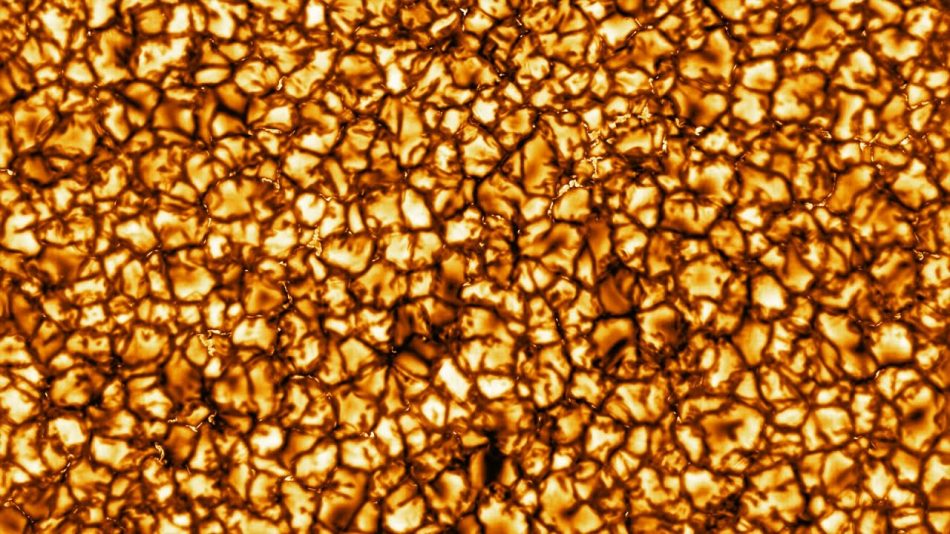
Is it melted caramel, or maybe some popcorn kernels? Actually it’s neither– the picture above shows the molten layer that covers the sun’s surface. This impressive new picture taken by the new Daniel K. Inouye telescope in Hawaii shows us the highest resolution images ever taken of the sun’s hot surface.
The craggy pattern that can be seen in the image is the ‘boiling plasma’ from the fusion reactions occurring inside the sun’s core. “The cell-like structures — each about the size of Texas — are the signature of violent motions that transport heat from the inside of the sun to its surface,” the National Science Foundation explained.
In the past, scientists just weren’t able to understand and predict the complex nature of solar weather, which brings us lovely aurora but can also wreak havoc on our satellites and the electrical grid. Through these incredibly detailed images, however, scientists will now have a better way to create forecasts of the sun’s behavior, which could help protect our satellites as well as our fragile electrical grids from solar storms.