This is one of those stories that you might look back to in a few years and remember as the starting point of a huge change in our world’s history. When we first covered this story years ago, it was already showing tons of promise. So, what are we talking about here?
In 2018, we shared a story about a new economic model developed by Kate Raworth. The Oxford University economist had been on a long mission to answer the question: how do we fast-track economic development while leaving a livable planet for future generations?
Her findings resulted in a bestselling book called Doughnut Economics: Seven Ways to Think Like a 21st-Century Economist. Now, her blueprints for a greener economy are leaping off the page and becoming official policy for the city of Amsterdam as the Dutch capital looks to maneuver its way out of the economic mess left by the coronavirus pandemic.
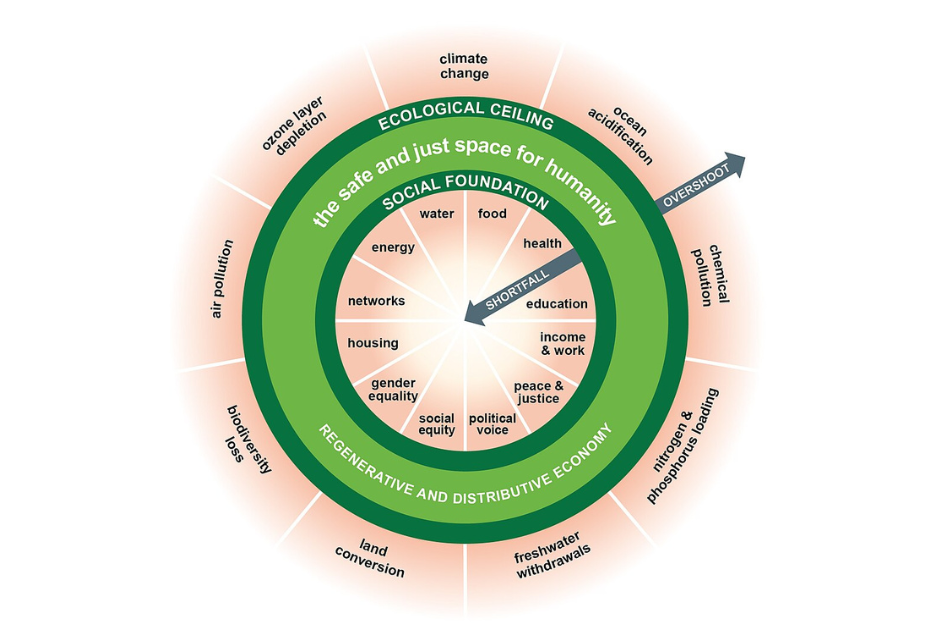
The doughnut model, which has been formally embraced by the city as the starting point for public policy decisions, works like this: The inner ring of her donut sets out the minimum we need to lead a good life, derived from the UN’s sustainable development goals and agreed by world leaders of every political stripe. It ranges from food and clean water to a certain level of housing, sanitation, energy, education, healthcare, gender equality, income, and political voice. Anyone not attaining such minimum standards is living in the doughnut’s hole.
The outer ring of the doughnut, where the sprinkles go, represents the ecological ceiling drawn up by earth-system scientists. It highlights the boundaries across which humankind should not go to avoid damaging the climate, soils, oceans, the ozone layer, freshwater, and abundant biodiversity.
Between the two rings is the good stuff: the dough, where everyone’s needs and that of the planet are being met.
The central premise is simple: the goal of economic activity should be about meeting the core needs of all but within the means of the planet. The “doughnut” is a device to show what this means in practice. To make the model work for Amsterdam, Raworth scaled down the model to a “city portrait” showing where basic needs are not being met and “planetary boundaries” overshot. It displays how the issues are interlinked.
Amsterdam is the first city in the world to formally denounce our attachment to economic growth and laws of supply and demands, opting instead to embrace an economic model that works with the planet.