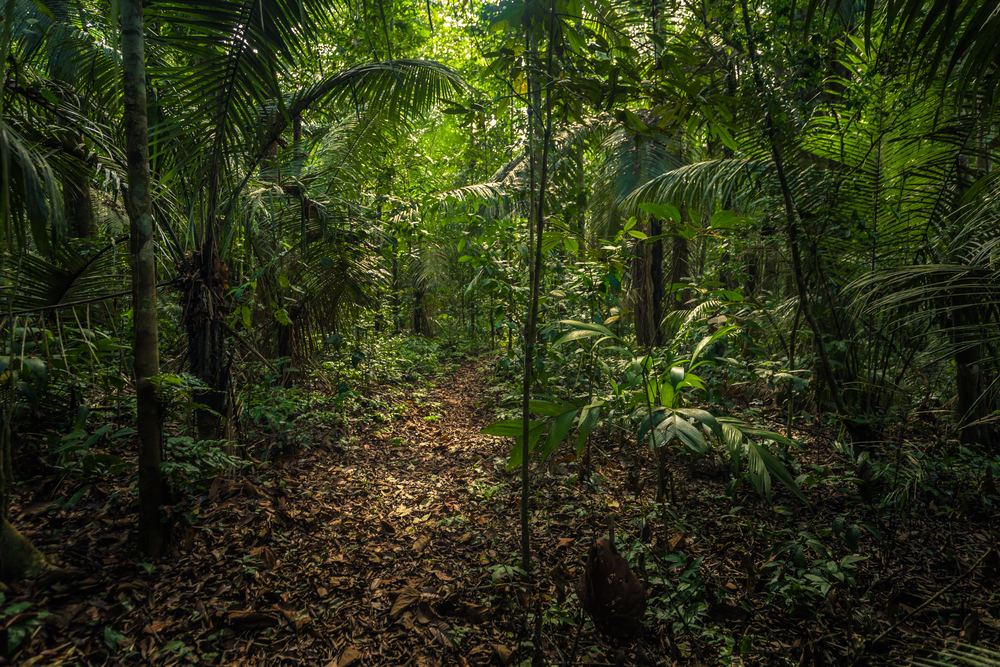
In the Amazon, more land is cleared for cattle than anything else. It’s easy enough to clear – chop down a few trees, light a few fires. But restoring the forest? Bringing back life and the greenness? That is far, far harder.
But that’s exactly what scientists at the Experimental Active Forest Centre (CEFA) in Brazil is doing. It is a research and development centre where farming within the forest, or agroforestry, is the focus. And it is part of a growing movement for sustainable agriculture in Brazil that has taken on a new urgency with the coronavirus pandemic, as scientists warn that the climate crisis and land development heighten the chances of another deadly virus jumping from animals to humans.
The founder of CEFA, Eugenio Scannavino Netto, has spent three decades in the rainforest working on Amazon solutions. In 1987, he founded the non-profit Health and Happiness Project, known by its Portuguese initials PSA (Projeto Saúde e Alegria), in nearby Alter do Chão. The group helps sustainable community development while providing health and education services for remote communities using a hospital boat and clowns. Last year it was judged one of the 100 best NGOs in Brazil.
The centre’s aims are ambitious but equally practical: 40,000 seedlings from its nursery will be donated to local communities to reforest areas in the reserve cut down and burned for cattle or traditional farming. These include pau-brasil, grown to be sold as wood; urucum, whose seeds are traditionally used as body paint by the Amazon’s indigenous peoples and sold for colourant in lipstick; and pau-rosa, whose leaves are used in perfume.
“The culture here is slash and burn, and we’re trying to change that,” Scannavino Netto says.
Changing the culture is not easy—and the government has been an obstacle rather than a supporter of the movement in recent years. But now with the coronavirus pandemic, farmers themselves see they have more reason to change. As the Netflix series Pandemic revealed, scientists and researchers have found thousands of other zoonotic diseases like the new coronavirus and fear that another virus could jump to human beings, like avian and swine flu or Mers.
In March, Scannavino Netto argued in Brazil’s Folha de S.Paulo newspaper that the monocultures of modern agriculture were destroying everything from biodiversity to insects that serve as “bioregulators”. Cutting down the Amazon changes animal behaviour and heightens the risk of another, much more lethal virus jumping to humans.