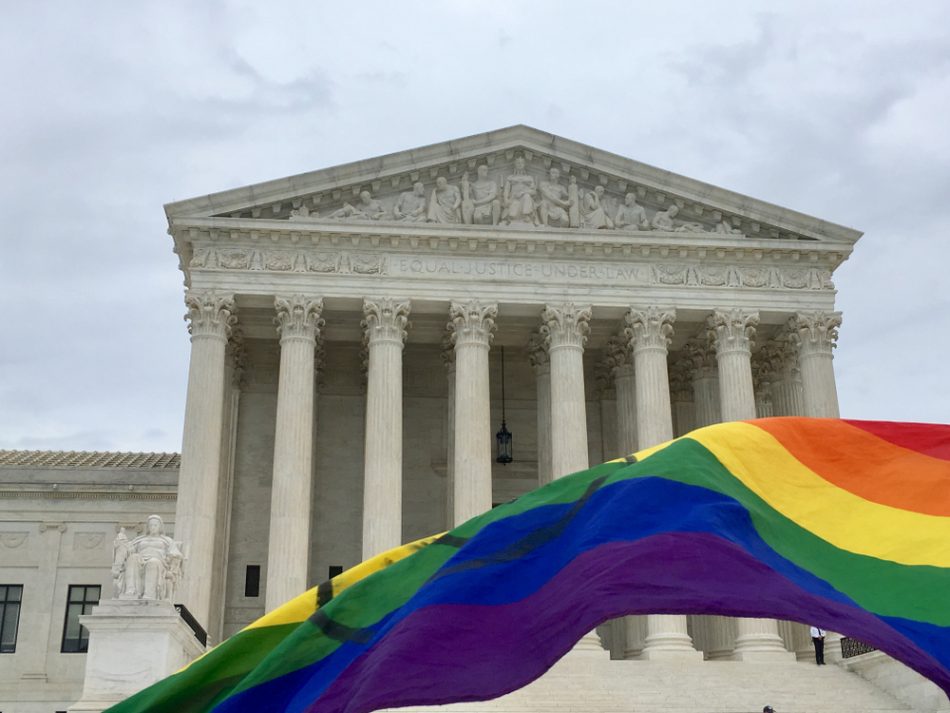
In 1964, the Civil Rights Act outlawed workplace discrimination based on race, religion, sex, or national origin. Yesterday, the US Supreme Court upheld and added to that declaration with a landmark ruling that employers cannot discriminate against employees based on sexual orientation or transgender status.
The court ruled 6-3 after hearing three cases on the issue: Altitude Express Inc v Zarda, Bostock v Clayton county, and R.G. & G.R. Harris Funeral Homes v. EEOC. Donald Zarda and Gerald Bostock, both gay men, alleged they were fired from their jobs because of their sexual orientation and the Harris Funeral Homes case was the first trans rights case to come before the Supreme Court. The case involved Aimee Stephens, a trans woman fired by her boss on “religious grounds.”
This case is the biggest legal victory for the LGBTQ+ community since the court upheld marriage equality in 2015. Some 29 states currently allow some form of discrimination on the basis of sexual orientation or gender identity in employment, housing and public accommodation.
The majority opinion was written by justice Neil Gorsuch who wrote, “An employer who fires an individual for being homosexual or transgender fires that person for traits or actions it would not have questioned in members of a different sex. Sex plays a necessary and undisguisable role in the decision, exactly what Title VII forbids.”