With only 10 percent of Uganda’s rural population connected to the power grid, people have no other choice but to use firewood as the main source of fuel to cook, leading to one of the worst deforestation rates in the world.
In fact, every year, 2.6 percent of the country’s forests are cut down for fuel, agriculture, and to make way for population growth. If things stay as they are, Uganda is at risk of losing all of its forests in less than 25 years.
Frustrated by a lack of government action on the issue, a local man by the name of Badru Keywalyanga has figured out a way to get his fellow villagers to use less wood: building mud stoves.
Keywalyanga began to build the stoves in 2017, after learning the technique from a group of American volunteers. The efficiency of the stoves is incredible, as it reduces the amount of wood needed to cook by half.
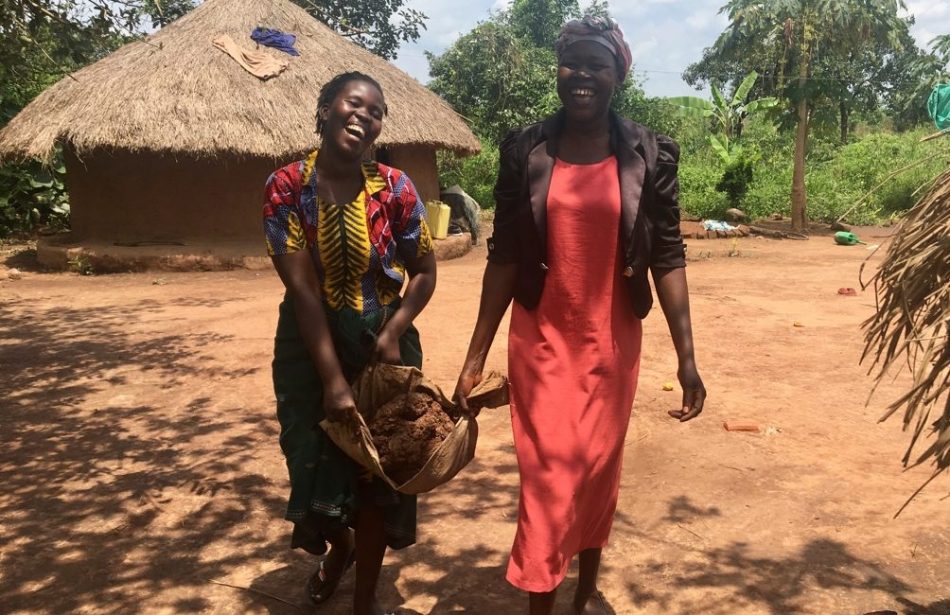
The key is in their simplicity: using only natural ingredients of mud, water and straw – all of which are accessible to most rural Ugandans – they cost nothing to make. They are also fast and easy to construct. In fact, they are literally thrown together.
Fist-sized balls of mud are pelted into the ground to form the body of the stove, forcing out unwanted air, and thus making the stoves one solid mass and preventing cracks.
As the stove takes shape, it is molded around the trunk of a matooke tree, a banana-like plant common across Uganda, which has been cut and arranged to form the ventilation chambers, combustion chamber, and chimney. Over the two-week period it takes for the mud to harden, the trunk will rot away, clearing the chambers for use.
For the final touch, a chimney is fitted to the wall allowing the acrid woodsmoke to escape. This last step is particularly important as it is very common for people to suffer from respiratory health issues due to the inhalation of smoke from cooking.
Working with a mixture of local and international volunteers, Kyewalyanga has so far built around 100 stoves, helping villagers to both reduce the rate of deforestation in the region as well as breathe cleaner air.