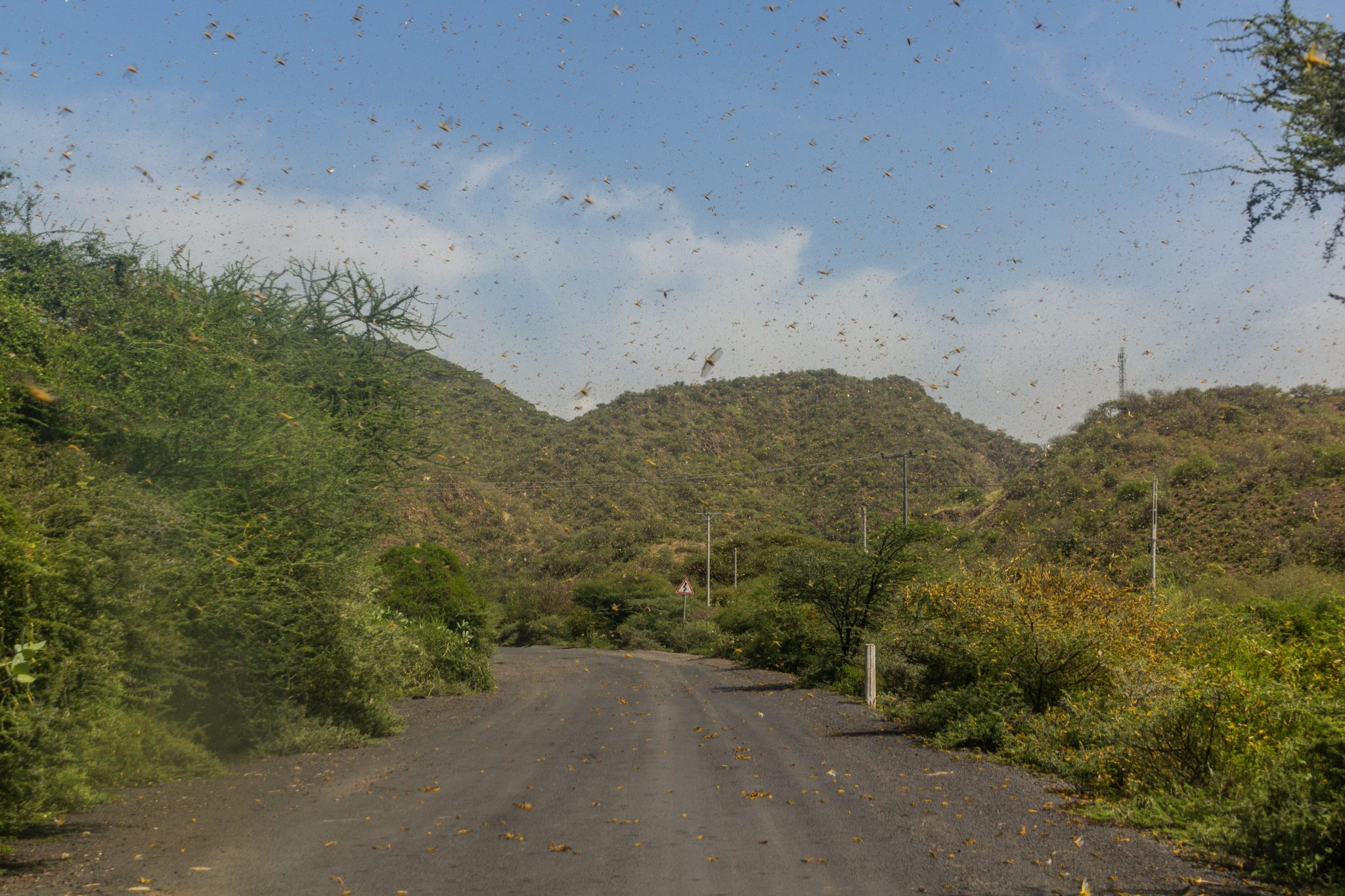
Locust swarms are serious. In a single day, a desert locust swarm (about 40 million bugs) can eat as much food as 35,000 people in a single day — and in the summer of 2020, billions of locusts were devouring crops across East Africa and the Middle East as part of an outbreak the size of which the region hadn’t seen in decades.
In a region where millions are already food insecure, containing the outbreak of these hungry bugs is pivotal. That’s where NASA steps in. The space agency is working together with the UN Food and Agriculture Organization (FAO) to help East Africa combat its locust problem by using satellite images to figure out where a swarm will hatch before it happens.
Researchers already know what kinds of environmental conditions locusts favor for their nesting grounds: warm, sandy soil that’s moist for 2 to 4 inches beneath the surface. They also prefer spots with an abundance of nearby vegetation for the hoppers to eat since they aren’t able to go far until their wings develop.
To find areas with abundant healthy vegetation, researchers are turning to the Moderate Resolution Imaging Spectroradiometer (MODIS) on NASA’s Terra satellite. This tool uses red and near-infrared light to determine the health of an area’s vegetation — the more light it reflects, the healthier the greenery.
To hunt down areas with the right amount of moisture, they’re looking at data collected by NASA’s Cyclone Global Navigation Satellite System, a fleet of eight micro-satellites that use a technique called “scatterometry” to measure land surface conditions. The researchers then refine the satellite data so that they can find where locusts will hatch and go there early to “destroy their nesting grounds.”
Though it might sound brutal, stopping locust swarms before they hatch is vital for farmers and the people who depend on their food.