


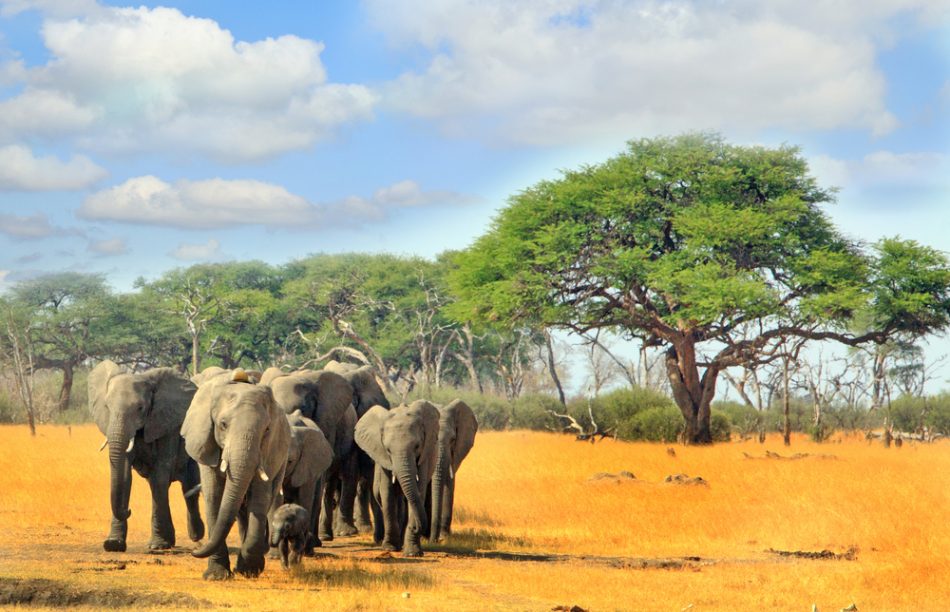
Home to more than 40,000 elephants and numerous other species, including the endangered black rhino, Zimbabwe’s biggest national park, Hwange, is a thriving wildlife haven.
In 2015, however, the country’s government gave permission to two mining companies to explore the park for coal, threatening the health of the park’s natural ecosystems.
The controversial decision to grant exploration rights in parks sparked a rallying cry from the public, with the #SaveHwangenationalpark trending on Twitter in Zimbabwe, and environmentalists warning that the park would turn into a “site for drilling, land clearance, road building, and geological surveys,” if coal exploration went ahead.
Luckily, following public outcry and increasing pressure from conservationists, the government recently reversed its decision by banning mining-related “ecological degradation” in all of its national parks.
The ban, which also extends to prohibit mining along most river beds, represents a landmark victory for conservation efforts and environmental protection.






