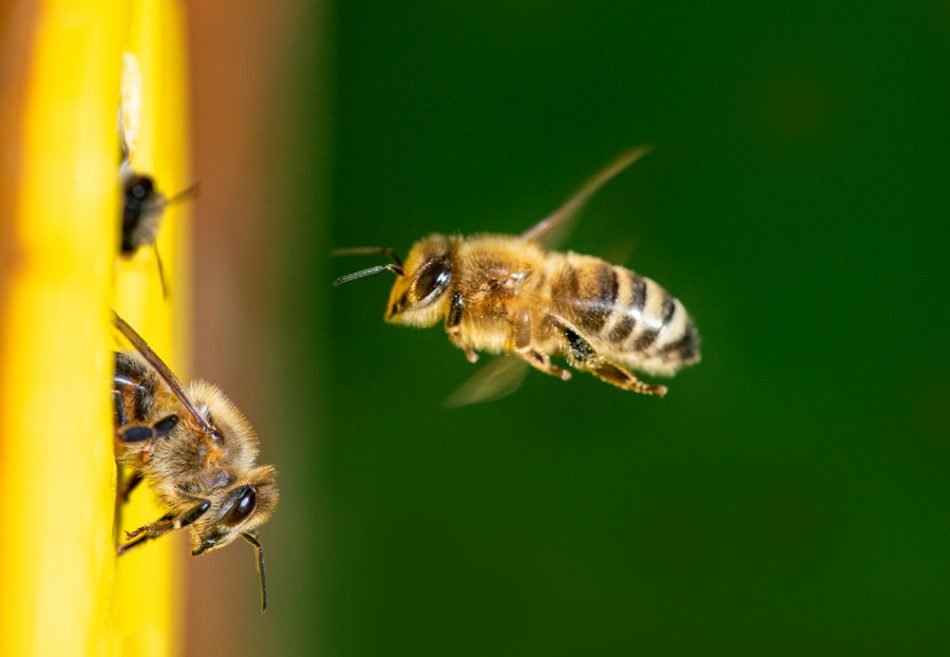
Pesticides known as pyrethroids are among the main culprits behind colony collapse disorder — a phenomenon that occurs when most worker bees in a colony disappear, leaving behind just the queen and a few other bees.
Detecting whether honeybees have been exposed to such types of pesticides is key to protecting these already vulnerable pollinators. But because of their nature and properties, detecting these bee-unfriendly pesticides has been rather difficult — that is, until now.
Researchers at the University of Waterloo have recently developed a fully automated and environment-friendly technique to extract pyrethroids from samples of honey — making it easier than ever to detect and quantify these harmful chemicals in time to help prevent colonies from collapsing.
The novel method involves adding a small amount of alcohol to honey, which dissolves any pyrethroids that may be suspended within it. Once that’s done, a technique called solid-phase microextraction is then used to quickly and effortlessly extract the pesticides. This, in turn, allowed scientists to verify their presence and measure their concentration.
“It is our hope that this very simple method will help authorities determine where these pesticides are in use at unsafe levels to ultimately help protect the honeybee population,” said the lead study author, Prof. Janusz Pawliszyn.