


Most of us now know that switching to a plant-based diet is one of the ways that we can help fight climate change and practice impactful sustainability in our own lives. However, for those of us whose favorite meals include dishes like a juicy beef burger, or tender, fall-off-the-bone ribs, switching to vegetarianism or veganism may be a struggle.
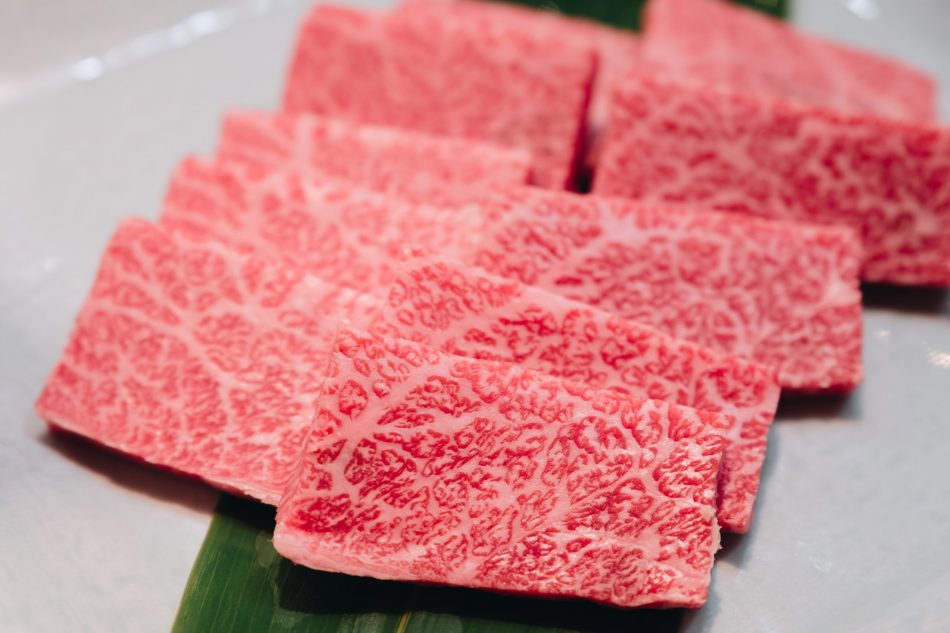
Luckily, the world of lab-grown meats is expanding and improving. In 2009, scientists first tried their hand at lab-grown meat and the results were less than appetizing. But over the last few years, the quality of lab-grown meat has risen to include classic steaks, ribeye cuts, and chicken. Now, thanks to scientists from Japan’s Osaka University who have mastered cutting-edge bioprinting techniques, the first lab-grown “beef” that resembles the famous marbled texture of Wagyu cows has been produced.
To accomplish this, the Osaka University researchers started out with two types of stem cells harvested from Wagyu cows: bovine satellite cells and adipose-derived stem cells. These cells were then incubated and coaxed into becoming the different cell types needed to form fibers for muscle, fat, and blood vessels. The team then arranged these into a 3D stack to resemble the high intramuscular fat content of Wagyu (more commonly known as marbling or sashi in Japan).
These stacks were then sliced in a perpendicular direction to make the cuts of lab-grown beef. The success of the Wagyu-like beef produced in the lab by the Osaka University scientists also opens the door for producing cultured meat with customizable and controllable amounts of fat.
“By improving this technology, it will be possible to not only reproduce complex meat structures, such as the beautiful sashi of Wagyu beef but to also make subtle adjustments to the fat and muscle components,” says senior author of the study, Michiya Matsusaki.
So, for those meat-lovers out there who have switched to a plant-based diet in the name of sustainability, your efforts are appreciated and will potentially be rewarded very soon as this promising research continues. For those who have not adopted a fully plant-based diet, check out these articles on regenerative agriculture and eating locally to ensure your meat is coming from a sustainable source.
Source Study: Nature Communications—Engineered whole cut meat-like tissue by the assembly of cell fibers using tendon-gel integrated bioprinting






