Do you think about what happens to your urine after you’ve flushed it down the toilet? Most people probably don’t dwell on the subject because we think of human waste as simply that: waste. However, there are researchers and innovators who believe that it’s time for us to see that human waste isn’t waste; it is, in fact, a valuable resource.
Take urine, for example. In 2018, Michaël Roes was inspired by the complaints of his friend Matthieu Préel who was frustrated with the costs and complications his waste management company experienced trying to get rid of all the urine they received. Roes began thinking of a way to make use of the copious amounts of liquid.
At the time, Roes was working for a French biostimulant company that used natural plant processes to make crop yields more efficient, and so Roes “immediately thought [human urine] would be much easier to reuse… in agriculture.”
Human urine contains many important nutrients for crop growth such as nitrogen, potassium, and phosphorus, so it could potentially be transformed into an efficient, natural fertilizer. The only problem is that studies have found that urine contains a mere fifth of the nitrogen found in standard fertilizers and less than five percent of the potassium and phosphorus. According to Roes, this means that every hectare of crops would need approximately 200 kilograms of nitrogen—a whopping 30,000 liters of untreated urine. “But logistically, that’s too much for a farmer to deal with, and economically it doesn’t make sense,” he explains.
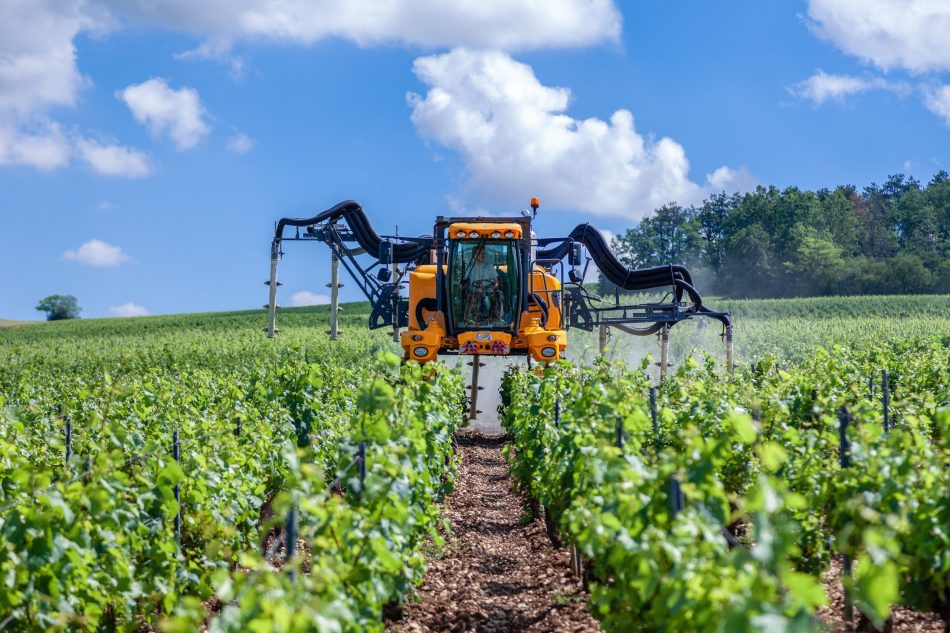
To address this, Roes tried fermenting the urine and adding natural bacteria to help crops assimilate nitrogen from the air and the plants to absorb nutrients and water. This method proved successful.
Roes eventually co-founded TOOPI Organics in 2019, a French biotech company that collects and turns human urine into fertilizer products. The fertilizer that Roes and his team produced was tested at Bordeaux’s National School of Agricultural Engineering, and the results were outstanding. The TOOPI fertilizer demonstrated that it could help corn plants grow 60 to 110 percent more than a traditional mineral fertilizer.
TOOPI has since established its own factory near Bordeaux that produces 2,500 liters of organic fertilizer per day. The process costs are around two euros per liter, much more affordable than the cost of competitors like BASF, which costs around 40 euros per liter. TOOPI’s aim is to have ten pilot plants worldwide by the year 2025.
For its revolutionary work, the French government’s Agency for Ecological Transition granted TOOPI 3.8 million euros in funding to create a urine recycling network, which would improve the current infrastructure in conjunction with toilet manufacturers, designers, construction companies, and waste collectors, all of whom need to be on board if urine recycling is to be successful.
Through this collaboration, TOOPI will be able to source its urine from waterless toilets that will be installed in schools, stadiums, businesses, gas stations, festivals, and medical analysis laboratories nationwide. TOOPI was also given the responsibility of installing waterless toilets at the 2024 Olympic Games in Paris.
Research on human waste and how it can be repurposed and reimagined into existing infrastructures to benefit rather than cost society is on the rise all over the world as we strive to adopt a more circular economy and meet demanding sustainability goals.