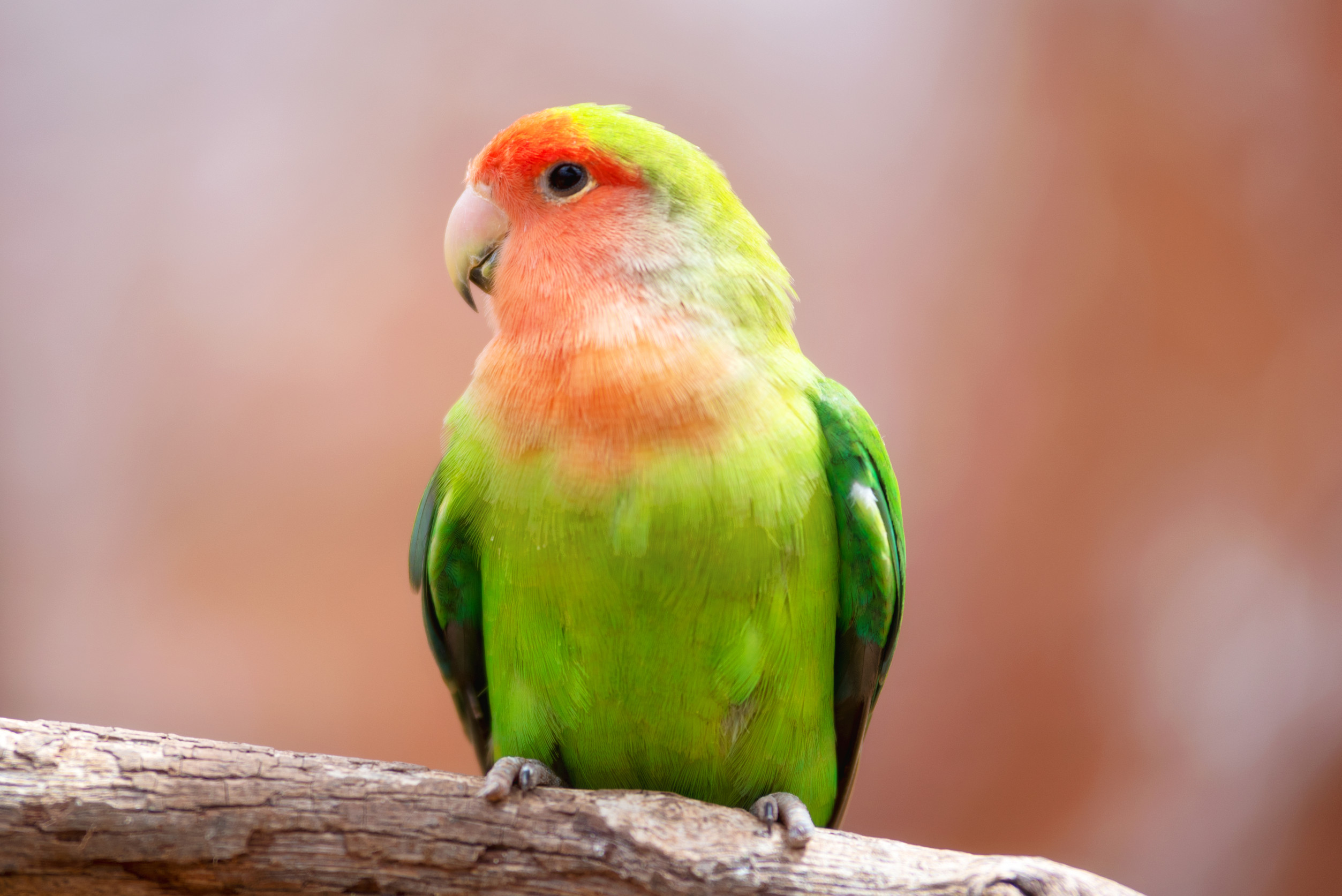
Bruce, a nine-year-old disabled parrot from New Zealand, has designed and uses his own prosthetic beak to the delight and surprise of wildlife researchers.
When wildlife researchers found Bruce, he was only a baby and was already missing his upper beak, which was likely caught in a trap made for invasive mammals such as rats. Bruce is a kea parrot, a species that is only found in New Zealand and that relies heavily on their long and curved upper beaks for preening their feathers and ridding themselves of dirt, grime, and parasites. This made Bruce’s lack of upper beak a severe disability.
However, the resilient bird came up with a solution by picking up pebbles of a certain size, holding them between his tongue and his lower beak, and using the tip of the makeshift prosthetic to groom his plumage. The researchers recently published their findings in Scientific Reports.
While it is true that other animals use tools, Bruce’s problem-solving skills are unique because he had no other kea to imitate and had to develop this idea himself. The study of tool use in animals is a tricky one because animal researchers have to be careful that their observations are objective, avoiding the bias that could be the result of anthropomorphizing animals, that is, defectively projecting human characteristics to animals.
“The main criticism we received before publications was, ‘Well, this activity with the pebbles may have been just accidental—you saw him when coincidentally he had a pebble in his mouth,’” says the study’s lead author Amalia P.M Bastos, an animal cognition researcher at the University of Auckland. “But no. This was repeated many times. He drops the pebble, he goes and picks it up. He wants that pebble. If he’s not preening, he doesn’t pick up a pebble for anything else.
The researchers were careful to set rules for themselves. Firstly, they observed that when he picked up a pebble, nine times out of 10 it was for preening. When he dropped a pebble, 95 percent of the time he either picked it up again or selected another one and continued preening. The researchers also noted that he would consistently pick up pebbles of the same size, rather than trying random pebbles.
The researchers also noted that no other kea in this environment used pebbles for preening, and when other birds did pick up stones, they selected pebbles at random, making Bruce’s intentions appear even clearer.
“Bruce didn’t see anyone do this,” explains Bastos. “He just came up with it by himself, which is pretty cool. We were lucky enough to observe this. We can learn a lot if we pay a little more attention to what animals are doing, both in the wild and in captivity.”
According to emerita professor of psychology at the University of Georgia, Dorothy M. Fragaszy, Bastos’ study is a fantastic model of how to effectively study tool use in animals.
“The careful analyses of the behavior in this report allow strong conclusions that the behavior is flexible, deliberate, and an independent discovery by this individual,” Fragaszy said.
Source study: Scientific Reports—Self-care tooling innovation in a disabled kea (Nestor notabilis)