


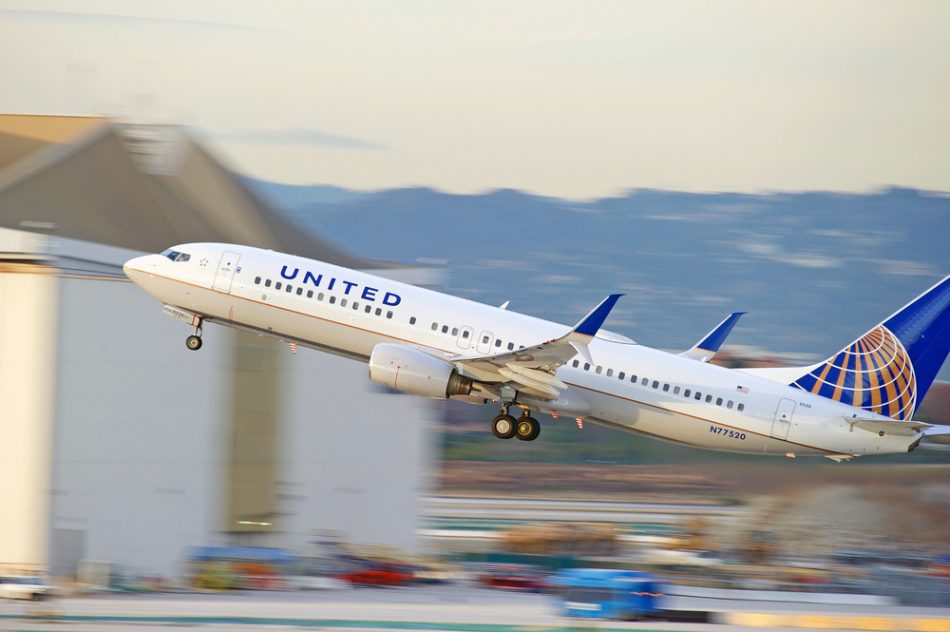
Last week, a United Airlines Boeing 737 MAX 8 filled with 100 passengers made the journey between Chicago and Washington D.C., but the plane didn’t use traditional aviation fuel. The plane was the first commercial flight to run on 100 percent “sustainable aviation fuel” (SAF).
Made up of fats, cooking oils, and grease produced by the company World Energy, SAF is said to emit 80 percent less carbon dioxide than traditional fuels. Although other flights have used half and half mixes of SAF and traditional fuels, United’s flight is the first to demonstrate the commercial feasibility of 100 percent SAF. The company has committed to purchasing over seven million gallons of SAF this year.
Created using excess biomass like corn, oilseeds, and municipal solid waste streams, SAF is a step in the right direction as most planes can run on it without modification to the aircraft. Additionally, according to the Department of Energy, the US produces one billion excess tons of biomass each year which could be used to create 50–60 billion gallons of low-carbon biofuel.
Although this is an exciting occurrence, experts note that SAF alone is not enough to decarbonize the airline industry. The technology needed to produce SAFs is still energy intensive and costly. The use of corn-based fuels also drives monoculture, draining nutrients and stored carbon from the ground with intense fertilizer use. Biofuels also still contribute pollutants to the atmosphere. Fortunately, the development of electric planes, paired with battery recycling programs, could negate the need for fuels altogether.






