


Unpredictable and impactful weather events like wildfires, snowstorms, and tornadoes present a particular problem for large areas with large unifying power grids. In one wild day, a whole city’s power and essential services can be shut off. It’s for this reason that researchers and utilities have to get creative, diversify, and make it so the whole system won’t collapse.
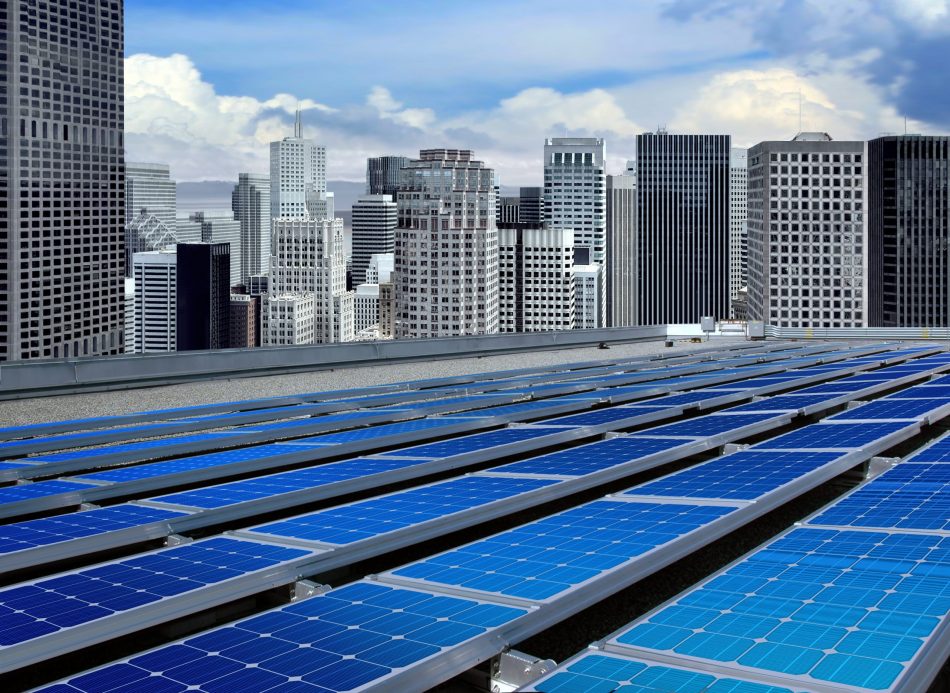
Last month, Commonwealth Edison completed a test of its microgrid in the Bronzeville Neighborhood of Chicago. With help from the Illinois Institute of Technology and the Department of Energy, Bronzeville, a historically black neighborhood, can function independently of the greater Chicago energy grid with its own generators, batteries, and even solar panels mounted on the roofs of apartment buildings.
What is a microgrid?
Essentially, a microgrid is a smaller network of energy sources and loads that connects to a larger energy grid but can disconnect from it and function independently, say, in the event of an emergency. There’s also a rising interest in microgrids because of their ability to integrate renewable energy.
There are a lot of challenges in creating a functional microgrid, which is what makes ComEd’s success in Bronzeville so momentous. It was able to connect not only to Chicago’s much larger grid but also that of the Illinois Institute of Technology, which has its own functional yet smaller microgrid.
There have been successful microgrids made in the United States and abroad – such as in Australia but not on the scale of Bronzeville. Not in a community of over 1,000 residences, businesses, educational institutions, and public services. And not connected to a larger grid like that of Chicago.
Resiliency and renewables: Our energy future
The establishment of the Bronzeville microgrid offers a new future of safety through diversity, wherein metropolitan areas consist of smaller contingent neighborhoods that can operate independently, as well as collectively, and better endure unpredictable weather events.






