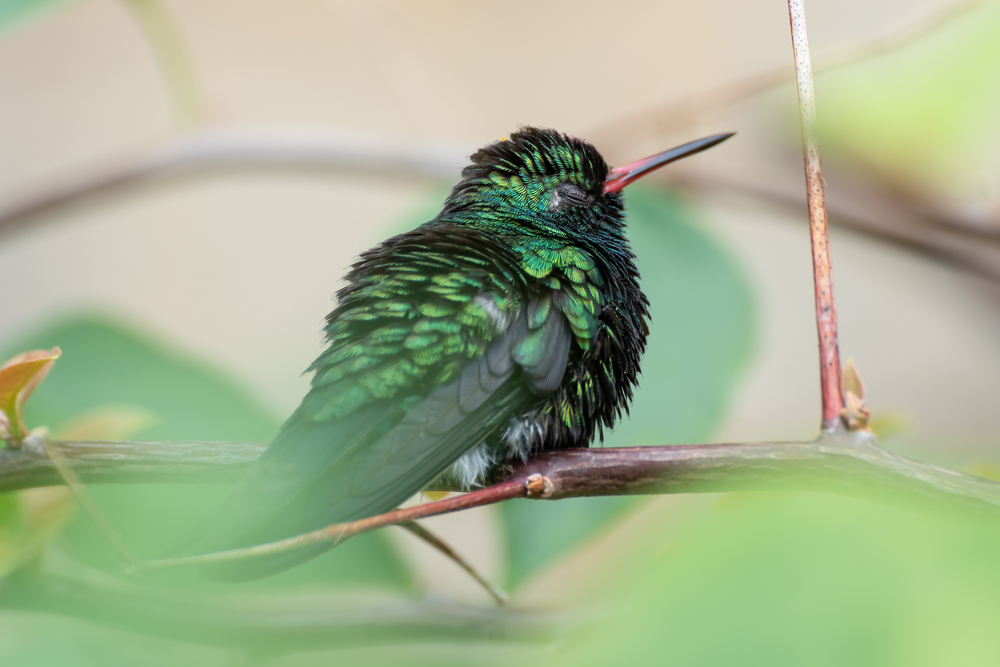
In the complex world of avian behavior, researchers have discovered a fascinating phenomenon: birds sing while sleeping. Scientists observed muscular contractions in a bird’s vocal tract to decode the quiet melodies of their nightly reveries. Let us begin a scientific quest to discover the mysteries of bird dreams and the intriguing world of avian sleep patterns.
The science of avian dreams: unraveling the mystery
Birds, like humans, undergo multiple stages of consciousness during sleeping. Previous studies have suggested that daytime actions, including singing, may continue throughout bird slumber. Gabriel Mindlin, a specialist in birdsong, reflects on the profound implications of this discovery: “Dreams are one of the most intimate and elusive parts of our existence. “Knowing that we share this with such a distant species is very moving.”
Mapping muscle movements: understanding birdsong during sleep
To better understand avian dreams, researchers at the University of Buenos Aires (UBA) systematically observed muscle activity in sleeping birds’ vocal tracts. Using custom-made electromyography (EMG) electrodes, the team assessed muscle reaction and electrical activity, giving light to the physiological processes that drive bird dreams.
The great Kiskadee: a window to avian dreamscapes
The use of the great kiskadee in the study provided important insights into bird sleep patterns. This loud and aggressive species, notable for its unusual three-syllable call, was used as a model organism to study bird dreaming. Through diligent observation and data collecting, researchers discovered the great kiskadee’s nocturnal habits, providing insight into avian dreamscapes.
Synthetic songs: transforming avian dreams into sound
Researchers reconstructed sleeping birds’ silent songs by combining data on muscle activation and electrical signals. The scientists used complex dynamical systems models to transform muscle activity patterns into synthetic melodies, producing audio representations of bird dreams. “We can use the muscle activity patterns as time-dependent parameters of a model of birdsong production and synthesize the corresponding song,” says Mindlin.
Insights into the avian brain and implications for future research
The study’s findings provide a unique perspective on the avian brain, paving the path for future research into avian cognition and behavior. Researchers want to better understand bird cognition and communication by decoding avian dreams using dynamical biomechanics modeling. “We have shown how physical models can be used to listen to what a bird is dreaming,” the researchers said, emphasizing the transformational potential of their research.
Source study: Chaos—Synthesizing avian dreams