BY THE OPTIMIST DAILY EDITORIAL TEAM
The long battle against Guinea worm disease may soon reach a historic milestone: total eradication. In 2025, just 10 human cases were reported globally, according to The Carter Center, the United States nonprofit leading the decades-long eradication campaign.
If successful, Guinea worm (dracunculiasis) will become only the second human disease in history to be fully eradicated, following the global elimination of smallpox in 1980.
“Zero is the only acceptable number, and our commitment to getting there is unwavering,” said Adam Weiss, director of the Carter Center’s Guinea Worm Eradication Program.
What is Guinea worm disease?
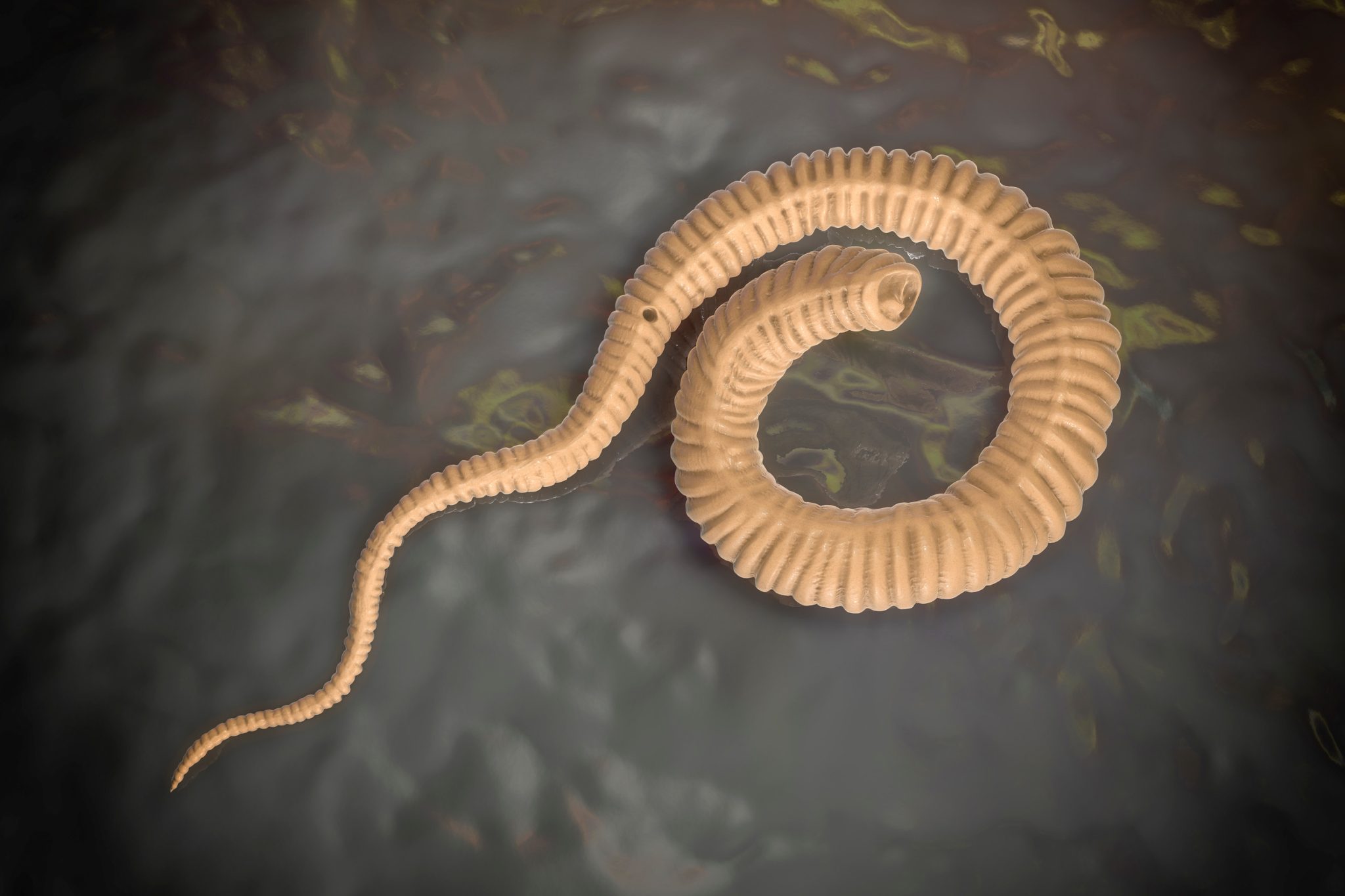
Guinea worm disease, formally known as dracunculiasis, is a parasitic infection caused by the roundworm Dracunculus medinensis. It is transmitted when people drink water contaminated with microscopic water fleas (copepods) that are infected with the worm’s larvae.
Once inside the human body, the larvae mature and grow for about a year. The adult female worm can sometimes grow up to three feet long and eventually migrates to the skin’s surface, forming a painful blister, usually on the lower leg or foot.
In a slow and agonizing process, the worm emerges through the skin, often over the course of several weeks. People suffering from the disease may immerse the blister in water to relieve the burning pain, unintentionally releasing new larvae back into the water and continuing the transmission cycle.
There is no vaccine or drug to treat Guinea worm disease. Eradication relies entirely on prevention, especially access to clean drinking water and interrupting the worm’s life cycle.
From millions to single digits: a global effort
When The Carter Center began intensifying its Guinea worm eradication efforts in 1986, an estimated 3.5 million people contracted the disease every year, mostly in rural regions of Africa and Asia.
Now, nearly four decades later, that number has dropped to just 10, a major global health victory. But the final push remains critical.
“Guinea worm causes immense suffering—not just for the individual, but for their family and community as well,” said Weiss. “Every case is one too many.”
Clean water access: the cornerstone of prevention
The key to stopping the disease lies in breaking its transmission cycle. Most efforts focus on improving access to clean water, providing water filtration tools, and conducting active surveillance.
Simple cloth filters or pipe filters can remove infected copepods from drinking water. Infected individuals are also educated to avoid water sources while the worm is emerging to prevent contamination.
These community-level interventions, often implemented by local health workers, have proven incredibly effective in reducing case numbers in even the most remote regions.
Where the disease still lingers
As of early 2026, the World Health Organization (WHO) has certified 200 countries and territories as free of Guinea worm.
Just six remain uncertified:
- Angola
- Chad
- Ethiopia
- Mali
- South Sudan
- Sudan
In 2025, Chad and Ethiopia each reported four human cases, while South Sudan reported two. Angola, Cameroon, Mali, and the Central African Republic reported zero cases for the second year in a row, moving them closer to certification.
To be officially declared free of Guinea worm, a country must maintain zero reported human and animal infections for three consecutive years.
A model for future disease eradication
Guinea worm is poised to follow smallpox as the second human disease in history to be eliminated through coordinated public health efforts. But the success story may not stop there.
Another disease, yaws, a bacterial infection that primarily affects children, has also been targeted by the WHO for eradication by 2030. Though it has no vaccine, yaws is treatable with antibiotics. As of 2025, 136 countries have been recognized as transmission-free, demonstrating a dramatic increase from just one in 2020.
Why Guinea worm’s near-eradication matters
The near-eradication of Guinea worm highlights the power of global cooperation, basic health infrastructure, and community-level solutions.
It is a reminder that even without advanced medical interventions, public health campaigns can stop suffering at its source with clean water, education, and persistence.
“We’re energized by this year’s progress,” said Weiss. “But zero is the only acceptable number.”
With each passing year, the world gets closer to that goal: a future where Guinea worm exists only in history books.
Did this solution stand out? Share it with a friend or support our mission by becoming an Emissary.