Episode Description:
This week starts with casino Easter eggs and a prom-posal, because apparently Good Friday is full of surprises.
Then Arielle and Karissa get into the actual news: a teenager built a working microplastic filter in her garage, Mexico’s monarch butterflies had their best winter in nearly a decade, and a $375 million jury verdict just put Meta on notice. There’s also a California law that stops punishing college students for asking for help after an overdose, a roundup of Easter traditions that gets genuinely weird, and some fungi that show up in wildfire burn scars before anything else does.
If you have questions, comments, feedback, suggestions, or just want to say hi, send a message to: podcast@optimistdaily.com.
Want to be part of the Optimism Movement? Become an Emissary.
Subscribe to our FREE Daily Newsletter and follow us on Instagram, X, and Blue Sky.
The Optimist Daily is a project of the World Business Academy.
Donate link: https://www.optimistdaily.com/donate-to-support-the-optimist-daily/?gift=Y%20http://
Transcript:
Karissa
Hey everyone, I’m Karissa.
Arielle
And I’m Arielle.
Karissa
Welcome back to the Optimist Daily’s Weekly Roundup.
Arielle
Yes, welcome back and happy Good Friday, Karissa. Do you have any exciting Easter plans this weekend?
Karissa
Okay. I’m not going to lie. My family mentioned wanting to go to the casino nearby. And my grandma said that she was going to hide money for us in Easter eggs (laughs).
Arielle
Oh, that’s fun (laughs). That’s even better than chocolate.
Karissa
To go gambling with. So, I think it’s not set in stone, but that was what was mentioned. I had to confirm the plans tonight. But it seems a little bit like what Easter shouldn’t be, maybe (laughs)? I don’t know, but that’s our take on Easter. What about you?
Arielle
I’ve never heard of anyone celebrating Easter like that, but whatever gets your family together.
Karissa
I mean, our family is just like very non-secular. So, Easter for us, like growing up, was always just about the chocolate and about the Easter money and about hunting eggs and nothing more, really. Not in a bad way.
Arielle
Wait, do you mean like non-religious? Because “secular” is more like…
Karissa
Oh (laughs). Yeah.
Arielle
But yeah, no, I totally get what you mean. My family was actually more on the religious side, but every Easter we did do the chocolate Easter egg hunt thing, and that was always fun. Actually, I had an ex-boyfriend prom-pose to me with an Easter egg hunt.
Karissa
That’s pretty sweet.
Arielle
Which was really cute. But there was no chocolate in the little eggs. There were letters that I had to unscramble, and then it said, “will you go to prom with me?” But no, nothing really exciting planned. I think we’re just going to hang out with the fam. It’s always an excuse just to get together, really.
Karissa
Yeah, exactly. And in this roundup, we talk about the different traditions of Easter, and I’m excited to dive into that one later because t there are some cool ones.
Arielle
But before we get into the solutions of the week, we would love to remind you to follow us on our socials. We are @OptimistDaily on pretty much everything except for X. There we are @OdeToOptimism, and those will be linked in the show notes.
Karissa
Yeah, and if you want these solutions straight to your inbox every morning. We do have a free daily newsletter that you can sign up for. The link is also in the show notes.
Arielle
And if you want to send us a message with comments, questions, feedback about the podcast or anything really, you can e-mail us at podcast@optimistdaily.com.
Karissa
And we also want to give a huge shout out to the Emissaries of the Optimist Daily who are our financial supporters.
Arielle
Yes. But of course, a huge thank you to all of the Optimists out there. Financial support is great, but if you’re just sharing the podcast or sending a story to a loved one, all of that is a huge help for us.
Karissa
Well, Arielle, should we dive into the positive news?
Arielle
Definitely.
Karissa
This is one of the highlights of my week. Being able to sit here and talk about it with you, Arielle, is such a great joy.
Arielle
I’m excited to hear about the first five solutions that we had this week.
Karissa
The first solution we shared this week is The high school student whose filter uses magnetic oil to trap microplastics. Mia Heller, who is 18 and attends high school in Virginia, built a working water filter in her garage that removes over 95% of microplastic without membranes or constant maintenance. She started because her neighborhood’s water wasn’t safe and government help was just not going to come. And the filter that she landed on uses a magnetic oil, and it recycles itself. So, it’s a super cool concept. And first and foremost, the power of youth and seeing a problem and just tackling it at such a young age always inspires me so much. So, shout out to Mia because you are amazing.
Arielle
Yeah, this is incredible. And microplastics are a huge problem right now. So, to think that she was able to come up with a solution just in her garage is pretty impressive.
Karissa
I mean, microplastics, like you said, are a huge problem, and they’re in 1,300 species, including humans. And it’s kind of been scary lately where they’re finding microplastics, like in the human body, from brain tissue to bones and testes and semen and placentas. So, it’s in everything. She saw this problem just in her own home. She read the reports of what was going on in her community and the water quality and just did something about it. All her work got her a finalist recognition at the 2025 Regeneron International Science and Engineering Fair, which is the largest high school science fair competition. And she received a $500 award from the Patent and Trademark Office Society.
Arielle
The next steps are to see if it can scale and if more people can have access to the solution.
Karissa
Moving on to the next article: How Mexico’s conservation work brought monarchs back from the brink. This winter, the monarch butterfly population in Mexico grew 64%, which is the largest coverage since 2018, almost a decade, basically.
Arielle
I love monarch butterflies. I did a project on monarch butterflies and the cycle of life of a butterfly when I was in grade three. So, I think I was eight. And since then, I’ve just been obsessed with monarch butterflies.
Karissa
Yeah, I’ve always been so fascinated by butterflies in general. And we also had a similar project. We had to raise some baby caterpillars until they became butterflies and we released them. But they’re such fascinating and magnificent creatures… but they have been widely threatened for decades now. And a huge part of that is because their habitats are being destroyed.
Milkweed, which is their main source of food across the Americas, has been destroyed. And there’s little protection for it. It’s especially in the United States a big problem. But it’s actually something that you can do your part in and help fix because it’s easy to plant milkweed. And if you want monarchs cruising through your backyard, if you’re in the United States, then you can take action and do something.
But back to Mexico, they had some government intervention here. And part of that was preventing illegal logging in their habitats. And it’s being shown as a logging victory because it’s really made a difference. I didn’t realize how dark this story could kind of get because someone has actually died in trying to protect butterflies. A butterfly conservator named Homero Gomez Gonzalez was actually found dead. And his family suspected that he was killed by groups clearing butterfly habitats.
Arielle
Yeah, that was back in 2020, right?
Karissa
Yeah, back in 2020. Yeah, it’s a big deal, but the fact that these logging efforts have been successful and they’ve been mainly able to combat this organized crime is a good sign.
We also had: A new law shields California college students who seek help after overdosing. This is such an important topic. It’s a prevalent issue. I didn’t realize until reading this article that overdose is the third leading cause for young adults between 18 to 24 of death.
And this article talks about a person named TJ McGee who overdosed in his UC Berkeley dorm room. And his roommates hesitated before calling 911 because they were weighing whether doing the right thing and helping save him could get him kicked out of housing or even them. He survived, but hesitation is the main problem here.
Arielle
Yeah, it’s definitely a heavy topic, a pretty dark one as well, but it’s important to be able to have conversations about issues as difficult as this one because there are many deaths that could be prevented if only people felt safe in reaching out for help.
Karissa
Yeah, and for TJ McGee, he overdosed in his dorm room, and again, his roommates hesitated. But after the fact, he was placed on academic probation immediately after with no institutional support on recovery. A quote from this article says he spent the next months crawling his way through recovery alone, piecing together what he could, holding his education together with duct tape and desperation. So that’s just not the way forward. I think we can all recognize that.
So, this new bill, which is AB 602, was signed in October 2025, and it takes effect this summer in July. And it says that all California public universities, which are the UC and Cal State systems, must offer rehabilitation services before taking disciplinary action following a student overdose.
Anyways, I think this is a great step forward, and students wrote this bill. So great job for them recognizing the problem.
The next solution is Speed friending: one cafe’s answer to America’s growing friendship recession. In 1990, about 3% of Americans said they had no close friends. And today that number sits between 12 and 20%, which is alarmingly a lot higher. So, it’s a real issue. It needs to be addressed. And we’ve talked about it a lot on the Optimist Daily and have quite a few solutions on addressing this loneliness epidemic or loneliness recession, as it has these different terms.
Arielle
Friendship recession.
Karissa
Oh, yeah.
Arielle
A loneliness recession would be perfect.
Karissa
Pardon me (laughs). Yeah, I meant friendship recession. The main point is that loneliness is a problem. A cafe owner in Pasco, Washington, recognized this problem and started hosting speed friending nights after his niece moved to town and struggled to meet anyone. Because yeah, I mean, you’ve heard of speed dating, but speed friending is something that maybe you’ll see pop up more.
Arielle
Yeah, I think it’s a really great alternative to Bumble BFF or something… something like that because not everyone is comfortable on the apps.
Karissa
Exactly. I think it’s such, like, a low stakes way to make connections and community. I think this is a great solution, and go check it out for more info on it.
The final solution I have to share today is How screening and vaccines drove UK cancer deaths to record lows. In 1989, 355 out of every 100,000 people in the UK died from cancer each year. But in 2022 to 2024, that number was 247, which is nearly a 29% drop. So, this week we got into the data behind that shift and talked about what’s actually working, what’s still getting worse, and what it could take to keep going on this downward trend.
Arielle
I know in the Netherlands, they’re pretty serious about people… or women, I guess, over 30 getting their cervical cancer check or just the HPV check. I’ve actually been to the doctor a few times, and they’re screening. It’s really effective and really proactive of governments to do. I know this is about the UK, but I only have experience here in the Netherlands, so that’s all I can draw on.
Karissa
And over the years, we’ve been seeing how the HPV vaccine has been pretty effective and we’re getting more data on that now that it’s been decades. In this article, it talks about how cervical cancer in the UK has been the most dramatic case of decreased number of deaths because deaths are down 75% since the 1970s. So that’s huge.
Arielle
But the article also goes into what didn’t improve because I think skin cancer increased to 46%.
Karissa
Yeah.
Arielle
So yeah, there’s definitely a full picture to be had here, but overall, the trend looks good.
Karissa
Yeah.
Arielle
Well, thank you, Karissa. I’m going to take it from here.
The first article that I’m going to be talking about is titled A $375 million verdict that could reshape how big tech treats children. A New Mexico jury just did what no jury in the US had done before, and it ruled that Meta knowingly harmed children’s mental health, made false statements about safety, and used unconscionable trade practices. It was a seven-week trial, and they looked at the company’s own internal documents, and the verdict is in. So, another big tech story, because last week we also had, I believe it was Brazil that blamed the platforms for addictive features.
Karissa
Yeah, exactly. We’ve been reporting on a lot of other countries, but as someone who lives in the United States, it’s great to see that now things are being held accountable here. So, good news. And this is far from over because even just this trial, there’s a second phase of it in May, and that will be a lot more telling on how the US government will hold Meta and big tech giants accountable. So it’s a work in progress. We’ll see what develops next.
Arielle
All right, the next solution is called Easter around the world: 9 traditions beyond the egg hunt. So, I guess not really a solution, but a very interesting piece and timely as well. Easter is one of the most broadly observed holidays on the planet, but what it actually looks like depends entirely on where you live and what your family’s like.
Maybe you’re going to go find cash in plastic eggs and then gamble it away, like Karissa’s family, or get asked to prom. But this week we went around the world. So, there are skeleton parades in a tiny Catalan village, crime novels on milk cartons in Norway, and a dove rocket shooting through a cathedral in Florence on Easter Sunday.
So yeah, I had not heard of any of these. The crime one in Norway really piqued my interest because we all know that I love true crime.
Karissa
Yeah.
Arielle
There’s some wacky ones, like there’s a giant omelette festival in France.
Karissa
That’s the one I wanted to point out. I think that one was by far my favorite because they—I mean, I love eggs. I would love to go take a bite of this giant omelette tradition.
Arielle
Yeah.
Karissa
They used like 15,000 eggs to cook this giant omelette in a pan. And the legend is linked to Napoleon founding the tradition, but historians say that’s probably not true. So, where this tradition came from, unclear, but it’s a cool tradition nonetheless.
Arielle
And I mean, I think a lot of them have roots from beyond Christianity, so it’s definitely worth a look.
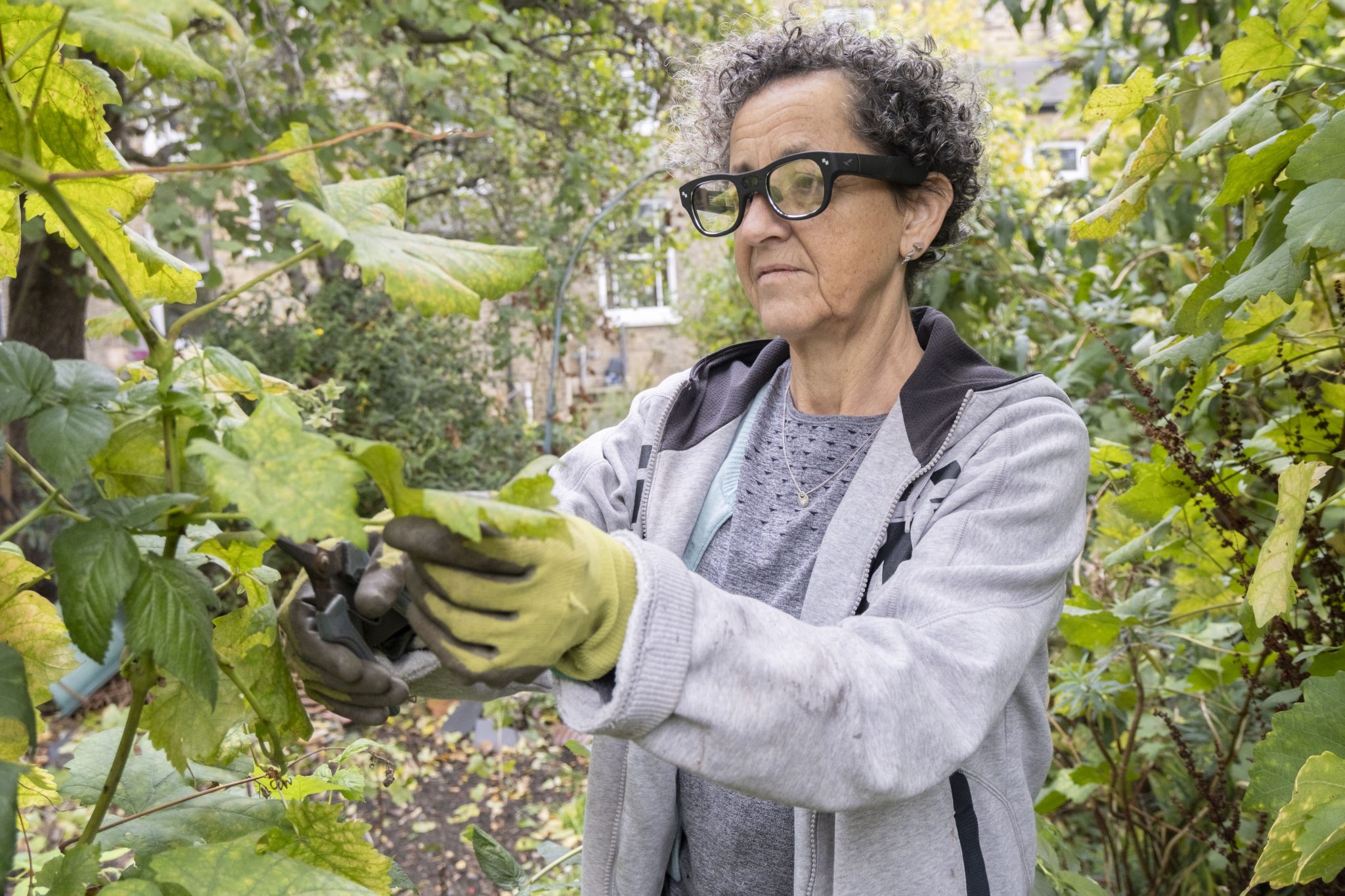
The next article is titled How AI-powered smart glasses could transform dementia care by 2027, which is just around the corner. In the article, there’s a woman with Alzheimer’s, and she could correctly name 46% of household items without the glasses. But with them on, that percentage jumped to 82. An hour after she took them off, she was still at 78%, so the technology still helped her even if she wasn’t using it. And these cutting-edge… glasses… I was going to say sunglasses, but these cutting-edge glasses are from CrossSense, and they won the longitude prize on dementia, which is 1,000,000 pounds, and that’s about $1,002,700. So, how do these CrossSense glasses work? They have a built-in camera, microphone, and speakers connected to an AI assistant called Wispy. Wispy gives real-time verbal prompts, floating text visible to the wearer that gives them kind of light conversation prompts and memory triggers.
Karissa
This is the kind of futuristic tech that I want to be seeing used and something that can really revolutionize the future of Alzheimer’s care.
Arielle
You know, I’m sure that a lot of people who are suffering through dementia and cognitive decline lose not just a sense of independence, but part of their identity and then feel like they’re a burden to other people because they need so much help. So, this is a way to extend their enjoyment of life. And it’s definitely AI tech that I can get behind.
Karissa
Of course, it’s in its early stages. It’s not peer -reviewed yet. And the battery life of these kinds of glasses only has an hour, but I’m sure that is something that can be fixed with more refinement. So, I’m optimistic about this one for sure.
Arielle
The next article is titled, The surprising science of sleep positions, explained by a sleep doctor. So, most sleep advice that we see online is about how long you sleep or what you do before bed, and much less attention goes to what your body is actually doing for those 8 hours. This week we got into the science of sleep positions, and some of it, especially the brain waste clearance piece, is genuinely surprising to me. Karissa, what’s your sleep position?
Karissa
I sleep on my side the most. And after reading this article, I had to really think because I switch sides like pretty frequently, but I think I’m usually more on my right side.
Arielle
Yeah, I’m with you. I think I fall asleep easier on my right side, which apparently is better for blood flow and heart pressure. But then I find that I also toss and turn quite a bit. And then I wake up on my left side, which supports the glymphatic system more effectively. And the glymphatic system is the brain’s waste clearance network. So, I had never heard of this before. I’ve heard of lymphatic, but I didn’t know that glymphatic also existed.
Karissa
Yeah, me either.
Arielle
And the article also offers practical fixes like pillows between the knees for side sleepers, which I think is a pretty common one, but then a pillow under the knees for back sleepers or just a thin pillow under hips for people who sleep on their stomach.
Karissa
Yeah, check that one out, and it’ll tell you more about what your sleep position says about you.
Arielle
And lastly, this article was really fun. It’s called Fire-loving fungi: Mother Nature’s first responders after wildfires. After a severe wildfire, the first visible signs of life returning are often flowers or birds. But what arrives even before those things is something most people have never heard of. It’s called pyrophilous fungi, or fire-loving fungi. Researchers are figuring out what this fungus actually does in burnt soil and why it matters for everything that comes after.
Karissa
Yeah, this is such an important solution. And I mean, fungi are nutrient recyclers all over the planet in different environments. So, the fact that they’re appearing in wildfire burn scars is so interesting. And I’m surprised that there hasn’t been as much research on this, but with wildfires being such a threat, and especially here in California, this one stands out to me because that is something we’re dealing with a lot. And as climate change continues, we will probably see more wildfires across the world.
Arielle
It’s just another case of mushrooms and fungus being really, really helpful. But I will let you guys read the article and find out more about it. All right, that was it for this week. But of course, as usual, we are going to leave you with a quote.
Karissa
You do not just wake up and become the butterfly. Growth is a process. And that is from Rupi Kaur.
Arielle
Beautiful words to end off the week. I hope you guys enjoy your Easter celebrations if you celebrate. And if not, have a great weekend anyway. See you next week, Karissa!
Karissa
Bye!
Arielle
Bye.