


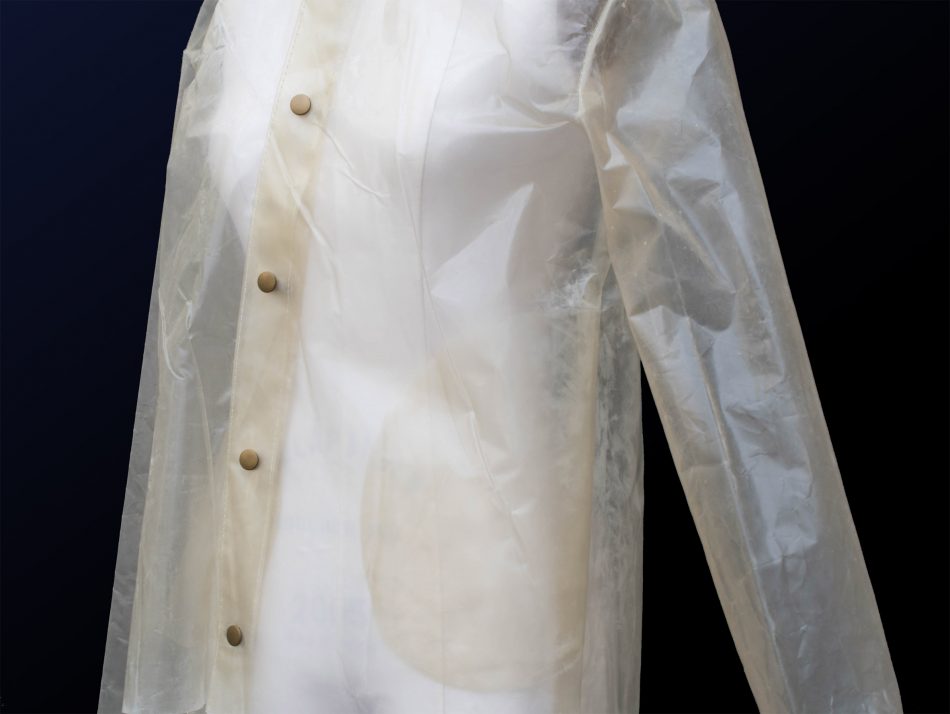
A New York designer, by the name of Charlotte McCurdy, has created a water-resistant jacket made from a bioplastic material derived entirely from large-celled algae. Because the jacket is made of algae, which is the single biggest capturer of CO2 from the atmosphere, it’s technically carbon-negative.
In order to make the jacket, the large-celled algae are bound together by heat and finally poured into molds which are custom-made to ensure the plastic survives the curing process. Once solidified, the algae plastic is given a thin coating of wax to improve its resistance to water.
What makes McCurdy’s raincoat especially cool is that, unlike other bioplastics, her material is entirely made of algae and not just “with some algae”. For example, she does not rely on foodstuffs, such as corn or sugar, for the jacket’s production, so as not to divert increasingly sparse resources from human consumption.
With the jacket, McCurdy hopes to show that the future of materials is not about no longer using petroleum-based plastic, but rather about “totally rethinking the source of carbon we make our plastics out of”.






