Today’s Solutions: June 14, 2026

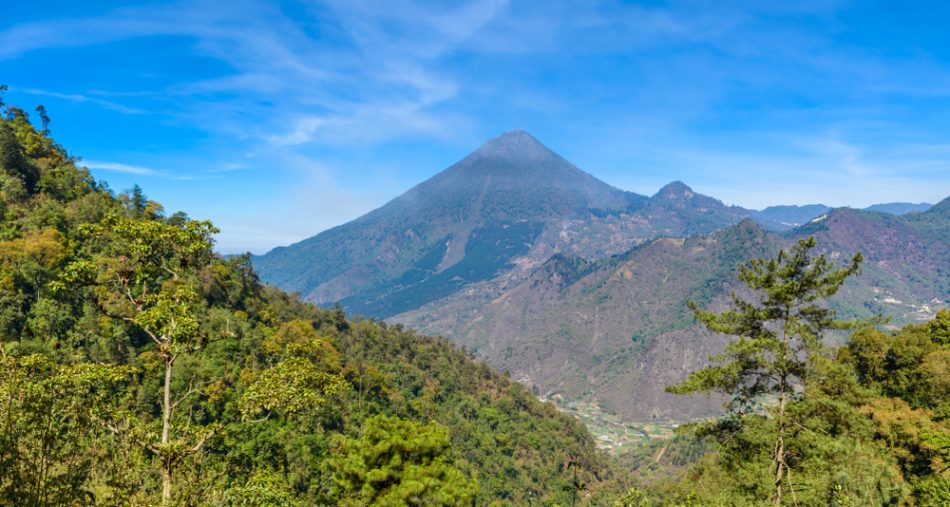
Active volcanoes are typically something to steer clear of, but for volcanologists, it’s their job to study these dangerous phenomena. Fortunately, they are now able to get up close and personal with active volcanoes without risking their own safety with the help of drones. 

Led by PhD candidate Edgar Zorn, a team of researchers from the German Research Centre for Geosciences successfully used a DJI Phantom 4 Pro quadcopter with a FLIR TAU 2 thermal imaging camera to observe the active Santa Maria volcano in Guatemala. Footage from the onboard 4K optical camera was digitally combined with that from the FLIR camera to create both visual and thermal imagery. The detailed images were then used to create a 3D model of the volcano with centimeter-scale accuracy.

The tool allowed the researchers to obtain information they would not have been able to from on-the-ground observations including the lava’s flow pattern and velocity as well as the volcano’s surface temperature. These specifics allow researchers to more accurately predict eruptions and protect surrounding communities. 

Solutions News Source Print this article
More of Today's Solutions

A revived old custom in Italy is helping those in need during the pandemic

In Italy, where the coronavirus has shuttered more than 2 million businesses and left one in every two workers without income, some Italians are ...

Read More

Hungarian scientist uncovers gene-based therapy that could cure blindness

Since 1985, the Körber Foundation in Hamburg has been awarding a prestigious prize to scientists whose work has applied futuristic techniques to physical sciences. ...

Read More

Scientists discover prehistoric dolphin species in landlocked Switzerland

Paleontologists have recently made an extraordinary discovery in landlocked Switzerland: two new species of dolphin dating back to 20 million years ago. Ancient dolphin ...

Read More

Reef Stars revival: innovative solutions to coral reef restoration

Coral reefs, vibrant undersea ecosystems brimming with life, are experiencing an existential crisis. With forecasts indicating that 90 percent of these unique ecosystems may ...

Read More