Isn’t it ironic that when we think of American cuisine, we rarely, if ever, think of Native American dishes? Sean Sherman, who goes by “The Sioux Chef,” is on a mission to reverse how colonization has erased Native American food from the menu, and instead give it a space to shine.
Sherman is an Oglala Lakota chef who was raised on the Pine Ridge Indian Reservation in South Dakota. He started working in the restaurant industry at the age of 13 as a dishwasher at a local steakhouse, which sparked a lifelong passion for cooking.
To pursue a career as a chef, Sherman moved to Minneapolis, Minnesota. Once he mastered various cuisines such as French and Japanese, a thought hit him: “Just all of a sudden, I realized that there was no Native foods. I just realized the other absence of Indigenous perspective anywhere in the culinary world, nothing that represented the land we were actually standing on,” he told PBS Newshour.
Indigenous cuisine
The absence of Indigenous cuisine isn’t just an issue of representation; it’s also been erased from within Native American communities. Although Sherman was born and raised on a reservation, he didn’t grow up eating traditional Native American foods. Instead, he remembers eating processed foods and government supplemental fare, which Sherman blames as one of the major reasons many Native Americans suffer from health problems such as obesity, heart disease, and type 2 diabetes.
To publish his first cookbook, The Sioux Chef’s Indigenous Kitchen, which won the prestigious 2018 James Beard Award for best American cookbook, Sherman had to delve deep into researching food systems and seeking the knowledge of elders, historians, and ethnobotanists.
“What were my Lakota ancestors eating and storing away? How were they getting oils and salts and fats and sugars and things like that?” were a few of the questions that burned in his mind. “So, it took me quite a few years of just researching, but it really became a passion.”
Sherman and Dana Thompson, his partner in life and in business, continue to secure Native American food its rightful place on the stage of the American culinary world through various initiatives. One way they keep Native American dishes on people’s plates is by offering catering through The Sioux Chef and the Tatanka Truck.
They’ve also founded a nonprofit called the Indigenous Food Lab, which works to increase access to Native American foods, and started a fundraiser to help distribute Indigenous Home Meal Kits to local families in need.
“For Indigenous peoples who went through intense assimilation, we lost a lot of our food culture,” Sherman says in an interview with Food and Wine. “But we’re at a point now where we can reclaim it and evolve it for the next generation. To be able to share culture through food will be really healing.”
Earlier this year, Sherman opened Owamni, his first permanent restaurant location in downtown Minneapolis in an area known to Native Americans as Spirit Island. The restaurant offers guests Indigenous dishes that do not include colonial ingredients like wheat flour, sugar, pork, and chicken.
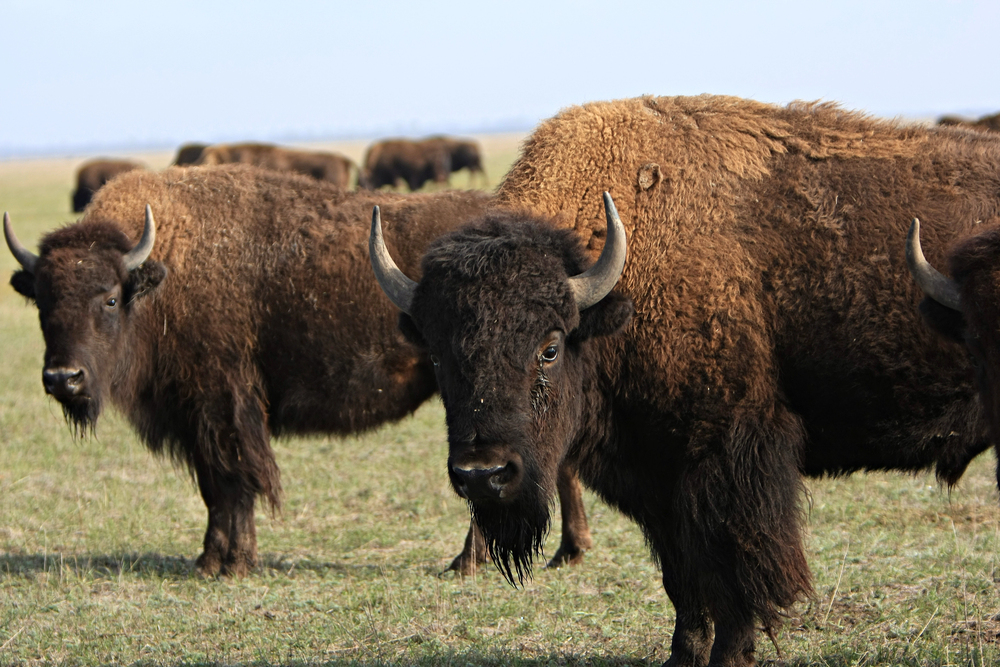
Instead, Owamni serves ingredients such as wild rice, nixtamalized corn from Mexico, bison, lake fish, dandelion, blueberries, and corn ash.
The overarching goal behind all of Sherman’s initiatives is to bring Indigenous food to the forefront of American cuisine.
“We believe that there should be Indigenous restaurants everywhere, because no matter where, we’re on Indigenous land,” he declares.
This story is part of our ‘Best of 2021’ series highlighting our top solutions from the year. Today we’re featuring education solutions.