If you use any kind of social media platform, you may notice the sudden appearance of gray, green, and yellow boxes in grids cluttering up your news feeds. This is because of the latest online craze, a game called Wordle.
What’s Wordle anyway?
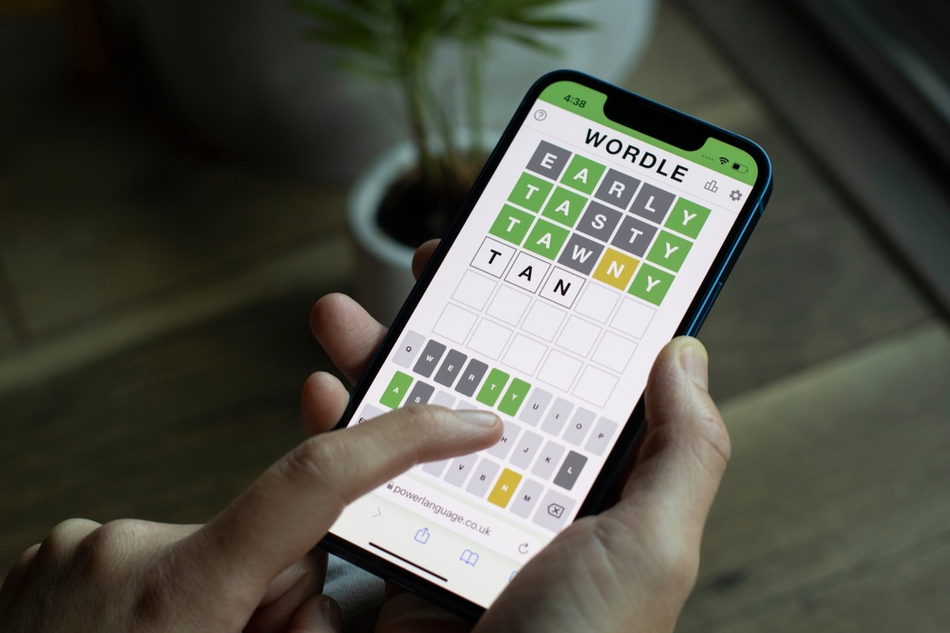
If you’re unfamiliar with this online game, let us fill you in. The player’s goal is to guess a mystery five-letter word in as few tries as possible. As per the game’s directions: “after each guess, the color of the tiles will change to show how close your guess was to the word.”
If the tile turns green, then that means the player placed the letter in the correct place. Yellow indicates that the letter is in the word, but in the wrong spot, and gray means that the letter is completely off and isn’t included in the word at all.
Unlike many games that you can binge-play all day long, Wordle can only be played once a day. The answer is usually a commonly known word in the English language, and it’s the same for everyone playing. Players have six tries to figure out what the word is, and afterward, they can share their colored grid progression with other online Wordle players, letting others know how many tries it took them to solve the puzzle, but doesn’t give away the answer.
Why did Wordle go viral?
University of Utah philosophy professor and scholar of games, Thi Nguyen, tweeted why he believed the game went viral. “The cleverest bit about Wordle is its social media presence,” he explains. “The best thing about Wordle is the graphic design of the shareable Wordle chart. There’s a huge amount of information—and drama—packed into that little graph.”
Each Wordle player must use both their language- and -logic processes in their brain points out psychologist Lee Chambers. When the player solves the puzzle, it leads to the release of dopamine, also known as the pleasure chemical, and so people continue to play, seeking out a repeat positive experience.
Plus, since the word is the same for everyone, there’s the added aspect of sharing a common experience and struggle. “The fact that we are all trying to solve the same puzzle brings us together,” says Chambers. “There’s both a sense of community in terms of ‘How difficult did people find it this time?’ and a competitive angle in terms of ‘How well did I stack up in finding this word compared to everyone else?’”
Who made it in the first place?
The creator of Wordle, Josh Wardle, wasn’t striving to make the next trendy game but made it as a gift to his word-game loving partner. In November of last year, there were only 90 Wordle players. Now, according to New Yorker reporter Kyle Chayka, there are over 2 million.
In the first iteration of the game, all five-letter words in the English language could have been the mystery word, but Wardle admitted that this version wasn’t very fun. “Think about it—if the first time you play Wordle, the answer is a word you’d never heard of, I think you would feel cheated,” he told Slate.
Now, the game uses approximately 2,500 five-letter words that Wardle’s partner narrowed down.
“The game feels really human and just enjoyable,” Wardle says. “And that really resonates with where we’re at right now in the world and with Covid.”
So, if you’re a Wordle fan, now you know why you may have been so drawn to it—and if you’re a Wordle skeptic, perhaps understanding a bit more about the psychology behind the game’s virality will make you want to give it a go, too.