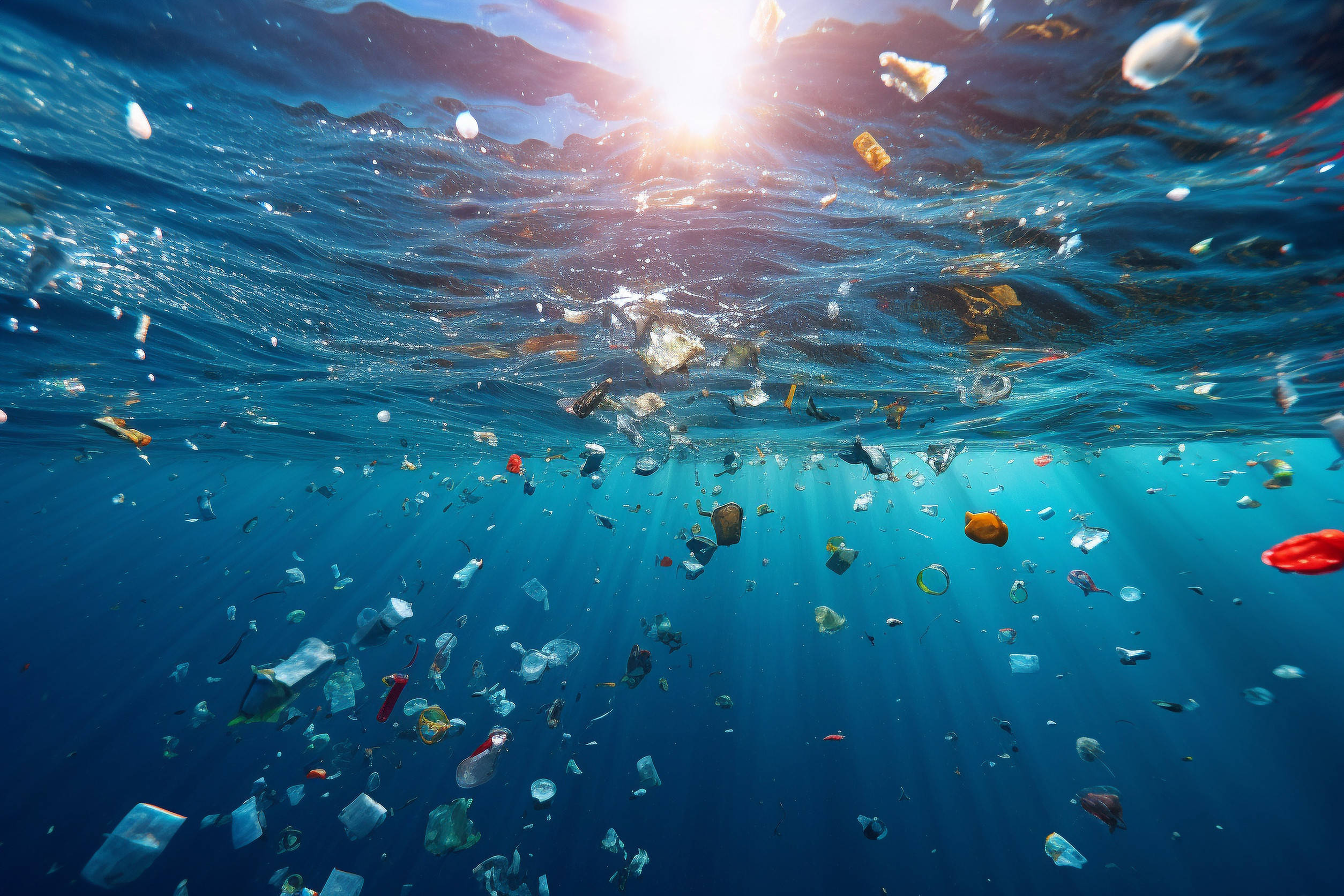
Microplastics are one of the most pervasive environmental and health issues of our time. And environmental engineers and researchers are working nonstop to address this, with enzymes, superworms, okra, and more.
Now, scientists from Sichuan University have developed and programmed a tiny robot fish that removes microplastics from the water while it swims.
Soft robots
This self-propelled, swimming robot tracks down, latch onto and removes free-floating microplastics from water. But that’s not all. It also repairs itself from the damage it incurs while on the job. This makes it what is known as a “soft robot.”
“It is of great significance to develop a robot to accurately collect and sample detrimental microplastic pollutants from the aquatic environment,” said Yuyan Wang, a researcher at the Polymer Research Institute of Sichuan University and one of the lead authors of the study. “To the best of our knowledge, this is the first example of such soft robots.”
This aquatic robot is only half an inch long, and with a laser system in its tail, it can swim around at 30mm a second. This is similar to the speed of some plankton. The hide of the robo-fish was inspired by mother-of-pearl, or nacre, which can be found on the inside of a clamshell. These multiple layers of material make the robo-fish flexible, stretchy, and, most importantly, able to absorb microplastics as it swims along. This is because of the microplastics’ chemical attractions and electrostatic interactions with the robo-fish material.
One of the benefits of this is that the fish can repair itself with up to 89 percent of the microplastic material it collects, which helps its efficiency. More importantly, though, it can analyze the different types of plastic it collects and gives researchers more information to fight microplastic pollution.
Source Study: ACS Publications — Robust, Healable, Self-Locomotive Integrated Robots Enabled by Noncovalent Assembled Gradient Nanostructure | Nano Letters (acs.org)