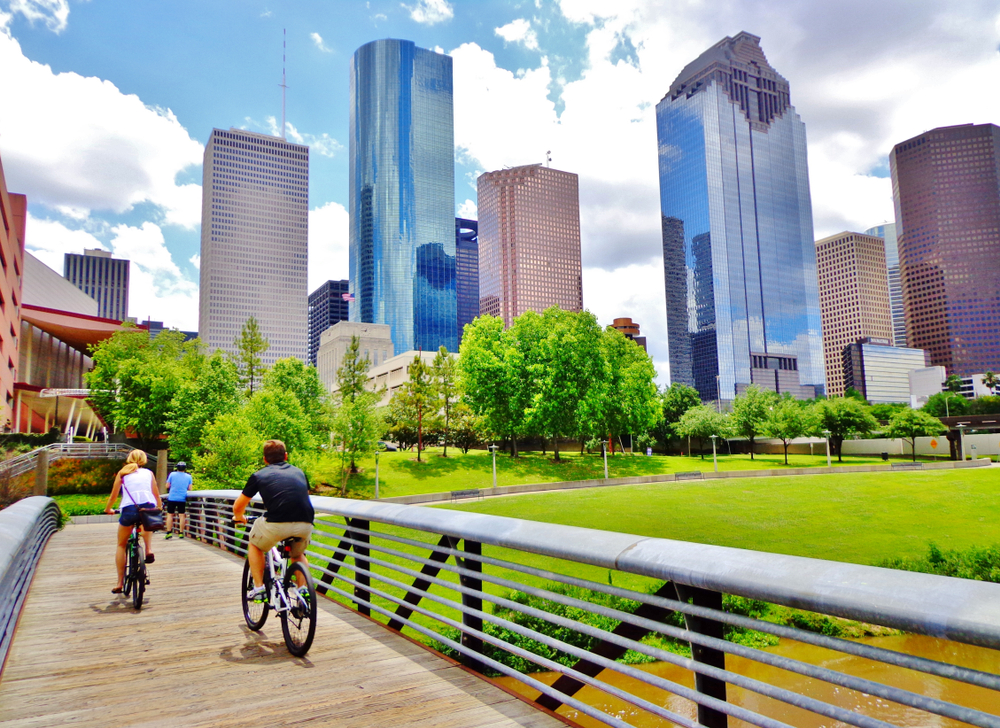
This year, Houstonians witnessed their city reach a searing 109 degrees in late August, tying a historic temperature record. Temperatures rose beyond 100 degrees for the duration of the previous month, underscoring the critical need for creative heat-resistance measures. The problem is keeping households comfortable while also addressing rising energy consumption from air conditioning. However, in the Conroe suburb, a ray of hope emerged in the form of a building that employs a new cooling system.
A scalloped revolution: self-cooling concrete walls
This ground-breaking construction has “self-cooling” concrete walls with a distinctive scalloped shape that functions as a heat repellent. “In a way, the wall is working a bit like a very large radiator,” explains Phu Hoang, founder and director of Modu Architecture Studio. The corrugated pattern’s deep grooves provide more surface area for heat dissipation. Surprisingly, testing has shown that this revolutionary design, which Modu made in collaboration with climate-focused engineering firm Transsolar, can keep the interior of the building up to 18 degrees cooler than standard flat walls.
Reflecting the future: White walls and sustainable paint
The use of white walls to reflect sunlight is another important aspect of the architecture of this remarkable building. The architects took it a step further by using a paint that not only reflects sunlight but also repels dirt. This clever solution ensures that the environmental benefits last without the need for extensive maintenance.
In addition, the structure has two dozen architectural fins that provide shade for windows. Furthermore, each store has a small garden with shade-giving plants like jasmine that will eventually spread onto the fins. These environmentally responsible design concepts mix form and function to provide a comfortable and sustainable environment for tenants and visitors.
Breaking the AC addiction: Toward sustainable cooling
Rachely Rotem, co-founder of Modu, emphasizes the importance of developing ways to minimize society’s reliance on air conditioning in the face of mounting climate change concerns. Our cities become hotter as we rely more on air conditioners. These cooling technologies, ironically, exacerbate the very problem they are meant to cure. The massive energy demand for air conditioners contributes considerably to climate change, generating roughly 2 billion tons of CO2 yearly – more than the aviation industry’s emissions. We need sustainable options as global air conditioner consumption is expected to triple by mid-century.
The move to renewable energy sources will surely assist in lowering air conditioning’s carbon footprint. However, it is equally important to reduce overall energy usage for cooling, not just to lighten the financial strain on consumers, but also to relieve grid pressure throughout the broader energy shift. Passive design, as demonstrated by this unique Texas building, provides an adaptable solution that may be adopted everywhere.
While tenants have yet to move into the newly built business space in Texas, early indications are encouraging. Even in Texas’ triple-digit heat, owner Anh Gip finds a notable improvement. “I haven’t turned on the air conditioning at all,” she explains, “but it feels cooler when I walk inside the building.” This ground-breaking project highlights how the combination of cutting-edge architecture and sustainable design can pave the path for a more sustainable future.