Episode Description:
In this episode, Karissa and Arielle begin in the Pacific Islands, where Indigenous leaders are creating the world’s first ocean sanctuary designed to preserve migratory routes across national borders. Then we turn to the science behind why women tend to live longer than men—and what those findings can teach us about resilience, biology, and the future of health. A thoughtful conversation about stewardship, survival, and what it means to care across generations.
Want to be part of the Optimism Movement? Become an Emissary.
Subscribe to our FREE Daily Newsletter and follow us on Instagram, X, and Blue Sky.
The Optimist Daily is a project of the World Business Academy.
Donate link: https://www.optimistdaily.com/donate-to-support-the-optimist-daily/?gift=Y%20http://
Transcript:
Theme music
Karissa
Hello and welcome to the Optimist Daily’s weekly Roundup. I’m Karissa.
Arielle
And I’m Arielle, and we’re working hard to put solutions in view and optimism in movement.
Karissa
Yep, we’re back with another episode of the pod… and both of us this time (laughs) to share the solutions from the Optimist Daily this week. Glad your voice is back!
Arielle
Yes, I am so happy my voice is recovered. It’s not at 100%. I still feel a little bit like I’m straining it, but you know it’s better than whatever my voice sounded like last week (laughs).
Karissa
Yeah, well, as always, we had the solutions on the website and in our daily Free Newsletter that goes straight to your inbox.
Arielle
We are also, of course, on social media, so if you prefer to get your news that way, we are on Blue Sky, Twitter… I mean X, Instagram, Pinterest. All of that fun stuff. You can find us @OptimistDaily on almost everything. The only difference is on X. There we are @OdeToOptimism.
Karissa
And as always, we want to thank our financial supporters, aka our Emissaries. And if you want to find out how you can also be an emissary, the link for that is in our show notes.
Arielle
Yes. But big thanks to everyone who visits the website and listens to the podcast; all of that is amazing support for us. So yeah, if you want to share this pod with someone and interact with us on social media, that is a great way to support us in a non-financial way.
Karissa
Alright. So, Arielle, your voice is back, and what else is going on in Amsterdam?
Arielle
Yeah, mostly I’m just feeling a lot better. I’m really happy to not be sick, so I’ve just been staying positive and I’ve been having a lot of fun going through the Local Changemakers submissions, so that’s also been keeping me buoyant and optimistic throughout the week… Although I know that there is a lot going on in the world that is overwhelmingly scary and, yeah, just in general a… a downer, I have to say. On that note, I’m skipping my I’m an Optimist, But… this week because I’m really just trying to stay positive. How are things on your side, Karissa?
Karissa
I am also just trying to focus on having hope. Last week we lost Doctor Jane Goodall, and that was kind of all over the news. I think Doctor Goodall would really appreciate and approve of the solution that caught my eye this week. If you don’t mind me jumping in…
Arielle
Yeah, go for it.
Karissa
Yeah. So, this is called World’s first Indigenous lead ocean reserve is one step closer to reality.
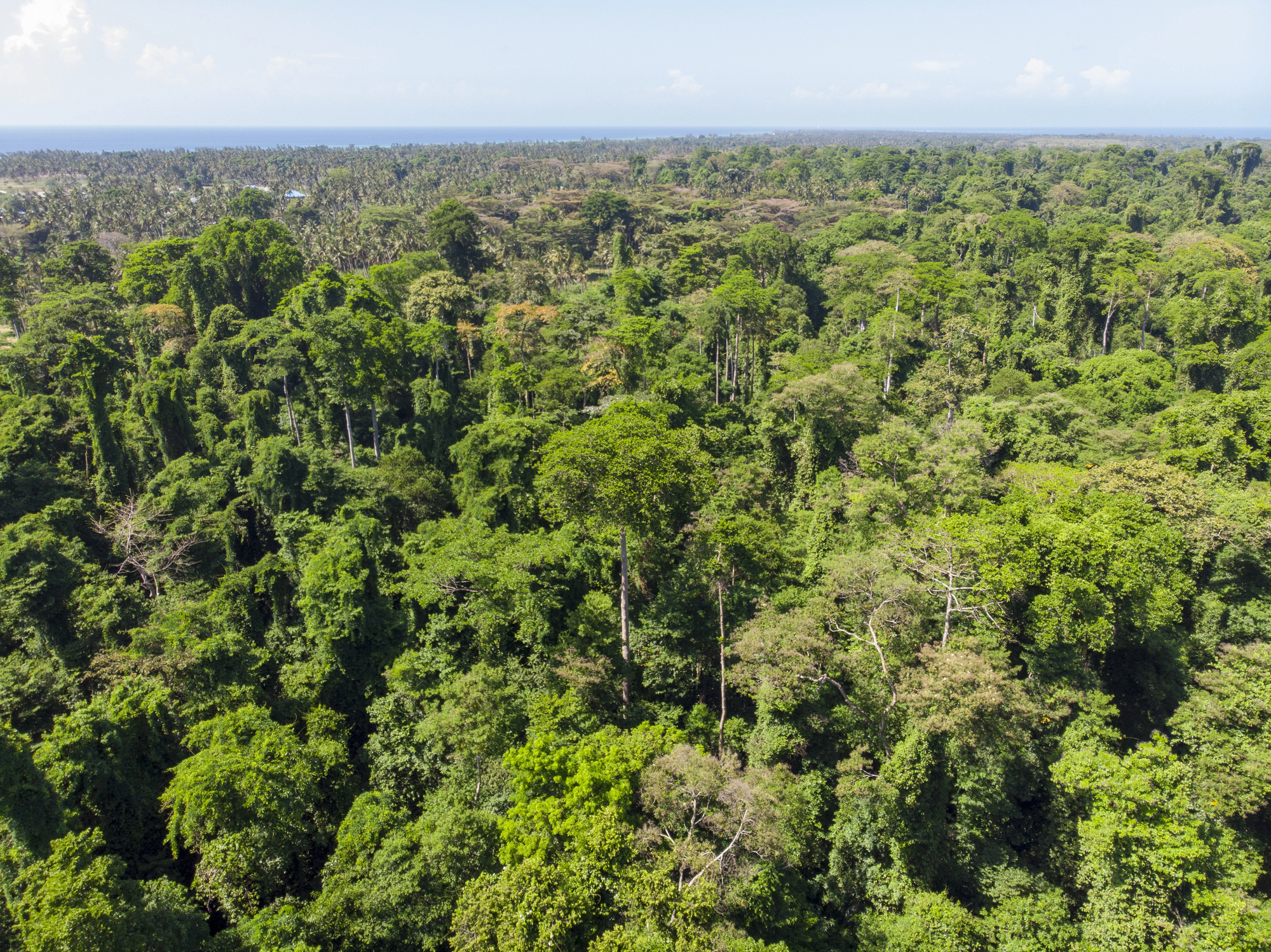
An extraordinary marine conservation initiative has taken a major step forward in the Pacific. The Melanesian Ocean Reserve, a proposed Indigenous-led marine protected area, will span over 6,000,000 square kilometers, which is more than 2.3 million square miles of ocean and islands—an area comparable to the Amazon rainforest.
Arielle
That’s pretty huge! And really exciting news!
Karissa
It’s quite extraordinary and it makes this area one of the largest protected ocean spaces on Earth! Unlike traditional models, the reserve will be governed entirely through Indigenous leadership and ancestral stewardship, combined with modern science and regional policy collaboration. Once finalized, it will be the first marine protected area in the world to operate across multiple exclusive economic zones—which are EEZs—uniting the nations of the Solomon Islands, Papua New Guinea, Vanuatu and New Caledonia.
Arielle
This sounds like such a great development. How did this agreement come about between nations?
Karissa
Well, the concept was formally announced earlier this year at the United Nations Ocean Conference in Nice, France, ce by Solomon Islands Prime Minister Jeremiah Manele. Framing it as a turning point in history, Manele emphasized the importance of redefining ocean governments to center Indigenous knowledge. And so to bring this vision to life, leaders have now established a ministerial platform designed to facilitate discussions with partner nations and secure essential development funding. This platform will help ensure that the reserve moves from concept to reality, not just in name, but in practice, with Indigenous leadership embedded at its core.
Arielle
That’s so fascinating. It sounds like this development is on the right path. Are there any rules guiding the ministerial platform?
Karissa
Yeah, so supporting the ministerial platform are what leaders are calling the four paddles, which represent the four conditional pillars guiding the development of the reserve.
Arielle
Four paddles, OK. That’s quite the fitting name for the solution trying to navigate oceanic problems!
Karissa
Yeah, exactly. And so, paddle number one is ocean transparency and monitoring. This will leverage both local populations and technological tools to oversee activity across vast ocean spaces. Paddle two is Indigenous-led investment. It will build pathways for Indigenous communities to participate and benefit from the sustainable ocean economy. Paddle three is sustainable transport and reconnection, and this will restore traditional ocean-based transport systems to renew the cultural and practical relationship between people and the sea. And paddle four is knowledge integration, which will blend modern science with ancestral knowledge to better understand and care for the marine environment.
Arielle
- These pillars sound like a great foundation that combines the strength of ancient Indigenous wisdom and modern knowledge. As we’ve written about many times on the Optimist Daily before, referring to Indigenous wisdom and guidance is one of the best ways we can protect our planet. Because they definitely know what they’re doing!
Karissa
I mean, like you said, all of this combined gives the people behind the move a lot of hope. They believe that the Melanesian Ocean reserve could serve as an organizing framework for a sustainable ocean economy.
Arielle
It sounds like this could be a great solution for solving some of our greatest environmental challenges in the sea.
Karissa
Yeah, totally. And as the world looks to ambitious solutions for climate resilience, biodiversity, and sustainability, this initiative provides a hopeful model—one that honors deep rooted knowledge, empowers local communities, and leads with collective care for the oceans.
Arielle
Yeah, this makes me really excited for the sharks as well. Because a few episodes back, I was so brought down by the plight of the sharks and how they’re being made extinct, and… anyway hopefully this helps.
Karissa
Yeah!
Arielle
All right! So, my solution is actually… not related to yours at all, I don’t think (laughs). It has to do with a really popular topic, though, that concerns a lot of us human beings. It’s about longevity, which is such a buzzword. And you know, everyone wants to know how to slow the aging process and how we can live to be centenarians.
Karissa
Yeah.
Arielle
But it seems like women have a natural edge in this arena, since we tend to have longer life expectancies.
Karissa
Mm-hmm.
Arielle
Which is what my solution is all about. And it’s titled, Closing the longevity gap: what research reveals about why women live longer. So, Karissa, have you ever wondered why women tend to outlive men?
Karissa
I feel like I’ve more just observed that than really thought too deeply about it, but I guess my immediate thought is that maybe the woman takes better care of herself or something? But I don’t know… I guess I have wondered, so I am excited to hear more about this solution.
Arielle
Yeah. I also just kind of accepted it. The women in my family tend to live really, really long and…
Karissa
Hmm. Yeah.
Arielle
…I just kind of didn’t question it, but it happens to not just be a human thing! It’s actually true across many species.
There’s this new study from the Max Planck Institute for Evolutionary Anthropology in Germany that looked at 528 species of mammals and found that in nearly 3/4 of them, females live longer than males.
Karissa
Oh well, that’s a pretty huge sample size! Do they have a theory for why this is happening across so many different species?
Arielle
Yeah, they actually have several. One of the key researchers, Fernando Colchero, explains that this female longevity advantage is part of mammalian evolution. It goes back millions of years. Genetically, females have two X chromosomes, which may provide a kind of backup against harmful mutations. But it’s not just about genetics; behavior and evolutionary pressures play a role too.
Karissa
- Like what kind of behaviors?
Arielle
Well, in many species, males take on risky behaviors to increase their chances of reproduction—so things like fighting over mates, growing larger body sizes, or developing features like antlers to assert dominance. All of that burns a lot of energy and increases the risk of injury or death.
Karissa
I see. So, they’re kind of trading longevity for reproductive success.
Arielle
Yes, exactly. And while it might sound a bit far off from humans, there are some real parallels. In the US, for instance, the life expectancy gap between men and women widened to 5.8 years in 2021. Men are more likely to smoke, drink heavily, and engage in other high-risk behaviors. They’re also more likely to die from things like alcoholism, drug use, suicide, and homicide.
Karissa
Yeah, I… I can see that. And that’s pretty sobering. Are there biological differences beyond the X chromosome that contribute to this gap?
Arielle
Yes! Estrogen, for example, has a protective effect on the heart, which gives women an advantage when it comes to heart disease, which I didn’t know. So, I’m pretty stoked about that. And with conditions like melanoma, men not only have slightly higher incidence rates but also much higher mortality rates too. Their skin is different. It’s thicker with more collagen and elastin, and that can actually make them more vulnerable to UV damage.
Karissa
Yeah. And I mean, I read somewhere that men are also less likely to use sunscreen or go to the doctor for regular checkups. Is that part of the picture too?
Arielle
Yes, totally. Only about 12% of men in a recent CDC survey said they always wear sunscreen when outside for more than an hour on a sunny day, and men are generally less likely to screen for cancers or even ask a doctor to check something.
Alan Geller, a public health researcher at Harvard, calls this a kind of double whammy. Higher risk factors combined with less preventative care.
Karissa
That makes a lot of sense, and I’m definitely seeing a lot of parallels to some men in my life. Is there anything men can actually do to help close this gap, though?
Arielle
Yes, the good news is that some of these behaviors are modifiable. Colchero says that as gender roles evolve and more men take on caregiving roles or pay closer attention to their health, we might see the gap start to narrow. In fact, the study even found that in species where males provide more care to offspring, they tend to live longer.
Karissa
So, I mean, caregiving might actually be protective in the long run.
Arielle
Mm-hmm. It seems that way. The theory is that the parent who provides more care needs to stay alive long enough for their offspring to become independent, so it’s an evolutionary incentive.
Karissa
So, are there practical tips here that people can use?
Arielle
Yes, definitely. For one thing, start wearing sunscreen, gentlemen! Geller points to preventative care and regular screenings as being really important too, obviously.
Karissa
Yes.
Arielle
And the American Heart Association has this helpful framework called Life’s Essential 8: eat better, be more active, quit tobacco, get healthy, sleep, manage your weight, control cholesterol, and manage blood sugar and blood pressure.
Karissa
That’s a pretty solid checklist, and it’s encouraging to know that even though some risks are hardwired, there’s a lot that people can do to take control of their health. So I think it’s important. To… to also kind of change the narrative around that, because for some men it just seems like, not masculine or something to take care of yourself and, like, go to the doctor, you know, be concerned about that kind of stuff.
Arielle
Yeah, exactly. It’s not really about turning the clock back on evolution. It’s just about making smarter choices now that we understand these patterns better. And yeah, the whole thing about sunscreen. I mean, women historically have been told that they’re valued because they look a certain way or that they look younger. And so, a lot of the…the… the motivation behind sunscreen use is to prevent wrinkles. And yeah, that’s not really something that men are really as worried about, I guess. Or historically they haven’t been as worried about it.
Karissa
Yeah.
Arielle
But I feel like because we live in such a visual culture, more men are becoming way more aware of how they look and how they present. And I know a lot of guys with skin care routines.
Karissa
Yes, as they should.
Arielle
Everyone has skin! So, we should all be taking care of it. But yeah, I think it’s just a really interesting solution. It definitely caught my eye because I was like, yeah, why do women live longer?!
Karissa
Mm-hmm. And yeah, the thing about caregiving was very interesting, too, because, I mean, we’ve written a lot on the Optimist Daily about the benefits of equal partnership and men taking on caregiving roles and contributing to that.
Arielle
And there are also a lot of programs—we’ve written about a few of them—that are happening around the world where men are getting, like, schooled, basically. They’re getting educated in these programs made for men who want to become better caregivers, not just for their wives, but for their children. And it’s nice to know that there is actually a huge benefit for the men as well.
Karissa
Exactly.
Arielle
I mean, hopefully these guys just want to become better family men anyway, but to know that they might live longer because of it is an extra incentive.
Karissa
Really cool, fascinating solution. So, thanks for sharing that one Arielle.
Arielle
No problem. My pleasure.
Karissa
Yeah.
Arielle
We also had a lot of really cool solutions on the Optimist Daily this week, and they include…
Karissa
How to use Borax spray safely and effectively around your home. Sunscreen goes green—Here we go, guys—Scientists craft coral-safe protection from pollen. Another sunscreen for everyone to use. Huntington’s disease breakthrough gene therapy slows progression by 75% and Should you work out when you’re sick? Doctors explain when to sweat and when to rest.
Arielle
We also have How Nobel winning discoveries are unlocking new treatments for autoimmune disease and cancer. The free and easy trick experts swear by to banish silverfish this fall. Can food rescue apps help feed vulnerable Americans as food aid shrinks? And Eight easy ways to make Halloween season cozy festive and totally stress free.
Karissa
Fun!
Arielle
Thank you everyone for tuning in, and Karissa and I will be back next week with more solutions!
Karissa
Yep!
Both
Bye!