BY THE OPTIMIST DAILY EDITORIAL TEAM
The California grid has a timing problem. Solar runs from mid-morning through early evening. Demand peaks later. Batteries have bridged part of that gap for years, but only about four hours’ worth. On June 1, a project in Kern County doubled that window.
Tumbleweed, a 125-megawatt battery installation, went online as the first major storage facility in the U.S. capable of discharging for eight hours straight. It’s the only one of its kind in the country right now.
Why eight hours matters
Most grid batteries discharge for four hours at maximum capacity. That’s been the standard because it made economic sense: equipment costs and market conditions aligned around four-hour systems. But analysts have long argued that cost-effective 24/7 clean power requires longer-duration storage. California regulators reached the same conclusion in 2021 and ordered utilities to start procuring it.
“This was one of our first eight-hour contracts in the country for batteries, and now it’s one of the first projects online,” said Alex Morris, general manager of California Community Power. “It’s designed to be part of the clean energy mix, helping capture the solar and discharge that later when they need it.”
How a four-hour battery became an eight-hour battery
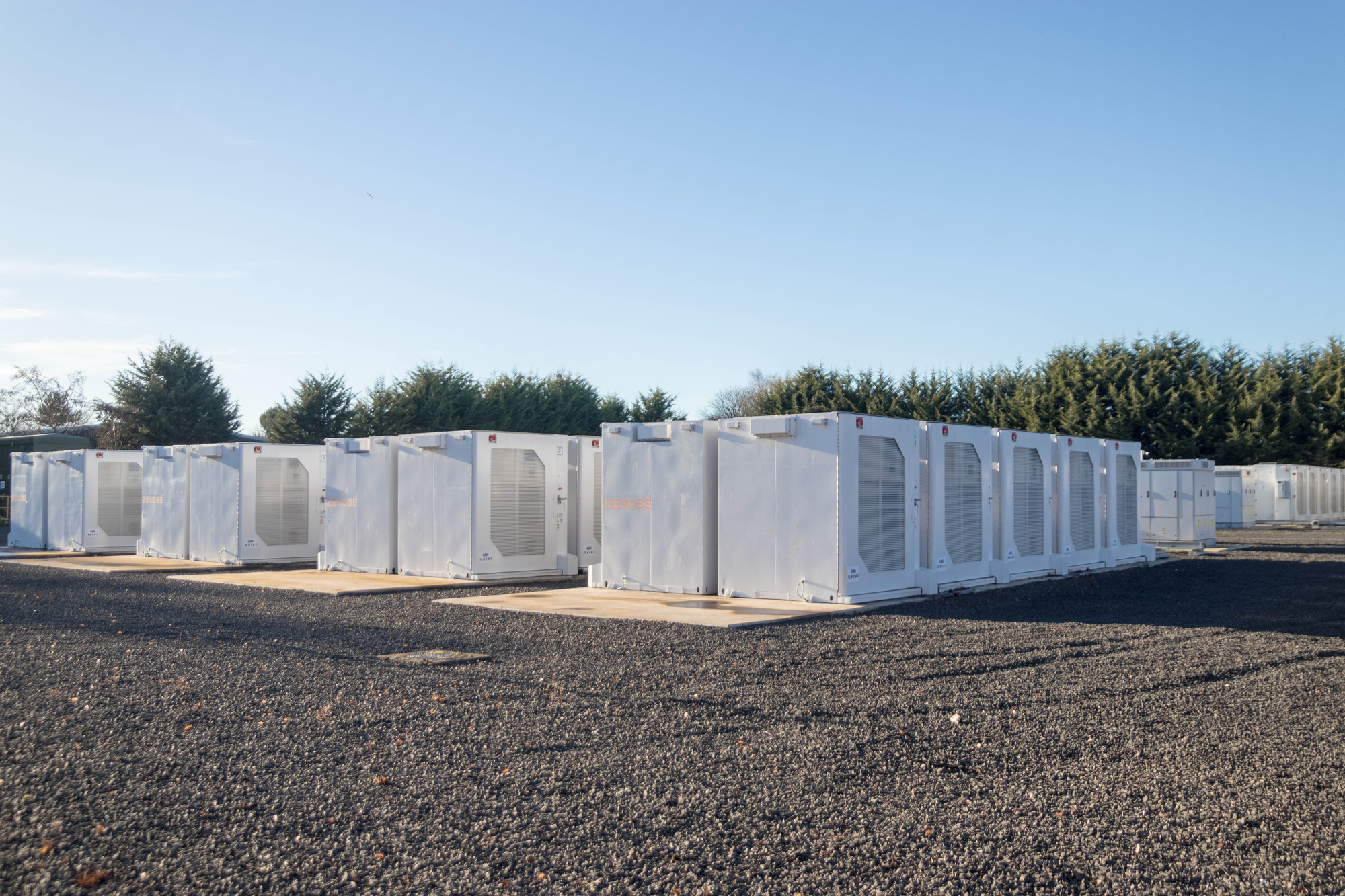
Rev Renewables, which built the project, first activated 125 megawatts for four hours in summer 2024. Converting it to eight hours was direct. The company “literally doubled the number of battery boxes on the site,” said Cody Hill, who leads storage development at Rev. “Technology-wise, the differences are pretty trivial.” The same contractor handled both phases, so lessons from the first build carried into the second.
The cells inside are lithium-ion phosphate from BYD, the Chinese energy giant. Not exotic chemistry. Not a novel technology. A bankable, proven system that Hill says “improves along every metric and gets cheaper.”
That last point carries weight. Scores of startups have raised billions betting that lithium-ion cannot serve the longer-duration storage market. Tumbleweed, by existing, puts pressure on that argument. At least up to eight hours, lithium-ion appears more than capable.
What this looks like on the grid
At this time of year, California gets strong solar generation from around 8 a.m. to 6 p.m. Tumbleweed can absorb that output cheaply, given its proximity to Kern County’s solar fields, then discharge clean power for eight hours afterward, carrying the grid through most of the night. The remaining pre-dawn hours, roughly 2 a.m. to 8 a.m., California currently covers with a mix of wind, nuclear, geothermal, hydropower, and some gas. If eight-hour storage catches on, the state has a clear path to clean electricity for nearly all of a typical day.
California Community Power and Ava Community Energy, a locally governed nonprofit that holds 50 megawatts of Tumbleweed’s capacity, are still working out exactly how to operate their portions in the wholesale market. The grid data will do the talking from here.
This solution is highlighted by The World Business Academy, the umbrella organization producing The Optimist Daily. To learn more, please visit our website.