BY THE OPTIMIST DAILY EDITORIAL TEAM
Air conditioning is making cities hotter, and that’s not incidental. It’s the physics. Every AC unit pulls heat from inside a building and dumps it into the street, which raises outdoor temperatures, which makes more people reach for the thermostat. Researchers at the University of Manchester have been looking at how to interrupt that cycle, and their answer starts with the water already landing on rooftops.
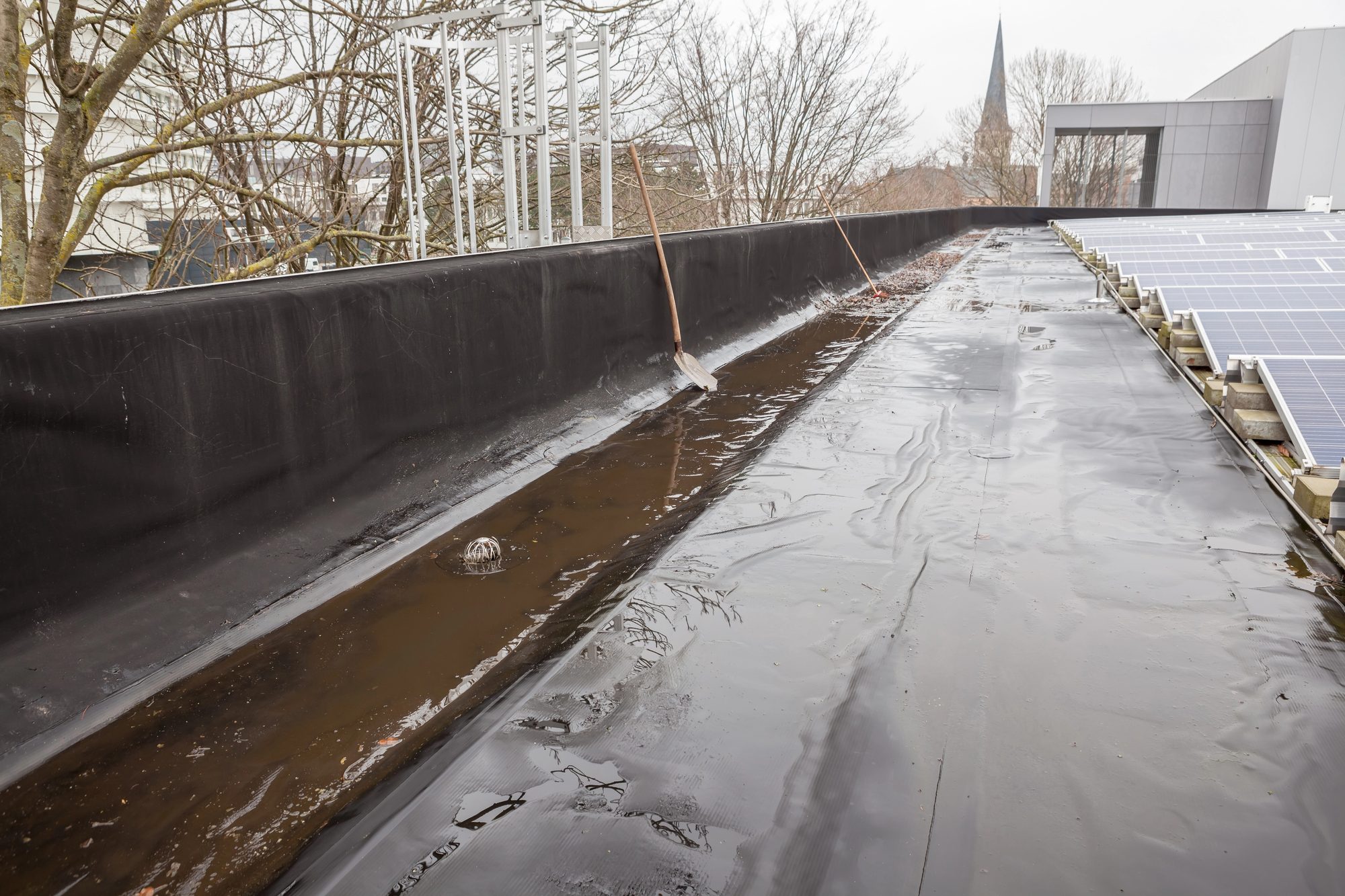
The study, published in Earth’s Future, modeled a system that collects rainwater, stores it in rooftop tanks, and sprays it onto the building surface automatically when temperatures climb. A wet roof cools through evaporation, which means less heat conducts into the building below, the AC runs less, and less waste heat ends up back in the surrounding streets. The researchers used Tokyo as their test case, but the model is built to help urban planners evaluate how similar systems would perform in their own cities.
Timing matters more than tank size
Here’s what the study found that wasn’t obvious going in: when the sprinklers activate matters more than how much water they deliver or how large the storage tank is. Very large tanks produced only modest additional reductions in energy use and extreme heat days. More water didn’t reliably mean more cooling either, because any excess that doesn’t evaporate just stays on the surface.
“Cities around the world are facing growing challenges from extreme heat,” said lead author Dr. Zhonghua Zheng. “Air conditioning can help keep people safe and comfortable but it also consumes large amounts of energy and releases additional heat into the urban environment. Our study shows that harvesting rainwater from roofs and using it strategically for cooling could provide a practical way to reduce both energy demand and urban temperatures.”
The AC problem keeps compounding
Space cooling consumed around 2,100 terawatt-hours of electricity worldwide in 2022, roughly seven percent of global power that year. The International Energy Agency projects that figure will grow sharply: AC installations could nearly triple over the next three decades, reaching 5.5 billion units globally.
The scale of that growth is a problem on multiple fronts. More installations mean more strain on electricity grids, more emissions from power generation, and more exposure to refrigerant leaks. The most common refrigerants, hydrofluorocarbons and hydrochlorofluorocarbons, trap thousands of times more heat in the atmosphere than carbon dioxide does. The EU and UK are phasing them out in favor of natural alternatives like propane and CO2, though propane’s flammability makes installation more complicated than a straight swap.
Rooftop cooling options are expanding
The Manchester study isn’t the only research pointing to rooftops as an underused cooling resource. A 2024 study by UCL and the University of Exeter looked at what would have happened if London had painted its rooftops white during the summer of 2018, one of the city’s hottest on record. Average temperatures from June through August hit 19.2 degrees Celsius (66.6 degrees Fahrenheit), about 1.6 degrees Celsius (nearly three degrees Fahrenheit) above the typical range for those months. Widespread cool roofs, the model suggested, could have taken around 0.8 degrees Celsius (about 1.4 degrees Fahrenheit) off the city’s average air temperature.
“If widely adopted, cool roofs can significantly reduce the ground-level air temperature of a city,” said lead author Dr. Charles Simpson of the UCL Bartlett School of Environment, Energy and Resources. “The resulting cooling effect across the city would save lives and improve the quality of life for residents throughout the urban area.”
Rainwater harvesting and cool roofs are different approaches to the same heat problem, one through evaporation and one through reflection. Neither requires building anything exotic. The infrastructure is already up there.
Source study: Earth’s Future—Optimizing the rainwater harvesting and roof sprinkling system to adapt to urban extreme heat
Did this solution stand out? Share it with a friend or support our mission by becoming an Emissary.