Episode Description:
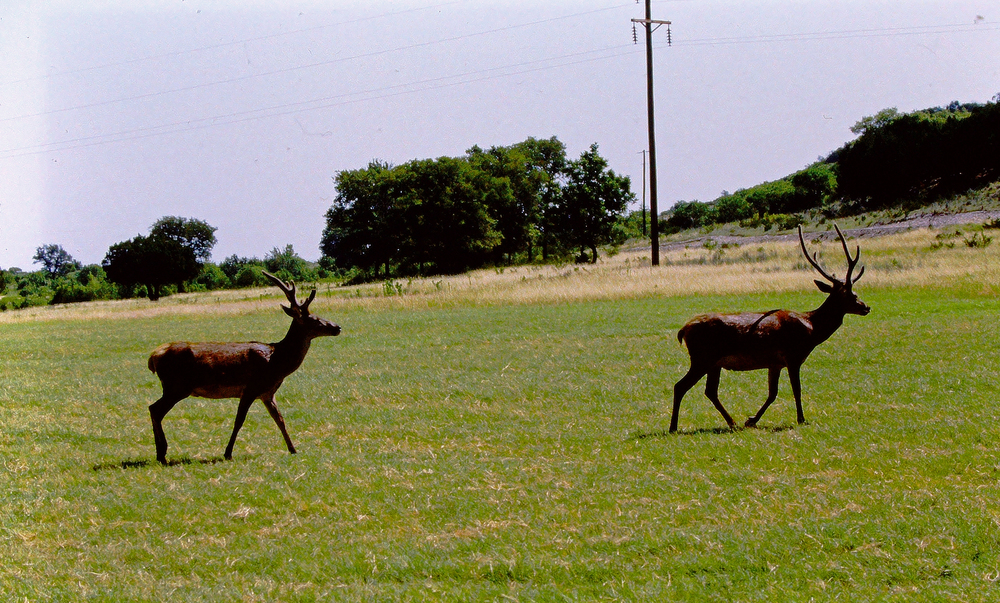
This week Arielle and Karissa cover the Colorado wildlife overpass that came in $15 million under budget and brought pronghorn back to habitat they hadn’t reached in decades, what Japan’s 107,000-plus centenarians reveal about diet and aging, Dolly Parton’s Imagination Library expanding in London less than a month after her death, and more!
Nominate a Local Changemaker (30 and under): https://us20.list-manage.com/survey?u=d2e7810fd2bcf24fb1144a7e2&id=6e0ab37520&e=28025b5010
If you have questions, comments, feedback, suggestions, or just want to say hi, send a message to: podcast@optimistdaily.com.
Want to be part of the Optimism Movement? Become an Emissary.
Subscribe to our FREE Daily/Weekly Newsletter and follow us on Instagram, X, and Blue Sky.
The Optimist Daily is a project of the World Business Academy.
Donate link: https://www.optimistdaily.com/donate-to-support-the-optimist-daily/?lsc=41ef528d
Theme and all original music by Marvin Lanes
Transcript:
Intro & housekeeping
Arielle:
Hello everyone, I’m Arielle.
Karissa:
And I’m Karissa.
Arielle:
And welcome back to The Optimist Daily’s weekly roundup.
Karissa:
Arielle, how are you doing over in Amsterdam?
Arielle:
I’m doing well. It was unseasonably warm. Um, weird fall weather. But I think that a lot of people are experiencing weird seasonal weather, uh… Maybe ’cause of the super El Niño that everyone’s talking about.
Um, I don’t know how it is over where you are in California.
Karissa:
Yeah, that’s certainly the hot topic right now, and it’s kind of already hitting in different parts of the world. I know that, uh, California just kind of declared a state of emergency thing, so we’re… gearing up for whatever it may bring. All these natural weather events can be a little frightening, but nonetheless-
Arielle:
Yeah, are you guys expecting, like, hurricanes or something, or what’s the deal?
Karissa:
I don’t know if it’s, like, so much of, like, a hurricane situation where we’re at. Mm-hmm. Um, but just, you know, a lot of flooding that the infrastructure can’t handle with heavy rains and all of its repercussions. But despite all that, there are reasons to be optimistic, of course.
Arielle:
Yeah, nonetheless. And we’re gonna get into all of those solutions today, or at least a few of them.
But before we carry on, quick reminder, nominations are still open for our Local Changemakers series, which we do every year in the run-up to Thanksgiving. And this year, we are doing the whole series on changemakers 30 years old and under.
Karissa:
Yeah. And if you nominate someone, you get entered to win an Optimist Daily mug.
And the deadline for this nomination was going to be today, this Friday, October 2nd, but we are moving that deadline to Wednesday, so you have the weekend to put in your nomination if you haven’t already.
Arielle:
As usual, we would love to send a huge thank you to all of our Optimists who are here listening to the podcast, reading the articles, sharing, following, liking, engaging.
All of that really helps us get our news out there and hopefully bring some positivity to people who need it. So a big thank you to you guys.
Karissa:
And we especially have to thank our Emissaries who help us by financially supporting us. Any donation amount has real impact here. Just a couple dollars
can help put these solutions in front of thousands of more people. So we really appreciate our Emissaries, and if you wanna become an Emissary, the link to do that is in the show notes.
Arielle:
Yes. We are trying to get 100 new Emissaries by the end of the year, so… if you feel called, now is the moment.
Another way you can help us is by following us. That means a lot to us as well. We are @optimistdaily on everything except for X. There we are @OdeToOptimism. Slide into our DMs, send us your feedback, comments, anything like that. And you can also reach us directly at podcast@optimistdaily.com.
Karissa:
If you want all these positive solution news to your email, you can sign up for the free daily or weekly newsletter.
The link to do that is also in the show notes.
Arielle:
All right. Well, with all of that being said, I’m gonna jump straight into our solutions.
Athens’ urban park
Arielle:
The first headline we have is “Athens’ former airport is becoming Europe’s largest coastal urban park”. Athens is turning its old international airport into a park, and not just any park.
They ran airflow simulations to design the walking paths, so the routes are literally cooler than the streets around them. It opens in 2027, which is just around the corner, and it’s going to be the largest coastal urban park in Europe. The designers went, like, pretty crazy, I think. Yeah. They used computational fluid dynamics.
That’s the same kind of modeling used in aerospace engineering, so serious stuff, and they used that to map how air moves across the site. The paths were laid out to follow natural ventilation patterns, so temperatures along those routes run up to four degrees Celsius, which is about seven degrees Fahrenheit, cooler than the surrounding streets.
The irrigation system isn’t like any irrigation system. It doesn’t just run on a schedule. It actually reads weather data and soil sensors, and only waters what actually needs water. That alone is projected to cut water use by up to 90% compared to a conventional park irrigation setup. For size comparison, this park will be 40% bigger than Hyde Park in London, and unlike most big European parks, it’s right on the water, so two kilometers from the Athenian Riviera waterfront.
Karissa:
Uh, and I mean, projects like this are so important because urban heat islands are getting worse in Mediterranean cities. Athens has had some pretty brutal summers in recent years. I feel like that’s been in the headlines a lot. So this isn’t just, like, a nice-to-have park. It’s a park that’s absolutely necessary for the future of cities like this, and this model can definitely be replicated in other Mediterranean cities and across the world, I hope.
Arielle:
Mm-hmm. Yeah, I mean, they also… The designers also published a design guide alongside this project, and that’s so that this kind of project can be replicable for other cities. So yeah, it’s nice that they’re also not gatekeeping all of their information.
Soft productivity
Arielle:
All right, the next solution we have is titled “Soft productivity is the smarter way to work”, and here’s how to start.
We talk about burnout a lot, but there’s a piece of the conversation that usually gets skipped. The same thinking that causes burnout is also making your work worse in the meantime. Soft productivity is a pushback on hustle culture, and the core idea is surprisingly simple. Just do less on purpose and protect your energy for the things that matter.
Traditional productivity measures how fast you move and how busy you look. Soft productivity asks what needs to get done and what work requires from you. So that’s a completely different question. Therapist Alexis Verbin has a useful point about perfectionism. It can produce great work, but it can also turn a 45-minute task into a four-hour project.
Her fix is to decide what good enough looks like before you start and stop when you hit that bar. Another thing that this article mentions is that most people burn their sharpest hours on low-stakes tasks like clearing email. And another therapist, HJ Cho, says that that’s kind of backwards. The work that matters most tends to get the least mental capacity if you’re functioning in this way.
Karissa:
Yeah, that’s a great observation.
Arielle:
This article actually reminded me of an article that we put out, I think it was months ago, but it was about the beauty of being average.
Karissa:
Mm-hmm.
Arielle:
Uh, maybe I’ll also link this article in the show notes. But yeah, it, it just says that there’s, like, so much of an expectation for us to, like, produce, produce, produce and that we start to conflate our self-worth with everything that we are able to achieve.
And that is not just bad for our mental state, but it’s also bad for work in the long run because then people do get burnt out, and then they’re, like- Yeah … out of work for a while, and it takes a lot to, to bounce back from that. So yeah, this is what this article reminded me of, that it’s okay to set a cap for your day and be okay with just reaching that, you know?
Karissa:
Yeah, 100%. I’ve been, uh, reminded of a quote that our former boss, Summers, had said at some point, and it sticks with me still to this day. And she said, “Being good enough is good enough.”
Arielle:
It’s nice to see that hustle culture is getting more pushback than ever, and I’m sure a lot of us have heard of soft living.
Uh, that’s grown a lot as a concept in the past few years, and soft productivity is the work version of that.
Colorado wildlife overpass
Arielle:
All right, the next article is titled “Colorado’s largest wildlife overpass cut I-25 collisions by 91%”. There’s a highway in Colorado that was killing roughly one deer every single day during migration season.
In response, Colorado built North America’s largest wildlife overpass over it, and nine months in, collisions are down 91%. And the animals showing up on camera are not just the ones they expected to see. So, the economics behind this project are pretty notable. The project was funded at $30 million, but it came in at 15 million.
CDOT’s Chuck Attardo, and that’s, uh, Colorado’s Department of Transportation, says, “Crossings like this typically pay for themselves in about 15 years through the accidents, property damage, and public service costs they prevent.” His case for building more is basically the math works, so why aren’t we doing this everywhere?
Karissa:
Yeah. Not that protecting animals should just be about um, the money, but politically it matters that, you know, it actually pays. I didn’t even realize that, you know, it costs so much to deal with animal, um-
Arielle:
Accidents
Karissa:
or collisions … collisions. Yeah. The fact that it’ll actually pay for itself in 15 years does matter politically, and I think, like you said, why aren’t we doing this everywhere if the math maths?
Arielle:
And also, it’s a safety thing for us as well. As humans who are, who are driving. I mean, deaths happen on both sides. It’s not just the-
Karissa:
Yeah …
Arielle:
the wild animals that are injured seriously or lose their lives. It’s also people who can get into really bad accidents, and yeah, it’s, it’s good for, for everyone really.
Karissa:
Mm-hmm.
Arielle:
A notable animal that has shown up are the pronghorn. They hadn’t reached the west side of I-25 in decades, and are now on camera using the overpass. They’d been cut off from that habitat for so long that seeing them cross is genuinely remarkable to the wildlife biologist who spent six years building this project.
And pronghorn are so beautiful as well. They’re like-
Karissa:
Mm-hmm …
Arielle:
they, they, they’re like deer, but they have, like, this really interesting coloring. Um, so yeah, go check it out. I really like that the wildlife biologists also piled wood into corridors on the overpass to give small mammals a covered route across, so that hawks and coyotes and other predators can’t just pick them off while they’re crossing.
It’s, it’s about the details. It’s about the small details. It says a lot about how much thought went into this.
Japan’s centenarians
Arielle:
All right, the next solution that we have on deck is titled “What Japan’s 107,677 centenarians reveal about diet, lifestyle, and aging”. Japan now has more than 107,000 people aged 100 or older, which is more than any other country on the planet.
That milestone took about 60 years to build from a starting point of 153 centenarians, and it says something very real about diet, lifestyle, and how a society ages. But the same demographic trends driving the number up are also creating a pressure the country hadn’t really figured out how to solve, and, uh, spoiler alert, it’s the birthrates.
Karissa:
Mm-hmm.
Arielle:
Um, but before we get into that, the data trajectory here is quite remarkable. Japan’s centenarian survey started in 1963 with 153 people, crossed 1,000 by 1981, hit 10K by 1998, and is now at this huge number that was in the title. Ooh. Which is a very steep curve over a fairly short span of time.
Karissa:
Mm-hmm.
Arielle:
88% of Japan’s centenarians are women. Ayy! And, uh, researchers point to diet and staying physically active as key factors. They also have less saturated fat in Japanese diets and more fish and vegetables, walking and cycling as everyday habits, uh, and people keep those habits well into old age.
And now we’re going to get into the counterweight to the milestone. Japan’s fertility rate hit a record low of 1.14 last year, and replacement level is 2.1. So by 2070, the total population is projected to drop about 30%, and nearly 40% of people will be 65 or older. It’s, uh, it’s not- Necessarily unique to Japan, though.
I think a lot of countries are experiencing falling fertility rates, and we’ll just have to keep an eye on Japan in particular because it’s such a stark contrast between, like, people who are getting much, much older and surviving and thriving, hopefully, with a decline in birth rates. But yeah, in terms of longevity research, it has real implications.
If diet and lifestyle are the main drivers, then that’s pretty actionable across healthcare and aging policy globally. And I think that also in Japan, as far as I understand, and listeners can correct me if I’m wrong, there’s a different attitude, a sense of reverence towards elderly people. They’re seen as fountains of wisdom.
They are respected.
Karissa:
Yeah.
Arielle:
And I think in a lot of Western societies, elderly people end up feeling more invisible than, than respected.
Karissa:
Yeah. I think mentioning, too, like, the policies about, uh, healthcare and aging policies, um, that can probably trickle over to birth rates as well, better, uh, policies. It’s just a huge conversation for working, uh, parents and parents in general could help this out, so.
Arielle:
Hmm. Everyone needs support. It’s not easy to have a kid these days. Everything is expensive, so, like, if we wanna see fertility rates, uh, rise, then maybe we should support the families who could potentially have babies. I don’t know.
Karissa:
Yeah. Lots to discuss here with this one. But I thought one detail from this article too that was so fun is that the government of Japan actually sends you a personal letter in a sake cup when you turn 100, so that’s pretty cool.
Arielle:
Aw, that’s so cute.
Karissa:
Yeah. Maybe if, uh, other countries did something similar, then we’d have more centenarians.
Dolly Parton’s Imagination Library
Arielle:
All right. The last article that I am going to share with everyone before I hand over the reins to Karissa is titled “Dolly Parton’s Imagination Library doubles its London reach even after her death”.
Karissa:
Aw, I’m glad.
Arielle:
Dolly Parton sadly died earlier this year, but less than a month later, the program she started in 1995 announced it was expanding. London is doubling its coverage, 157,000 more children getting a free book in the mail every month. That’s what it looks like when something is built to outlast its founder.
The model is almost aggressively simple. Basically, you just register a child under five. They get a book mailed to them by name every month until they start school. There’s no application. There’s no means test. It’s just a book showing up at their door. The literacy numbers in both the US and the UK right now are not good, um, maybe because Costco got rid of their
Karissa:
Got rid of the book section
Arielle:
their book section. Uh, if you didn’t hear last week’s episode, you can hear me and Karissa kinda rant about that. Um. But yeah, a third of US eighth graders are below basic reading levels, the worst in 30 years. In the UK, nearly a third of preschool kids try to swipe at book pages like a touch screen.
Karissa:
Oh my gosh. I’ve, I’ve never heard that before, but that, that scares me.
Arielle:
Honestly, I, I will say that, like, there have been moments in my life where I’m reading or, like, flipping- … through a magazine, and I- Uh-huh … double tap on a photo.
Karissa:
Yeah.
Arielle:
So yeah, it’s not great. I’m guilty of it. But, like, preschool kids are
trying to swipe-
Karissa:
No
Arielle:
at book pages. It just feels a little bit too young. Um- But yeah, anyway, back to the Imagination Library. This program scales because the model doesn’t need rebuilding every time. They just find a local funder, that local funder covers the books, and the Dollywood Foundation handles the infrastructure. I think this is great because the real question right now is about what gets a child reading when, when screens are so shiny, and they get there first, and the devices are just very, very tempting. Yeah. Um, but this program kind of predates that problem, and it turns out to be a pretty good answer to it.
Karissa:
And another important detail that we, that you mentioned, Arielle, is how all the books are addressed to the child, and that’s really important that it’s addressed to the child and not the parents because kids love getting mail. So I remember being little and of getting a piece of mail was so exciting.
Arielle:
Yeah. Whenever I get mail, uh, which is also very rare as an adult- um, I get excited ’cause usually it’s, like, government letters or taxes or like, or some subscription that I thought I canceled. So- It makes it feel special, and I think as a child there’s so much more magic in the world anyway.
So even though it’s exciting as an adult to get mail, it’s just that much more exciting to get it as a child.
Karissa:
Mm-hmm, exactly.
Noise health hazard
Karissa:
Well, the next solution we had is “Why noise is an underestimated health hazard and what to do about it”. Most of us have adjusted to a loud world so gradually that we do not notice when it is hurting us.
But noise exposure has been linked to cardiovascular disease and Type 2 diabetes, not just hearing loss, and it is one of the most preventable environmental health hazards out there. An audiologist breaks down what the research shows and what people can do about it today. I personally didn’t realize how bad noise was for us, so I think this is a good eye-opening article that we had to share this week.
The noise dose concept is a key reframe here in the article. It basically says how exposure adds up across your whole day, not just at a concert or a construction site that’s super loud. Your commute with all the honking and stuff, and the gym, and dinner at a loud restaurant, or just an evening show all count towards the same running total of this noise dose, and there’s not a reset between them.
The safe daily benchmark for your noise dose is 85 decibels averaged over eight hours, and for every three decibels above that, safe exposure time cuts in half. So that’s very kind of a narrow, um, I don’t know, like, exposure level.
Arielle:
Mm-hmm.
Karissa:
Four hours at 88 decibels burns the same daily allowance as eight hours at 85, so really interesting here how, how that works.
But yeah, noise, especially urban noise, is getting harder to avoid as cities get denser and just… Yeah, I mean, it connects to housing, transit, zoning, and how we design public spaces.
Arielle:
Yeah. Here in the Netherlands, uh, especially here in Amsterdam, there are a lot of music events and uh, just really fun cultural events.
But the noise pollution issue has been… I think it’s- it’s pretty well known here just because so many of us are exposed to… well, we, we willingly expose ourselves to, like, really loud speakers.
Karissa:
Yeah.
Arielle:
Um, and so I’ve noticed that a lot of people, myself included, I have earplugs when I go out, and they are specific to listening to music at a really loud level.
And you can get… you can just look online and get earplugs that are- Yeah … are good for, like, focusing or are good for urban environments. Um, so I think that that’s actually something that we’re doing right, at least the younger generation here in the Netherlands- … I’m gonna, I’m gonna include myself in that, are aware that you can really damage your health if you are not careful with the exposure. But I found it interesting that there is a free government app from the National Institute for Occupational Safety and Health called the N-I-O-S-H, NIOSH, I guess, Sound Level Meter. Um, and that estimates noise levels around you in real time. Most people have no idea what their baseline daily exposure looks like.
I certainly don’t. So if you’re interested, then check that out.
Herbs and spices
Karissa:
The next solution is “The herbs and spices dietitians say support immune function”. And as we roll into cold and flu season, this is very important. We spend a lot of money on immune supplements every fall, and there’s nothing wrong with that.
But six herbs and spices already sitting in most people’s kitchens, turmeric, garlic, ginger, oregano, basil, and rosemary, have real bioactive compounds that support immune function. Dietitians break down exactly how each one works and how to get the most out of them in this article. One interesting point that was in this article is how the turmeric and black pepper pairing is a detail that most people will miss, and I’ve certainly missed it.
I kind of always wondered in the back of my head why they were always paired together in, like, immunity shots or, um, juices. But it turns out that the curcumin in turmeric does not absorb well on its own. But a small pinch of black pepper contains a compound called piperine that dramatically slows its breakdown in the digestive system.
So it lets more of it reach the bloodstream. Basically just saying that black pepper activates the important immune, um, compounds in turmeric. So that’s pretty cool.
Arielle:
Hmm. I didn’t know that.
Argentina’s Tren Solar
Karissa:
The next solution is “How Argentina’s battery-powered Tren Solar is recharging an ancient Andean route”. Argentina has a solar-powered train running through an Andean valley that’s been a human corridor for thousands of years.
It runs entirely on battery power charged by local solar energy, so there’s no diesel and no overhead wires. And it brought passenger rail back to a region that hadn’t had it in 30 years. So this is a very cool kind of full circle-ish solution that we had. The battery range on this train is 100 to 120 kilometers, which is more than double the actual route length, so it’s pretty secure in that.
And when the train brakes going downhill through the mountains, it actually captures that motion and stores it back as electricity. So the terrain that makes this route challenging is also helping power it. The reason this works so well is that Jujuy province has some of the best solar conditions in the world.
The same high altitude terrain that makes grid connection basically impossible also makes solar generation incredibly abundant. This train is really, really fascinating, and there’s been 90,000-plus passengers in under two years in a valley where communities hadn’t had rail access since roughly the mid-1990s.
So bringing back this transportation is very, very important. Hmm.
Arielle:
I I love that, uh, this train goes through the UNESCO World Heritage Site. This valley has been a corridor through the Andes since before the Inca, and now it has a solar train. So it is, as you said, Karissa, a full circle moment-
Karissa:
Yes …
Arielle:
um, and kind of keeping the traditional corridor alive through, I guess, an ancient power that is now being harnessed in a modern way.
And I think, I mean, the literary person in me just loves the poeticism in that.
Karissa:
Yeah, me too. I mean, remote rail electrification is a real global challenge. And in places where diesel dominates and the electrical grid doesn’t reach, which is a lot of the world, it’s an issue, and it’s definitely a model that can be used for other high sun, no grid regions, especially in Latin America and Africa.
Fighting dengue
Karissa:
The next solution is “Fighting dengue with sterile insects: Lisbon’s experimental approach”. Portugal just released 30,000 mosquitoes into a Lisbon neighborhood on purpose. They don’t bite. Male mosquitoes never do. But the idea is that they’ll compete with wild males for mates, and any female that chooses the wrong guy produces nothing.
It’s pest control from inside the population with no pesticides involved. Ugh, I hate mosquitoes, so I was glad to see this solution. Um, with this experiment, it’s phase one, so they’re not trying to crash the population quite yet. The researchers are tracking how far the released mosquitoes travel and how long they’ll survive before committing to a full study here.
The disease logic is that Asian tiger mosquitoes pick up dengue or Zika from an infected person and pass it to whoever they bite next. But fewer mosquitoes means fewer chances for that chain to complete, of course. And the sterile insect technique has been used in agriculture for decades. I think we’ve also written about it here on The Optimist Daily before, I think with mosquitoes too, so, um, lots of research already.
But using it against disease-carrying mosquitoes in European cities is a newer direction, and this is one of the first experiments of its kind.
Arielle:
Yeah, I used to live in a region where dengue was really relevant. Luckily, I didn’t get it, but I… a lot of my, my friends and people that I knew got dengue.
One of my really good friends got Zika, and that’s of course in Central America. And then I moved to Europe, and I’m like, “Okay, don’t need to worry about that anymore.” But dengue is showing up in Europe in ways that it definitely did not used to. The climate is expanding the range of the Asian tiger mosquito into places like Portugal, Spain, and Italy.
I’m in the Netherlands, so not quite so sunny and nice. But I do like to, to pop over to Portugal, Spain, and Italy, and I would really not want to get dengue there. Um-
Karissa:
Yeah …
Arielle:
the irony of, like, first living in Costa Rica and not getting dengue, and then moving to Europe and then getting dengue. Yeah. I’m like-
Karissa:
Yeah
Arielle:
no, thanks.
Karissa:
No. No, thanks at all. Where I live, West Nile is an issue, and, um-
Arielle:
Mm …
Karissa:
I just heard that they’re getting some more West Nile cases this time of year, which usually it’s… it doesn’t happen as badly right now, but because it’s still so warm, um, those mosquitoes are still out there. So good solution, and hopefully that will lead to some more control around the world.
Urine test for womb cancer
Karissa:
The next solution is “How a simple urine test could spare most women from invasive womb cancer procedures”. Right now, if a woman has postmenopausal bleeding, she gets referred for investigation, which is often an internal ultrasound or a camera passed into the womb. About 90 to 95% of the time she doesn’t have cancer.
So researchers in Manchester just published results on a urine test that could sort a lot of those women out much earlier. In a study of nearly 1,900 women, the test correctly cleared 93% of women who didn’t have the disease. So that’s a lot of people who could skip the camera procedure. It caught 80 of 99 actual cancer cases, which isn’t a perfect catch rate, but the point is triage.
Fast-track the high-risk cases, reassure the lower-risk ones without an invasive exam. And the open question is whether the accuracy holds in regular clinical settings. The samples in this study were read by specialist cytologists, and the researchers are upfront that the routine practice hasn’t been tested yet.
But nonetheless, I think this is very hopeful, and we’ve written a lot on The Optimist Daily about these non-invasive health screenings that could really improve just the whole process. And um, we’ve talked a lot about how more invasive procedures can make people want to come less. So something like this is really, really helpful.
Arielle:
Yeah. Women’s health diagnostics have historically been pretty slow to update, and-
Karissa:
That too …
Arielle:
it’s nice to see that there’s a lot of energy right now around reducing unnecessary invasive procedures for the reasons that you just said, Karissa, that if there is an invasive or uncomfortable procedure, then people are less likely to go get checked, or they’ll put it off for longer. And honestly, early diagnosis is so important. It can save lives.
Karissa:
100%. Especially because womb cancer is one of the most common gynecological cancers. So this isn’t just a rare form of this disease. It affects a lot of people every year.
Wrap-up & quote
Karissa:
That’s all we had to share this week on The Optimist Daily.
Before we go, we’d love to leave you off with a positive quote.
Arielle:
So the quote today is, “Be both soft and wild, just like the moon or the storm or the sea.” And that’s from Victoria Erickson, author, writer, poet, I believe.
Karissa:
Mm-hmm. Yeah.
Arielle:
Um, and yeah. So with that, we hope all of you have a soft and wild weekend.
Karissa:
Exactly.
Arielle: Um, and-
Karissa:
And we will be back next week with more solutions on The Optimist Daily.
Arielle:
Okay. Until then. Bye!
Karissa:
Bye!