Of the 33 million Americans who have filed for unemployment since the coronavirus crisis began, many expect to get their jobs back—in one recent poll, 77% of workers who have been laid off or furloughed say that they expect their employers to rehire them. But economists say that may be overly optimistic; some jobs won’t survive, and new ones will need to be created to replace them. As Congress debates more stimulus funding, one of the best ways to add new jobs may be to invest in green infrastructure.
According to Devashree Saha, a senior associate at the nonprofit World Resources Institute (WRI), jobs in the low-carbon sector have been growing much faster than overall employment, and economists expect to continue seeing dramatic growth moving forward. “In a situation like today, with unemployment rising, significant investment in clean energy and other low-carbon sectors as part of the economic recovery is a very effective way to create jobs in the near term,” said Saha.
The WRI plans to model exactly how many jobs could be created through specific policies. But for now, in a series of fact sheets based on previous research, they give a rough sense of the scale. Until COVID-19 hit, the energy efficiency sector was the largest job creator in energy, employing at least 2.4 million people as of 2019 (the coal industry, by contrast, employed around 70,000 people.)
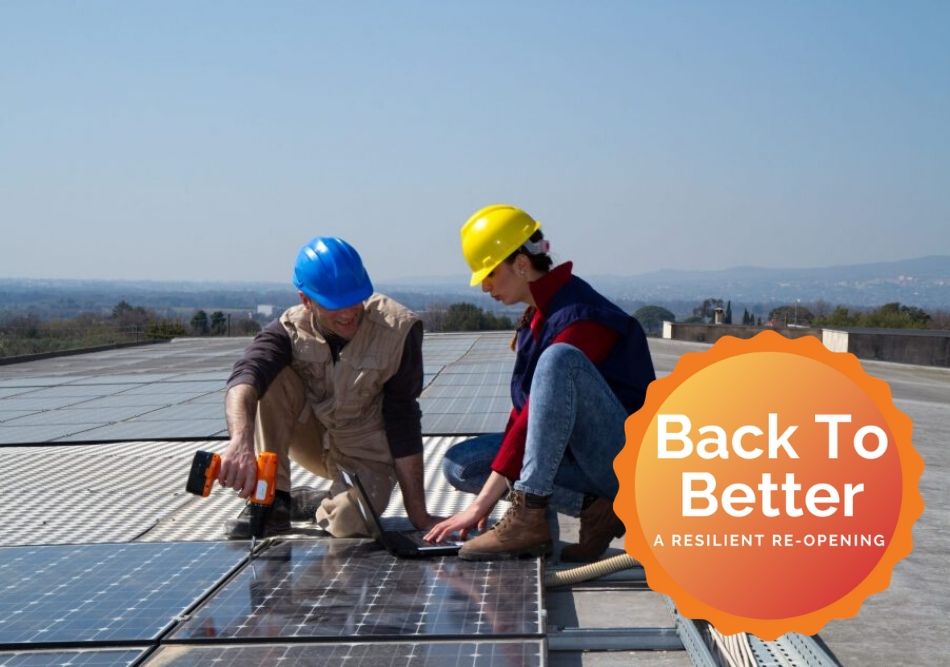
Retrofitting homes and businesses to save energy, something that needs to happen nationwide, could add millions of jobs. A $1 million investment in energy efficiency creates around eight full-time jobs, nearly three times as many as an investment in fossil fuels. The work can also save small businesses 10-30 percent in utility costs—something that could help those businesses survive.
On top of that, modernizing the electric grid could create 150,000 to 200,000 jobs each year, while also making the system more resilient and reducing energy costs. Investing $12-16 billion in the grid annually could lead to $30-40 billion in economic activity each year. Similarly, investing in renewing the country’s aging transportation infrastructure could create thousands of local construction and manufacturing jobs.
Each $1 billion invested in public transportation can create 50,000 jobs. Investing in mass tree restoration—a helpful tool in fighting climate change—could create more than 150,000 jobs each year.
While WRI didn’t focus on other types of green jobs, the list is long. Offshore wind projects, for example, could also create hundreds of thousands of jobs; some large projects, including a $2.8 billion wind farm off the coast of Massachusetts, are ready to begin construction once they pass some final regulatory hurdles. The big takeaway is that there is road to recovery once the pandemic is over, and it could simultaneously give the country the eco-overhaul it needs.