BY THE OPTIMIST DAILY EDITORIAL TEAM
Somewhere near you, a coyote may be nursing a litter of pups right now. She chose her den carefully: tucked under a fallen tree trunk, wedged inside an old burrow, or backed into a pile of abandoned concrete. One priority guided the choice: keeping you from finding it.
New research published in Ecology and Evolution tracked 48 urban coyotes with GPS collars across Atlanta and found 20 active dens. Most people in those neighborhoods had no idea. “Most people don’t even know coyotes live in our cities,” said study co-author and ecologist Michel Kohl. “This paper demonstrates that these animals are living and reproducing in the same spaces as us without people even realizing it.”
How coyotes choose where to raise their young
More than half the dens were in natural structures: existing burrows and fallen tree trunks. Others used whatever was available: discarded concrete, an overturned boat, a large half-buried tractor tire. That’s not affinity for human materials. It’s coyotes working with what’s there.
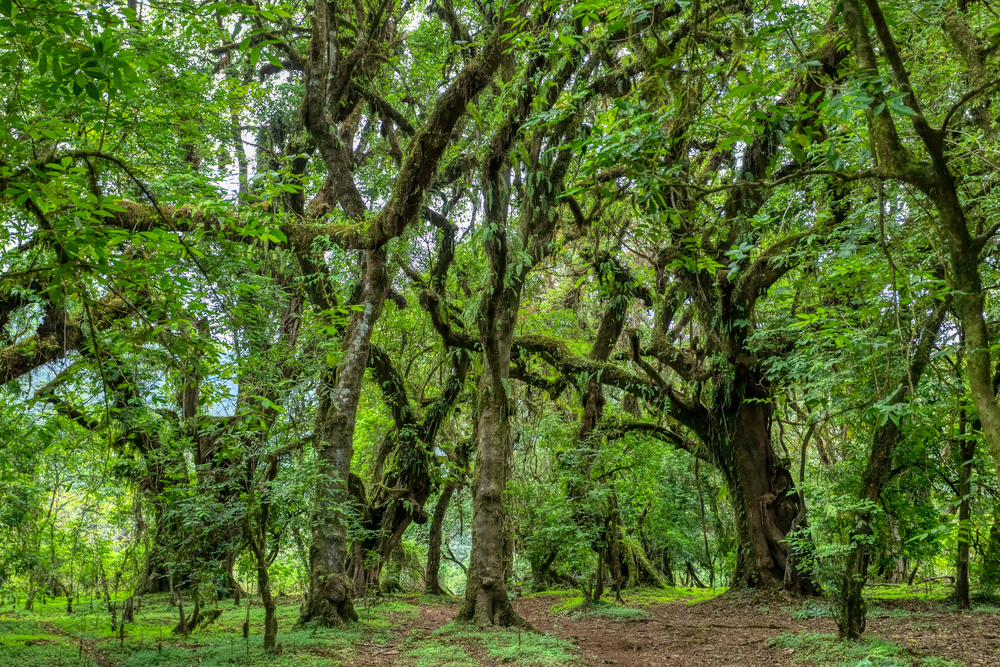
“As long as it was strong and it had visual cover around it to hide the coyotes from people seeing them, they were happy,” Kohl said.
Lead author Summer Fink, a doctoral candidate at the University of Georgia, put it plainly: “Basically, we saw that the coyotes were trying to avoid people. The animals didn’t want to den in areas where there was a lot of human activity and development.”
“It seemed like coyotes were perceiving that risk, realizing there weren’t people there and deciding to den in those locations,” Fink said.
What spring looks like inside a coyote pack
Coyotes live in packs of two to seven and are present in every U.S. state except Hawaii. In Georgia, pupping season runs from mid-March through mid-April; elsewhere it can extend through mid-May, with litters ranging from two to nine pups.
Only the breeding pair reproduces; the other pack members hunt, babysit, and defend territory, according to the Wolf Conservation Center in South Salem, New York. Coyotes are opportunistic eaters: small mammals like mice and squirrels, berries, whatever’s available.
Most pups won’t survive to adulthood. Vehicle collisions and food scarcity take a heavy toll.
Why cities need coyotes more than most people realize
Coyotes have a reputation as disease carriers and pet predators. What that reputation tends to drown out is what they actually do ecologically. In urban environments they’re often the top predator, keeping rodent populations in check. They disperse seeds, scavenge roadkill, and clean up carrion. “Without an apex predator, ecosystems can get all out of whack,” Fink said.
Kohl is skeptical of the fear that surrounds them: “This highlights how well coyotes are able to avoid us, which suggests that people’s fear of coyotes is often greater than the actual risk.”
“They’re an incredibly adaptive species, and they’re very intelligent. But there is likely a limit. As urbanization increases and denning locations become more limited, it is going to put further pressure on the ability of these coyote populations to sustain themselves in these urban landscapes,” Kohl said.
How to coexist with coyotes this spring
Coyotes will nearly always choose to avoid people rather than confront them. Keep dogs leashed on walks. Don’t probe holes or sheltered spots that might be dens. If a coyote seems unusually bold near a trail or park, it may be running a distraction rather than acting aggressively. “If you are close to a den, the parents may make themselves more visible, more noticeable,” Kohl said. “But that doesn’t necessarily mean that there’s something wrong with that coyote. It actually may be a behavioral ploy, so to speak, to try and get you to go somewhere else.”
Don’t feed them, and don’t run. If one appears sick or injured, call your local animal control.
The parks you walk through, the vacant lots, the weedy edges you pass without looking: some of those spots have coyote pups in them right now. The coyotes know you’re there. They’re counting on you not to notice.
Source study: Ecology and Evolution– Coyotes choose cover over concrete when selecting den sites
Did this solution stand out? Share it with a friend or support our mission by becoming an Emissary.