More and more research continues to show that the best way to stop the new coronavirus from spreading is by wearing a mask. Despite this, the mask remains a controversial symbol that many Americans are refusing to wear. If you need to convince anyone just how vital the mask is, consider showing them this highly visual experiment from Rich Davis, microbiology director for the Sacred Heart Laboratory.
This week, Davis published a visual demonstration on Twitter that vividly shows how masks and social distancing help contain the spreading of “big, fat, wet respiratory droplets,” and potentially of SARS-CoV-2 (the virus causing COVID-19), which is known to spread via those globules.
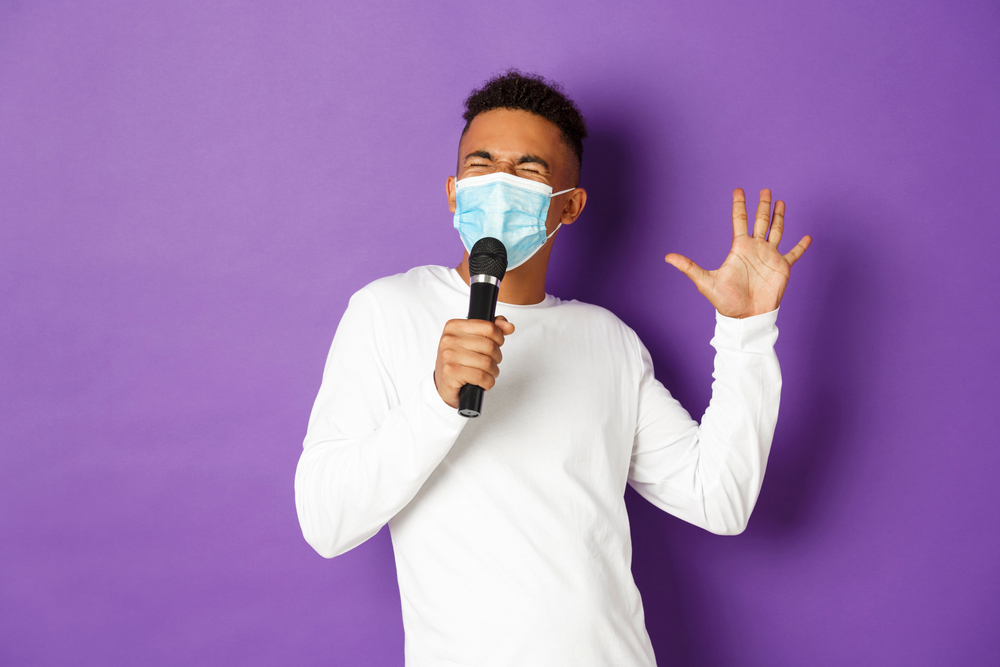
Davis performed four everyday actions, all of which are “opportunities for large droplets of spit and stuff from your respiratory tract to get out into the environment.” He coughed, sneezed, talked, and sang at identical culture plates, firing bacteria from his mouth onto the agar jelly, to create a visual representation of the number of bacteria droplets that can reach another human being when the spit producer is masked or unmasked. These are harmless bacteria that he says “live happily, secretly in your mouth, your nose, your throat.”
The coronavirus is, of course, caused by a virus, not bacteria. But the same concept applies to the coronavirus, which we know is spread primarily through inhaling or touching those beads of saliva.
The results were as expected, and in line with CDC guidelines: The masked test didn’t produce any visible droplets on the agar in any of the instances, while the unmasked tests produced voluminous quantities of droplets. Most, by far, came from sneezing, followed by coughing, then talking and singing, which generated about the same amount of spittle. And so you know: the song Davis was singing was a Hamilton show tune.
In a separate social distancing test, he coughed for 15 seconds at two, four, and six feet from the dishes. At each stage, fewer and fewer droplets landed on the jelly; at six feet, the recommended range for social distancing, there was just one visible droplet from an unmasked hack.
Davis is fully aware of the limitations of his experiment—in fact, he doesn’t call it an experiment, rather a demonstration, because he’s the only data point, and he knew the outcome going in. After all, it’s easy to know the outcome when the overwhelming majority of research backs up the case for masks.