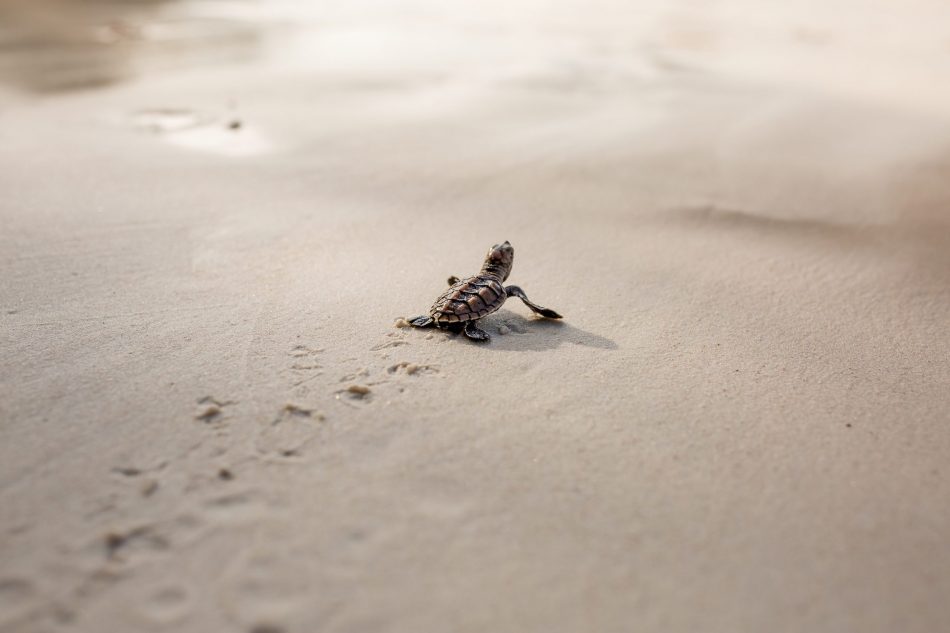
With sea turtle populations having seen a decline in recent years, conservation groups are stepping up their game to bring sea turtle numbers back up. This past week, conservation groups carried crates each full of dozens of tiny turtles to Gianyar beach on the Indonesian island of Bali, and encouraged local people and volunteers to line up on the sand and release the hatchlings together.
In total, more than 10,000 baby turtles were released, making for quite the sight as the tiny turtles scurried over the black sand and pebbles.
Flavianus Erwin Putranto, a conservation volunteer, said turtle eggs were appearing in fewer places on Bali than before, but programs to help protect them were seeing success. “We are able to collect and save them. Hopefully, we can hatch more turtles and release them back into the ocean,” he said.
Last Wednesday, Bali authorities released 25 of the larger green turtles into the sea after they were rescued during a raid on illegal traffickers. Combined, these efforts are helping to preserve sea turtle populations around Indonesia.