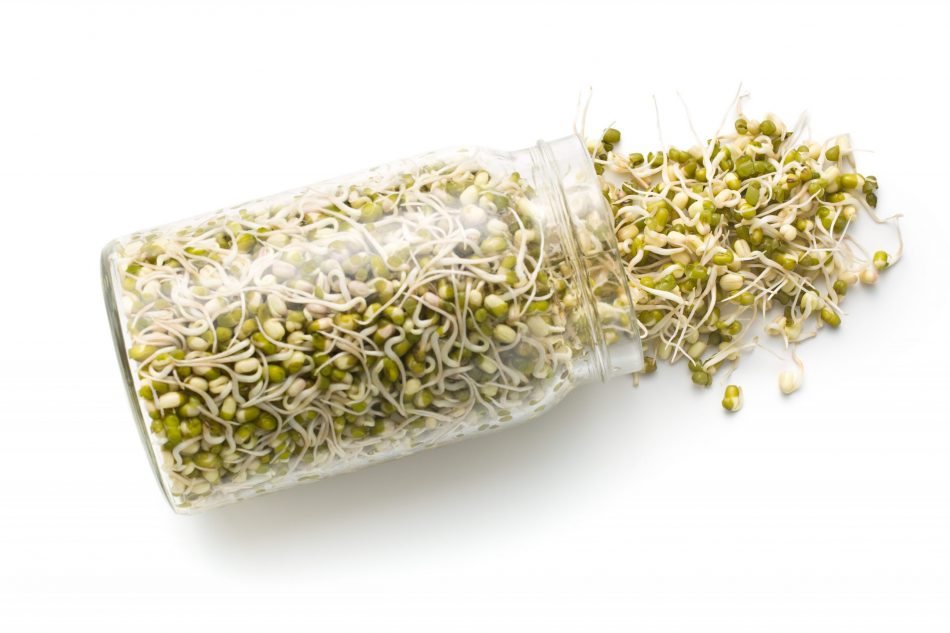
Cooked, dried seeds like lentils can be tasty, but consuming them leaves us with only a fraction of their potential nutrients. This is because before seeds reach the sprouting phase, a growth inhibitor called phytic acid keeps vitamins, fiber, and other healthy nutrients locked within their shells, preventing us from benefiting from them.
Luckily, dissolving the phytic acid and letting seeds or legumes sprout is an easy way to unlock and maximize their health benefits. With a bit of planning, you can cultivate sprouts at home, no garden necessary!
Start with two cups of any seed or dried legume. Soak them in water for eight to 12 hours overnight, then drain them the next day, but be sure to leave a little trickle of water behind. Move the drained seeds to a large, cylindrical container, covering the opening with cheesecloth and securing it with a rubber band.
Use a rimmed baking sheet to prop up the bottom part of the container and lay it on its side so that it slopes downward, allowing the contents to fall naturally into a shallow, even layer. Let the seeds sit for at least another 12 hours. Fill the container with water again to rehydrate the seeds, drain it immediately and then place the container in the same position on the baking sheet.
In another 12 hours, your seeds should have sprouted tiny tails. This means that they are ready for consumption, but you can also transfer them to another container, still covered by cheesecloth, and save them in the fridge for about five days.