The romantic Italian city of Venice is slowly but surely sinking into the sea. While rising sea levels are partly to blame for this, there is a less commonly-known contributor to this issue called “moto ondoso,” also known as wake pollution.
Wake pollution is caused by speeding motorboats whose wake is full of acidic pollution that has already damaged 60 percent of the city’s buildings. Most of the damaging boats are tourist boats and water taxis that zip through the city’s narrow canals and create a wake that slaps up against the walls of the canal. This accelerates the erosion of the buildings.
On top of that, most motorboat engines aren’t equipped with the catalytic converters that cars have, meaning that acidic nitrogen oxides and particulate matter are pumped into the air, further destroying local structures.
Over the past year, residents have noticed that because of the lack of waterway traffic due to the Covid-19 pandemic, the waters have been unusually clear. This inspired action from officials and locals alike to maintain the cleaner state of the water, and for a company called Candela to develop a new water vehicle that will eliminate the damaging wake that conventional motorboats cause.
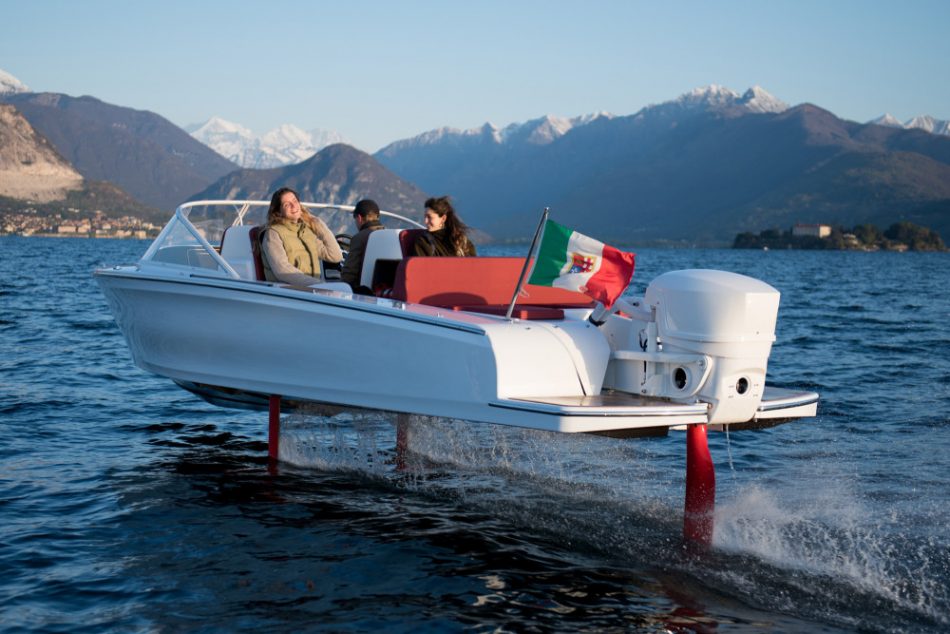
Candela’s product, dubbed C-7 boats, use hydrofoils and computer-controlled underwater wings to lift the hull above the water, therefore reducing its wake to a humble 5-cm-high bump that is comparable to the wake of the traditional Venetian rowing boats.
If widely adopted, this design could significantly reduce the damage from speedy boats and acidic pollution. Candela just demonstrated its flying electric boats over the weekend during the Salone di Nautica in Venice. The hydrofoils and wings optimize energy usage, enable silent travel and decrease the force of friction on the water by 80 percent in comparison to taxi boats.
Not only will the C-7 be a greener option that can save the medieval architecture of Venice, but it is also efficient. It can maintain a high cruise speed of 20 knots for over 2 hours, which is much longer than electric boats. Furthermore, because hydrofoil boats are lifted above the water, they can avoid choppiness making the journey much more comfortable for those on board.
Source Image: Candela