


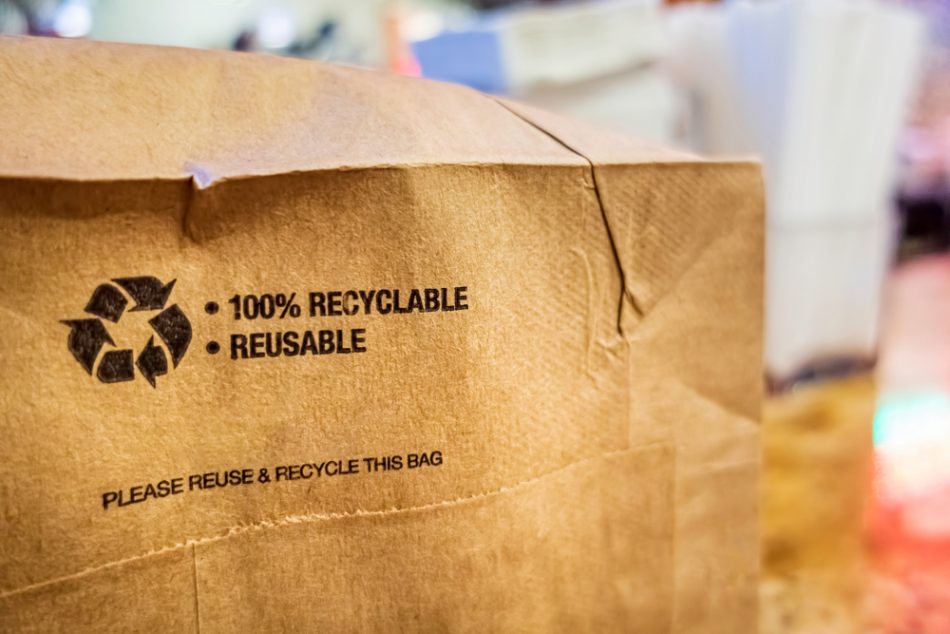
If you look around at just about everything made of plastic in your home, as well as most paper products and anything that contains just about anything, the odds are you’ll see that ubiquitous three arrow triangle on the item’s label or embossed somewhere. Now, many of us think this is just a friendly reminder to recycle, but California lawmakers want to make it about much more than a suggestion.
Currently, there are no hard and fast rules about how and when manufacturers can use the logo. In fact, it is largely unmonitored and has in many ways become meaningless, because unfortunately most products bearing it are simply never recycled. A measure in California, called Senate Bill 343 intends to make manufacturers earn the right to use this “recyclable” logo by requiring that they ensure their products are made of materials that are recycled at a rate of 75 percent or higher. Products would also have to meet other criteria, including not containing toxic compounds like PFAS.
State Sen. Ben Allen, the bill’s lead sponsor, was inspired to put forth the proposal when he realized that one of his daily morning habits was contributing to the problem known as “wishcycling.”
His morning paper arrived in a plastic sleeve marked with the three arrows. Doing his duty as a good steward of our earth, he would toss the bag in the recycling bin, later learning that these bags really aren’t recyclable, practically speaking. While these bags are theoretically recyclable in perfect systems, the processing plants that handle American recycling operate in far less than optimal lab conditions.
While this is not yet law and must pass in the California Senate and then receive approval at the gubernatorial level, it has a lot of support. Currently, less than ten percent of all plastics are recycled in the US annually, despite assumptions from consumers that when they toss items with the logo in the blue bin, they will be recycled.
“Americans find recycling… more confusing than building IKEA furniture, doing their taxes, playing the stock market or understanding their spouse,” said Allen, referencing a study by the Consumer Brands Association.
Both the misconception of recycling practices and the recycling industry need to change to meet modern demand. Consumers should have the opportunity to make educated choices in their purchases, not just feel good about a logo and a blue bin.






