


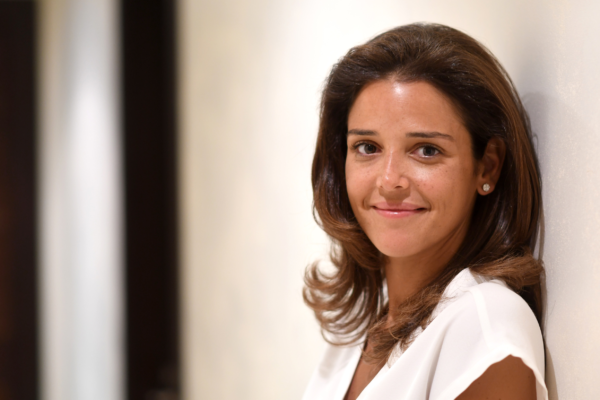
Dr. Nadine Hachach-Haram attributes her concern for medical inequity to her exposure to war-torn Lebanon as a child. There she saw how people suffered because they lived in inaccessible places, didn’t have the opportunity to connect with highly specialized medical professionals, or couldn’t afford to pay for the use of equipment or machinery.
As she pursued a career in medicine, the thought that billions of people across the globe lacked access to safe surgery loomed over her. “Five billion people lack access to safe surgery. That’s two-thirds of the world’s population,” Hachach-Haram says. “And of that five billion, about 18.6 million people die every year from that lack of access. That’s more than HIV, malaria, and TB combined” she adds.
In response to this gargantuan issue of inequities in surgical care, Hachach-Haram created technology that allows surgeons to join any operating theater around the world, “simply by using a phone, tablet, or computer.”
When coming up with this solution, it was crucial to Hachach-Haram that whatever she and her team designs or creates “really democratizes surgery as well, that it is not specific to a location or a piece of hardware that [one] can afford or any type of bandwidth that [one has].”
The tech, called Proximie, is software that could be used in most environments, even in very humble, rural locations. It allows the surgeon to have a full view of the operating room as well as control over the cameras giving them the freedom to zoom in and zoom out on all areas. Surgeons can also have a fully immersive discussion with the entire clinical team while directing them using the annotation tools that vary “from simple pen telestration to a 3D hand to even the augmented reality hand.”
Back in 2019, Hachach-Haram thought that the technology she developed would take years to be fully integrated into medical practices, but with the emergence of Covid-19, the adoption of this technology happened almost immediately. As healthcare workers began falling ill or started self-isolating, Hachach-Haram’s technology became, in some circumstances, the only solution available to clinicians that needed to continue delivering care.
This technology will only continue to make access to safe surgery more equitable and will allow medical practitioners to collaborate, not only locally, but worldwide.






