


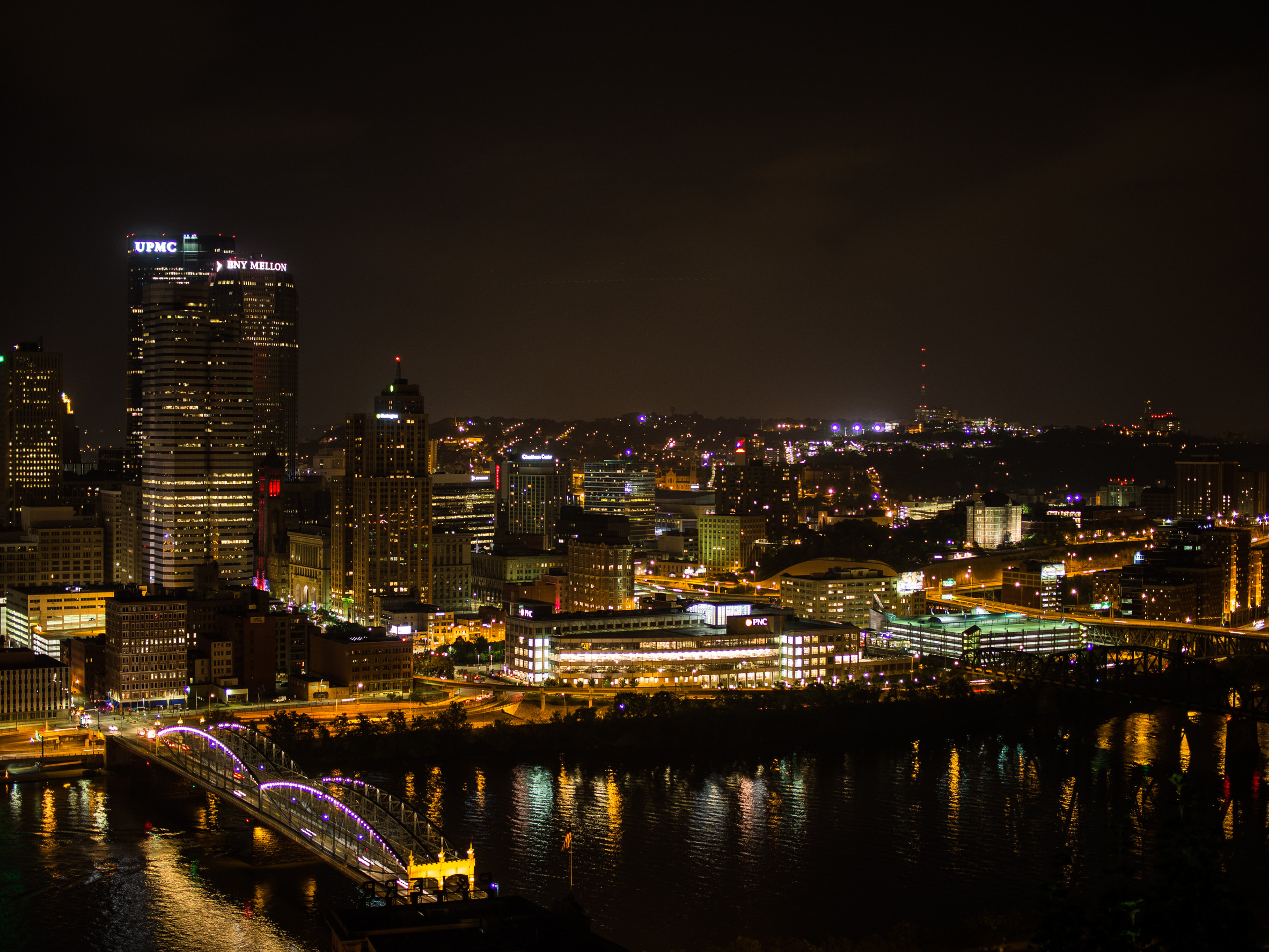
Anyone who lives in a big city knows that stars are a rare sight due to light pollution, but that may soon change in one American metropolis. Pittsburgh, Pennsylvania has announced that it will become a dark sky city in 2022, joining others like Tucson and Sedona in Arizona, and Fulda in Germany in limiting the negative effects of nighttime lighting.
As a dark sky city, Pittsburgh will follow the International Dark Sky Association’s new values-centered outdoor lighting guidelines and switch to lower wattage LED bulbs in streetlights, bridges, and other public spaces. These new bulbs will emit less blue light, reducing the lighting’s negative impact on birds, insects, and other wildlife species. Traditional nighttime lighting has been shown to be disorienting for these animals, disrupting feeding and mating patterns.
The city has allocated $16 million for the light bulb switch, and estimates that switching the 40,000 bulbs will save the city roughly $1 million in energy costs. The dark sky initiative builds upon other Pennsylvania initiatives, like Lights Out Philly and Lights Out Pittsburgh, which turn off unnecessary external and internal lights during bird migration seasons.
Some residents have voiced concern about the safety implications of less nighttime lighting, but a 2015 study found that reductions in street lighting have no impact on crime or road accident rates. Since Pittsburgh made the announcement, both Washington D.C. and the state of Massachusetts have reached out to learn about adopting similar policies.






