


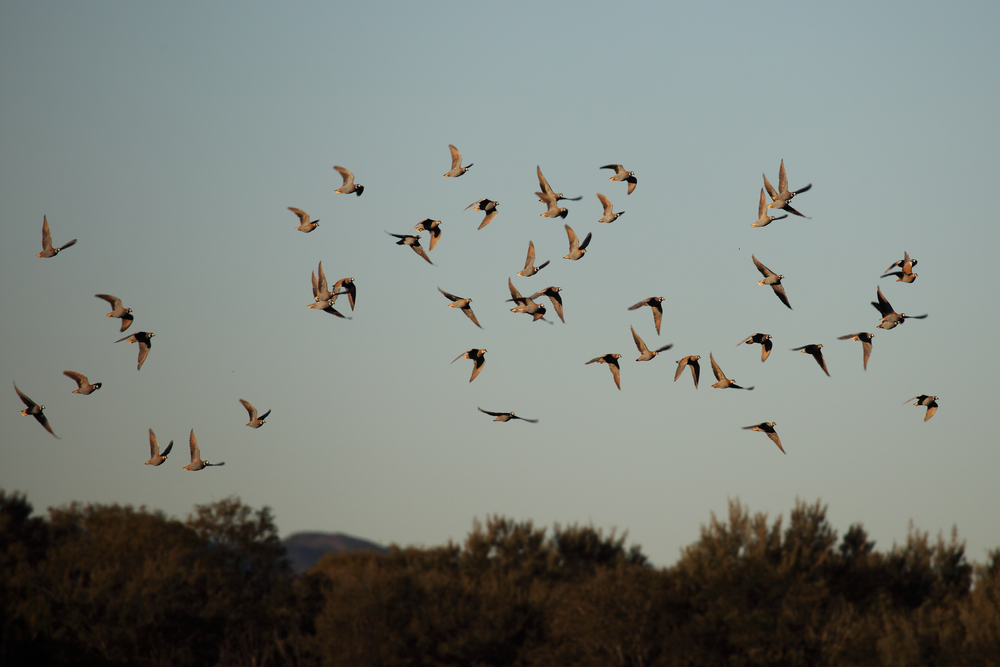
Recently, we wrote a story about how abundant rain in California has brought an endangered salmon species back to some of the state’s streams. Now, an equally welcoming sight has been spotted in the Australian outback, where an ecologist has photographed a flock of hundreds of endangered bronzewing pigeons after two seasons of widespread rainfall.
Ecologist David Smith caught sight of the bronzewing pigeons taking flight last week in the Narriearra Caryapundy Swamp National Park, located in the northwest of New South Wales.
While it was common to see the birds fly in flocks of more than 100,000 about a century ago, their numbers dwindled significantly in recent years as a result of habitat loss. The birds are also rarely seen because they frequent arid areas, like the national park near the borders of NSW, reports Australian Geographic.
“They’re arid zone nomads,” says Smith. “There’s something cool about birds that move around the arid zone looking for where food and water is, and where the conditions are right. That they’re hard to find makes it really exciting. You never know whether they’re going to be around or not.”






