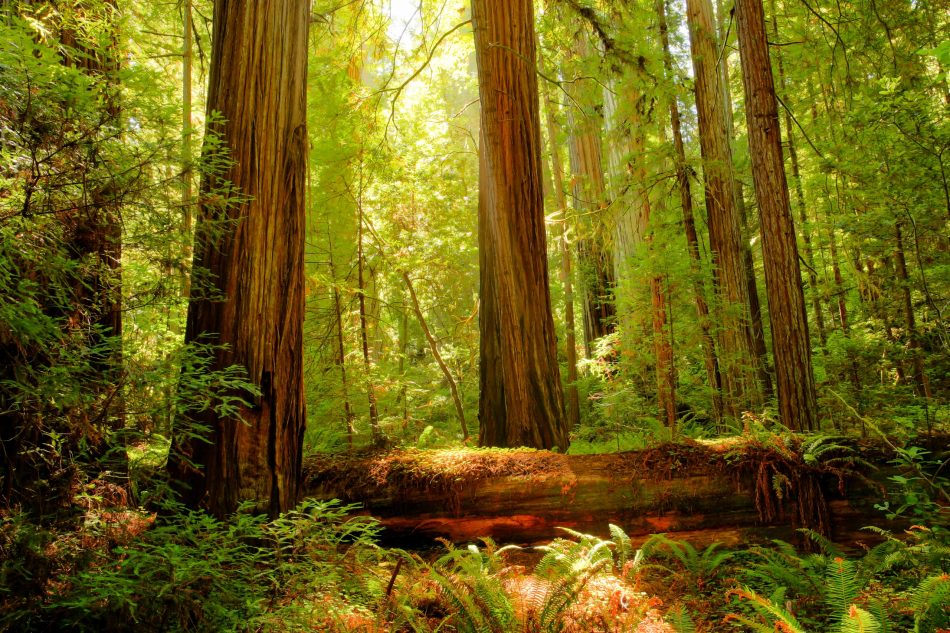
We’re doing a lot to adapt to climate change, from creating tree cities and sponge cities to speeding up the schedule for renewable energy. As it turns out, though, humans aren’t the only ones getting ready and adapting to a changing climate.
California’s iconic redwoods have started growing special new leaves to deal with drought.
Making their own tools
Tree leaves absorbing water is nothing new, but according to a new study in the American Journal of Botany, redwood leaves adjust their capacity for water depending on their environment.
Redwoods have two kinds of leaf shoots, axial and peripheral. Peripheral shoots are what most of us would identify as leaves, and they’re longer and perform photosynthesis. The axial shoots, though, are smaller and bunched closer to the twigs, and they absorb four times more water than the peripheral shoots.
The research found that trees in drier locations are growing axial leaves higher on the trunk, making them better able to absorb moisture from rain or fog. In wetter climates like Oregon, where drought isn’t as severe as in California, redwoods are growing their axial leaves lower on their trunks.
We’re seeing trees reaching for moisture higher up where they can get it, adapting in real-time to drought and a changing climate.