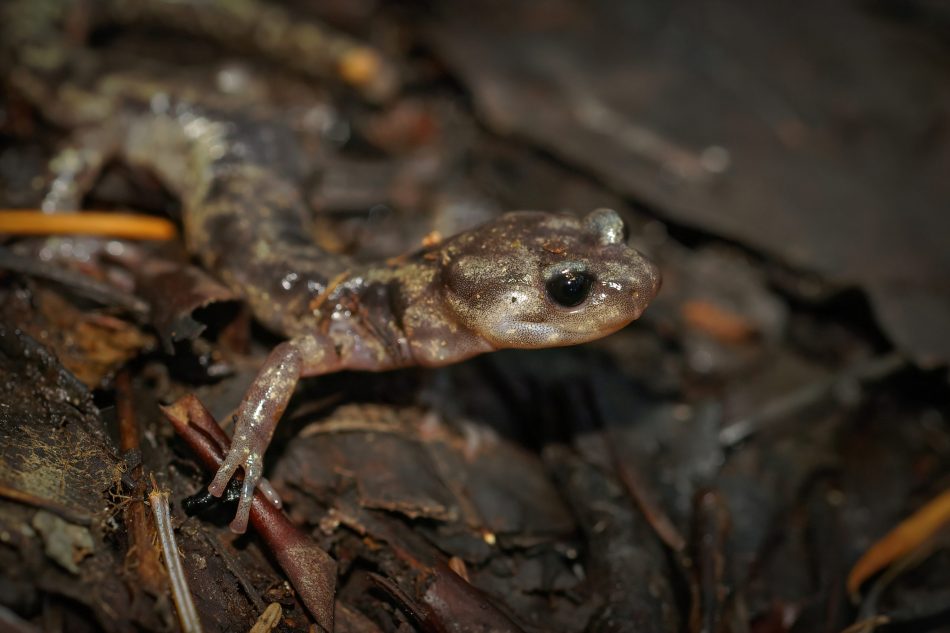
A recent study published in Current Biology sheds light on a peculiar adaptation of California’s wandering salamanders, Aneides vagrans. These amphibians are commonly associated with streams, rocks, and decaying logs. The wandering salamander, however, is commonly found in trees and even jumping from the canopies.
This isn’t an accident. The wandering salamander actually controls its speed and movements as it falls, making this more akin to skydiving. Christian Brown, a doctoral student in biology at the University of South Florida, has been researching these salamanders and their peculiar jumping habits.
Skydiving amphibians
“This is a five-gram salamander that climbs the world’s highest trees and isn’t afraid to take a leap of faith,” said Brown.
In 2020, Brown and his colleagues published a paper on how these salamanders can jump. They do it with two legs instead of four, which Brown now theorizes affords them more control over their drop. “It’s better to be in control after the jump than to jump really powerfully,” he says.
Brown decided to test the wandering salamanders’ abilities in a wind tunnel like you’d use for indoor skydiving but smaller. Just like human skydivers, these five-inch salamanders adjusted their bodies and limbs to slow their descent by 10 percent. The wandering salamander even used its tail to guide its direction. Brown put three other salamander species in the drop simulation and found the wandering salamander controlled its fall the best.
Why crawl when you can fly?
So, what’s behind this usually grounded creature’s skydiving skills? Researchers think this is a quick way to escape predators. Another theory is that it is actually safer for these salamanders to jump and fly rather than crawl back down a tree. Researchers estimate that these salamanders jump from between 40 and 80 feet, a distance that would put them at more risk of predators if they were crawling down a tree trunk.
Their jumps can be more specific too, as they also use their parachuting, guiding, and gliding to move from one tree branch to another. “The level of control is kind of exceptional, so that’s exciting,” Brown said. “This is an animal that can leap around with dexterity to navigate its habitat … and they just might surprise you.”
Brown and his team are now observing the details of salamander flight from trees in their natural environment. They are using ladders to test drop the amphibians from varying heights, from a few meters to up to 200 meters.
Source Study: Current Biology — Gliding and parachuting by arboreal salamanders: Current Biology (cell.com)