


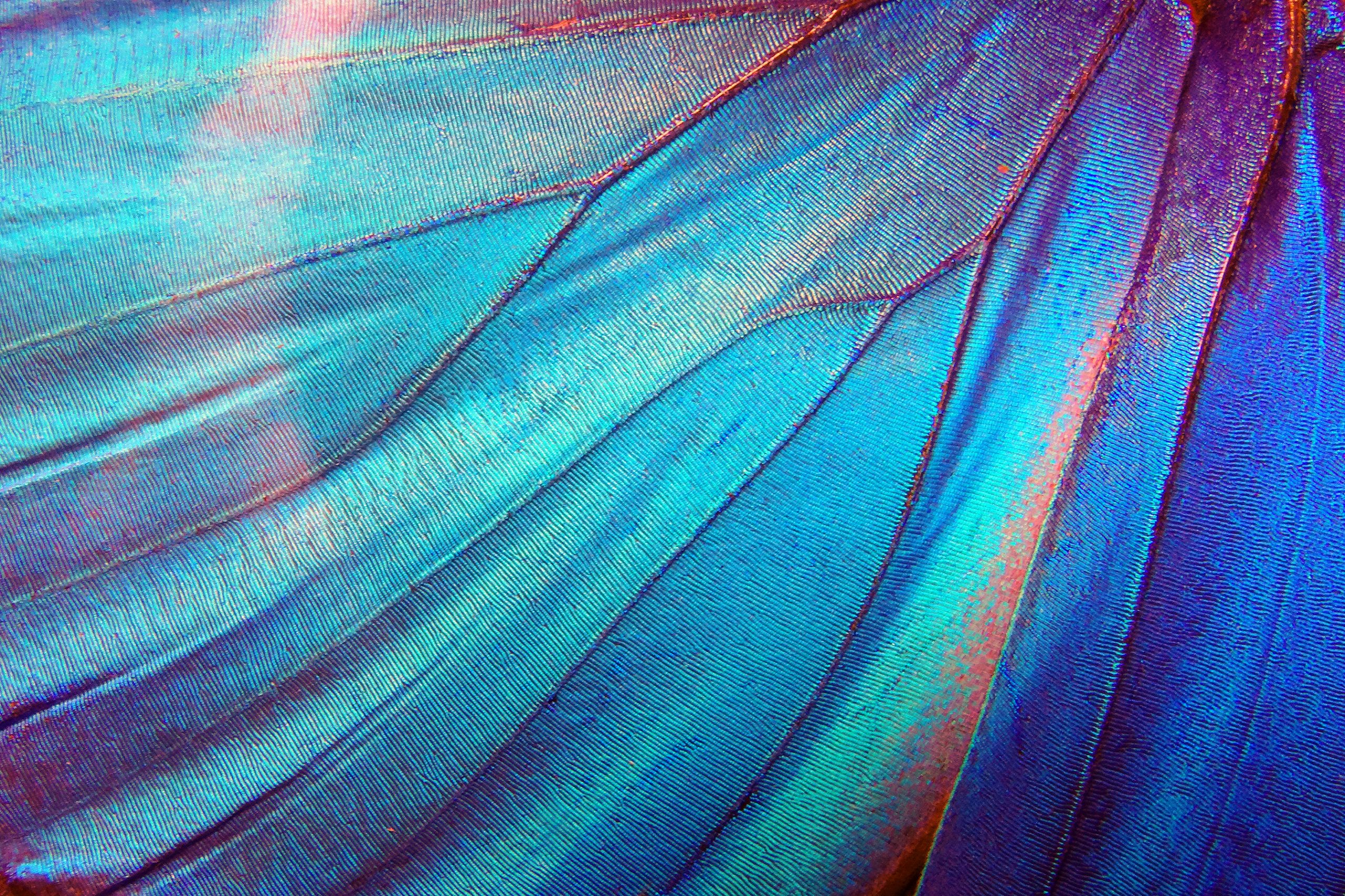
In a society plagued by increasing temperatures and concerns about the environment, biomimicry offers a game-changing solution to keeping cool. Scientists from Shenzhen University and Shanghai Jiao Tong University were inspired by the beautiful patterns found on butterfly wings and peacock feathers to develop a new material that not only has bright colors but also reflects an incredible 100 percent of incident light.
This novel nanoscale structure can potentially alter industries ranging from architecture to transportation by battling surplus heat in an elegant and efficient manner.
Using colorful nanolayers to conquer heat
Darker hues have traditionally been understood to absorb more light, and that light is converted to heat energy which boosts temperatures. However, the inventive filmy material in this study takes a different approach.
The material is made up of painstakingly manufactured nanolayers with alternating coatings of titanium dioxide and aluminum dioxide atop a patterned frosted glass layer. The underlying layer of pure silver acts as a perfect reflector, guaranteeing that no light is absorbed. This breakthrough tech allows for the use of vibrant colors without sacrificing cooling efficiency.
“Thanks to the layered structure we developed, we were able to extend the passive cooling method from colorless objects to colorful ones while preserving color performance,” says lead researcher Guo Ping Wang. “In other words, our blue film looks blue across a large range of viewing angles and doesn’t heat up because it reflects all the light. In addition, high saturation and brightness can be achieved by optimizing the structure.”
A step towards comfort, beauty, and sustainability
This technology’s potential applications are extensive and transformational. The researchers anticipate broad consequences with a focus on energy sustainability and carbon neutrality. Cooling films have the ability to lessen the impact of air conditioning in buildings, save energy in electric vehicles, and moderate the effects of heat on diverse items.
“In buildings, large amounts of energy are used for cooling and ventilation, and running the air conditioner in electric cars can reduce the driving range by more than half,” Guo Ping Wang says. “Our cooling films may contribute to energy sustainability and carbon neutrality.”
The bright nanolayer films have performed admirably in real-world testing. These films routinely outperformed their counterparts whether applied to building roofs, autos, fabrics, or even cell phones. The materials exhibited their prowess by keeping temperatures much lower than those of untreated surfaces during both winter and summer days – over 15°C (27°F) cooler in winter and an impressive 35°C (63°F) cooler in summer.
The research team’s vision remains laser-focused as the path toward a cooler and greener future continues. Future initiatives include looking at replacing the silver layer with aluminum, which would improve price and manufacturability. Simultaneously, the scientists intend to optimize other characteristics of the material to assure its durability and resilience, ushering in an era in which the merger of nature’s genius and human creativity provides relief from the heat.
Source study: Optica—Cooling colors below ambient temperature






