


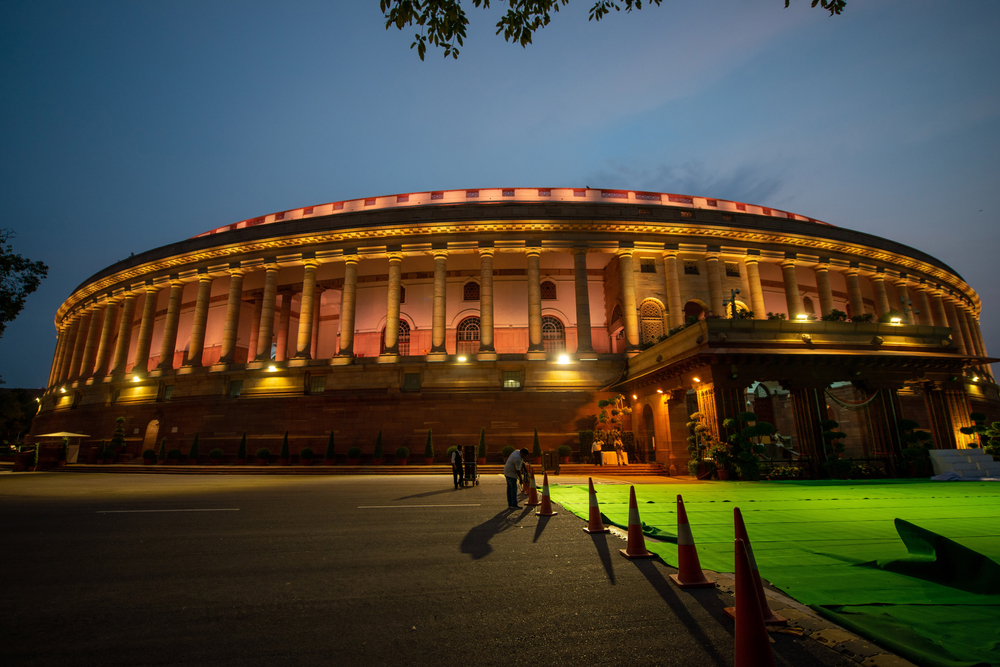
The Lok Sabha, India’s lower house of Parliament, passed a revolutionary bill that guaranteed one-third of seats in both the parliament and state assemblies to women. This historic decision comes after years of debate and criticism, and it represents a big step forward in Indian politics toward gender equality.
Decades in the making
The law, first submitted in 1996, had been dormant for decades due to opposition from numerous political parties. However, after hours of intense debate, the Lok Sabha passed the law with near-unanimous support on Wednesday, marking a watershed event in India’s political scene.
The bill’s journey isn’t over; it still needs to be approved by the Rajya Sabha, India’s upper house, before being signed into law by the president. The actual execution of this historic legislation, however, is contingent on the completion of India’s census, which is scheduled for 2025 because of delays caused by the COVID-19 pandemic. Furthermore, efforts to restructure assembly seat borders, known as delimitation, could complicate the bill’s implementation.
Prime Minister Modi’s hope
Prime Minister Narendra Modi welcomed the achievement as “historic legislation” that will dramatically increase women’s political involvement. With national elections nearing next year, this measure is expected to help the ruling Bharatiya Janata Party (BJP).
The measure received overwhelming support in the Lok Sabha, with 454 MPs from various parties voting in favor and only two opposing it. Even members of the opposition expressed concerns about implementation during the eight-hour debate. Former Congress President Sonia Gandhi supported the measure but demanded that it be implemented immediately.
“How many years will they have to wait, two, four, eight?” Ms Gandhi implored. “Delaying this would be doing gross injustice to women.”
A call for inclusion
While the measure represents a big step toward gender equality, some opposition MPs have called for a separate quota for women from Other Backward Classes (OBCs), a group that accounts for roughly 52 percent of India’s population. The bill reserves one-third of the seats in the already assigned Dalit and tribal quota for women but does not extend this sub-quota to OBC women.
Sonia Gandhi called for a caste census, pressing the government to count OBCs and guarantee that the law’s benefits reached these women. This action has sparked a controversy about the bill’s inclusion, with detractors claiming that it only favors upper-caste women.
Despite the complications and arguments surrounding the bill’s implementation, its passing in the Lok Sabha is a watershed event in India for gender equality and women’s political empowerment.






