


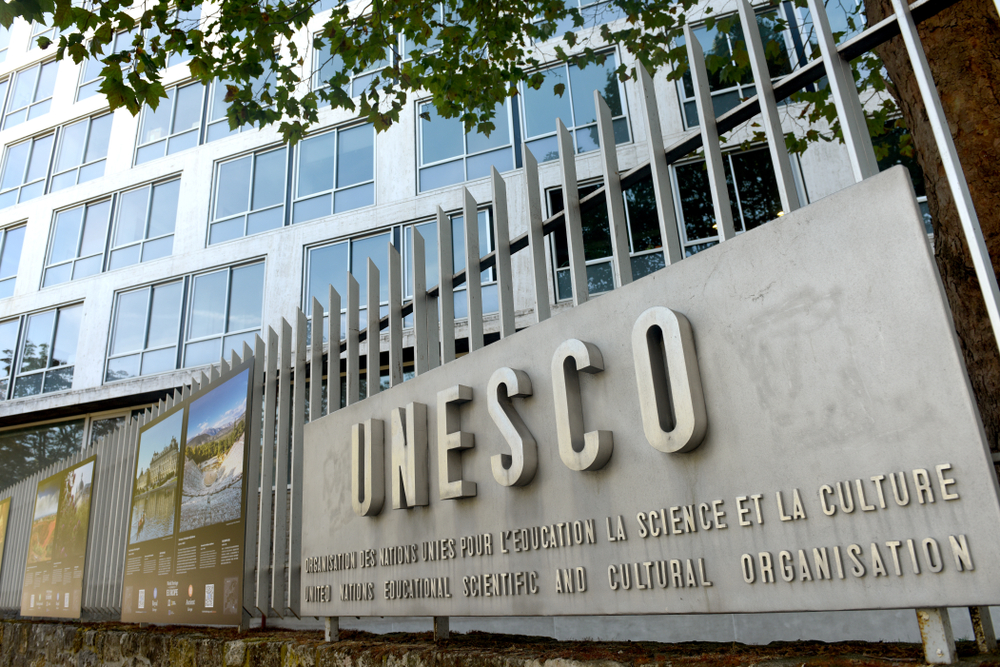
Unesco, the United Nations’ cultural authority, collaborated with Interpol to build the world’s first virtual museum dedicated to the issue of stolen cultural objects and the need to safeguard cultural heritage. The effort, which is set to launch in 2025, intends to raise public awareness about the criminal trafficking of cultural artifacts as well as the need to preserve our common heritage.
According to Unesco Director-General Audrey Azoulay, “Behind every stolen work or fragment lies a piece of history, identity, and humanity that has been wrenched from its custodians, rendered inaccessible to research, and now risks falling into oblivion.” This virtual museum is an audacious attempt to restore cultures’ freedom to access their heritage and interact with their cultural identity.
A bold partnership: Unesco and Interpol join forces
Unesco and Interpol worked together to establish this ambitious $2.5 million initiative. Over 52,000 cultural objects stolen from museums, galleries, and archaeological sites around the world are cataloged in Interpol’s comprehensive database. These organizations are united in their determination to employ technology to bridge the gap between lost cultural treasures and their rightful owners.
The visionary behind this project, Francis Kéré, the 2022 Pritzker Prize-winning architect, stressed the importance of the museum, claiming that it is about “awakening the imagination” and realizing the worth of cultural items within local communities.
The virtual museum experience
Visitors to the virtual museum will go on an immersive trip through a number of virtual environments, each of which has detailed 3D pictures of stolen goods. These digital exhibits will be accompanied by detailed narratives that explain each artifact’s particular cultural value. Local community stories and testimonies will serve as a reminder of the human connections that these objects represent.
While Unesco has not revealed the specific items that will comprise the initial collection, the virtual museum promises to shed light on stolen cultural treasures that have been lost to history, such as a third-century alabaster stone inscription from Yemen’s Awwam temple, a seventh-century BC ivory relief from Baghdad Museum, a green stone mask from Rio Azul, Guatemala, and a fifth-sixth century figurine from Rajasthan, India.
The stolen artifacts catalog
Ernesto Ottone, Unesco’s associate director-general for culture, notes that this effort will not only teach but will also attempt to retrieve stolen artifacts and support cultural property repatriation. He went on to say, “We will exhibit them virtually, in a space where we can really tell the story and the context behind them.” Ottone sees the virtual museum as a way to educate young people about the need to return stolen items to their communities.
Surprisingly, the museum’s ultimate objective differs from that of regular museums. Instead of adding to its collection, it intends to see it decline over time as stolen items are found and restored to their rightful owners, effectively undoing the damage done to cultural heritage.
A journey towards repatriation
As the project progresses, Francis Kéré’s visionary design incorporates an expandable virtual “ramp” that connects areas, countries, civilizations, and the first collection of 600 items. This digital infrastructure is designed to connect a worldwide audience to their shared cultural history.
“No one has imagined a museum like this,” says Unesco Director-General Audrey Azoulay of the museum’s one-of-a-kind nature. “The works’ presentation is enhanced by a deep dive into their universe, into the cultural and social movements from which they were born – linking the material and the immaterial.”
The 1970 Convention against the Illicit Import, Export, and Sale of Cultural Property by Unesco emphasizes the necessity of collective action in combating trafficking. Unesco and Interpol have taken a big step ahead in protecting the world’s cultural legacy, safeguarding history, and promoting a worldwide feeling of responsibility for our shared cultural assets with this groundbreaking virtual museum.






