


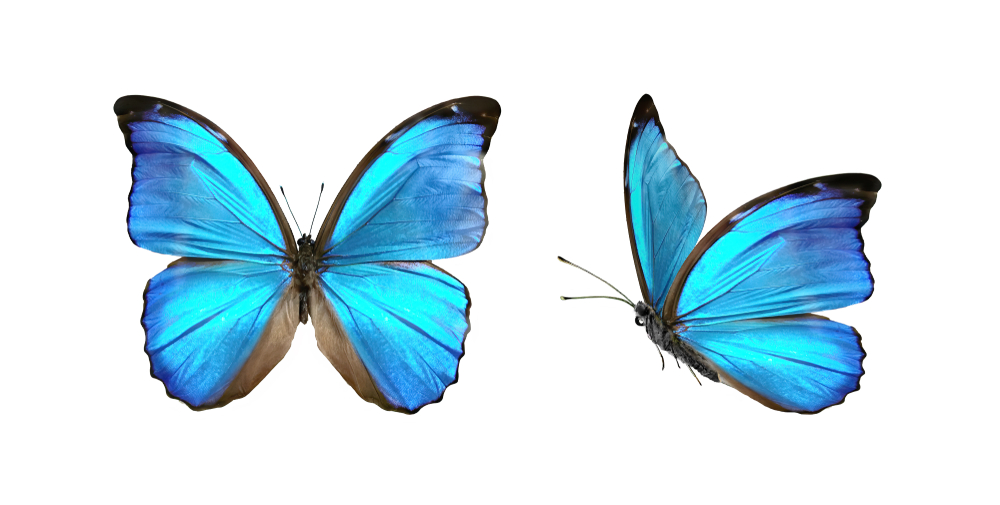
In the world of sensory perception, other creatures frequently outperform humans. A research team has created an imaging sensor that looks into the elusive ultraviolet (UV) spectrum by drawing inspiration from the Papilio xuthus butterfly’s sophisticated visual system. This groundbreaking method, spearheaded by Professors Viktor Gruev and Shuming Nie of the University of Illinois Urbana-Champaign, reveals extraordinary potential in detecting cancer cells with exceptional precision.
Imaging technology innovations driven by butterfly vision
Gruev emphasizes the breakthrough: “We’ve taken inspiration from the visual system of butterflies…and designed a camera that replicates that functionality.” This innovative sensor captures UV wavelengths using perovskite nanocrystals (PNCs) and stacked photodiodes, mimicking the ability of butterflies to detect small fluctuations in the UV spectrum.
Because humans lack UV vision, it is difficult to notice and differentiate within this spectrum. Gruev is fascinated by the butterfly’s natural ability: “It is intriguing to me how they are able to see those small variations.”
Imaging advances: uncovering cancer indicators
The sensor’s capacity to differentiate malignant tissues is based on the detection of various biological markers that glow in the presence of UV radiation. Shuming Nie goes on to explain, “Now we have come up with this technology where we can image UV light with high sensitivity and can also distinguish small wavelength differences.” The imaging equipment obtained a 99 percent confidence rate in distinguishing cancer cells from healthy cells based on their spectral characteristics by utilizing UV fluorescence.
Applications outside of healthcare
Gruev and Nie anticipate a dramatic influence that goes beyond healthcare. They hope to use this technology in surgeries to help doctors remove tumors precisely. Nie points out the broader implications: “This new imaging technology is enabling us to differentiate cancerous versus healthy cells and is opening up new and exciting applications beyond just health.”
This breakthrough is not limited to healthcare. Aside from butterflies, many other species perceive the UV spectrum, providing information about their behavior and surroundings. Furthermore, underwater research with this imaging sensor has the potential to solve mysteries inside aquatic habitats by shedding light on how marine life perceives and uses UV light.
As the world witnesses significant advances in UV imaging inspired by nature’s wonders, this technology promises to improve healthcare diagnostics and reveal the hidden mysteries of many ecosystems.
Source study: Science Advances—Bioinspired, vertically stacked, and perovskite nanocrystal-enhanced CMOS imaging sensors for resolving UV spectral signatures






