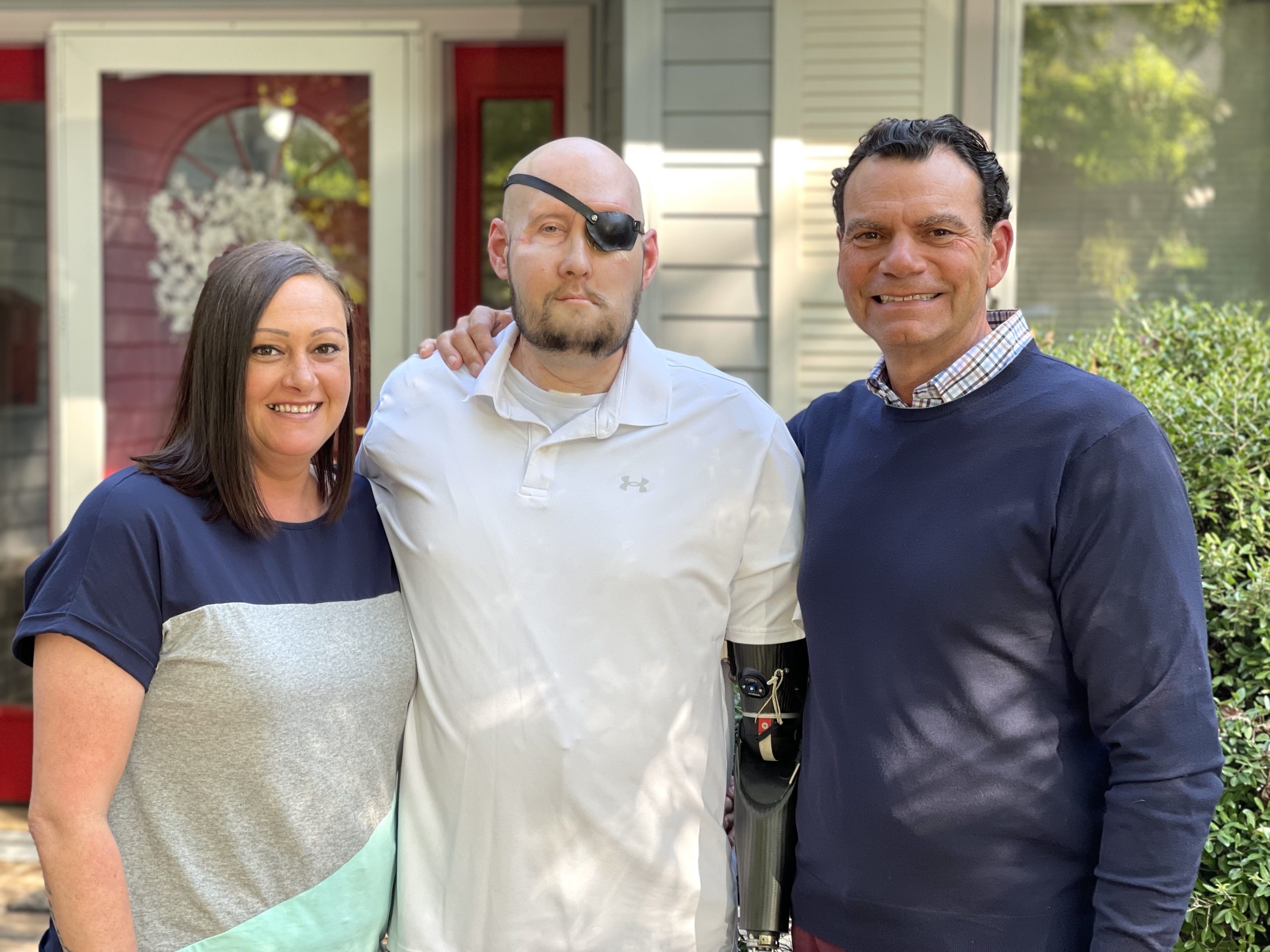
Surgeons in New York smashed the frontiers of medical possibility by executing the world’s first whole-eye transplant. Though the patient, Aaron James, has yet to regain sight, the surgical achievement is being lauded for ushering in a new era in ocular research.
A visionary procedure
The unusual surgery took place at NYU Langone Health during a partial face transplant that lasted an astounding 21 hours. The head of the surgical team, Dr. Eduardo Rodriguez, muses on the momentous event, saying, “The mere fact that we transplanted an eye is a huge step forward, something that for centuries has been thought about, but it’s never been performed.”
A peek into the future
Six months after surgery, the grafted eye shows encouraging signs of health, with functioning blood vessels and a healthy-looking retina. Dr. Rodriguez underlines the importance of this accomplishment, which marks a break from the past when only corneal transplants were possible.
Beyond cosmetic goals
Attempting to transplant the eyeball into the patient was initially intended for aesthetic reasons, but it gave an unanticipated potential for scientific advancement. Dr. Rodriguez goes on to say, “If some form of vision restoration occurred, it would be wonderful, but… the goal was for us to perform the technical operation.”
While the transplanted eye is now unable to communicate with the brain via the optic nerve, novel approaches are being taken to promote healing. Adult stem cells were infused into the optic nerve from the donor’s bone marrow, providing a potential pathway for damaged cell replacement and nerve protection.
Unveiling future possibilities
Dr. Rodriguez foresees a wealth of possibilities flowing from the transplanting of a viable eye globe, even if sight is not entirely restored in this case. Collaborative efforts with other research teams studying approaches like electrode insertion into sightless eyes could change vision restoration.
Aaron James, the recipient, recognized the experimental nature of the procedure, acknowledging that the medical team “never expected it to work at all.” Despite the uncertainty, James remains optimistic, stating, “Maybe at least you all can learn something to help the next person. Hopefully, this opens up a new path.”
As the medical community celebrates this groundbreaking success, Aaron James’ story shines as a ray of hope. While the returned sight of the transplanted eye is unknown, the successful completion of this technically hard operation lays the path for future advancements and instills great hope in the field of vision restoration.