


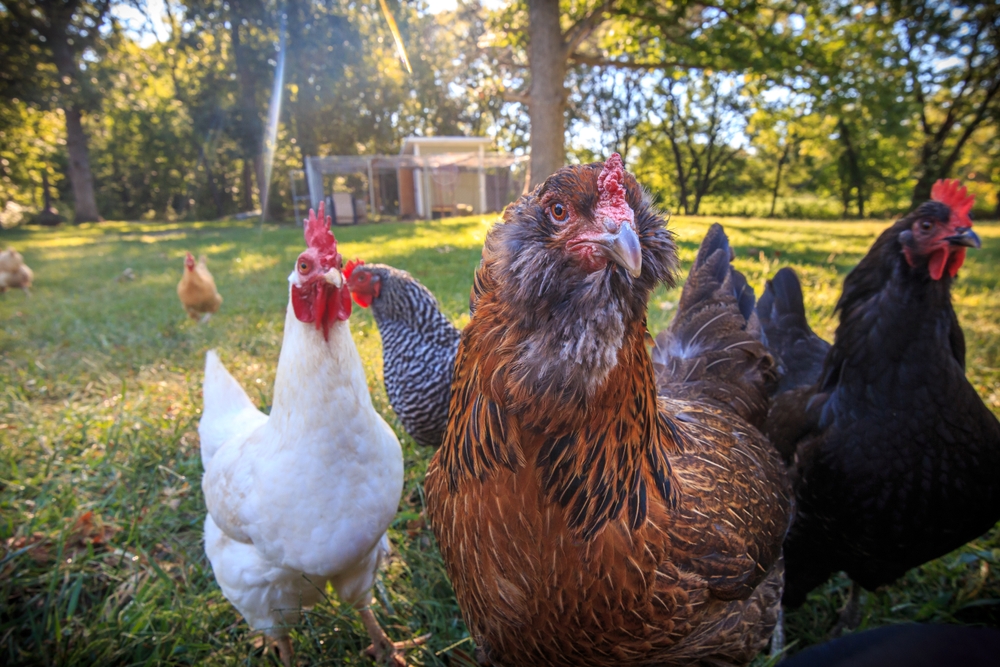
Have you ever wondered what the chickens are talking about? Chickens are excellent communicators, with their clucks, squawks, and purrs forming a complicated linguistic system. These sounds are their way of engaging with the world and communicating delight, fear, and social cues to one another, just like humans. Chickens’ “language” varies with age, environment, and, unexpectedly, domestication, revealing details about their social structures and behaviors.
Feathered linguistics: the complexity of chicken communication
Understanding these vocalizations can change our perspective on poultry husbandry, improving bird welfare and quality of life. At Dalhousie University, artificial intelligence (AI) is used to decode chicken language, which is similar to having a universal translator for chicken speaking. AI can analyze massive volumes of audio data and discern patterns and nuances in chicken vocalizations, a development that goes beyond scientific success and represents a step toward more ethical and compassionate management of farm animals.
AI’s universal translator: interpreting the language of chickens
The yet-to-be-peer-reviewed study describes how algorithms learn to discern patterns and nuances in chicken vocalizations. This AI discovery paves the way for more compassionate treatment of farm animals, giving us a previously unattainable glimpse into their world.
Beyond clucks: analyzing emotional states with natural language processing
We’re learning to comprehend chickens’ emotional states by using Natural Language Processing (NLP), a tool commonly used to decipher human languages. Are they stressed? Are they content? Understanding their mental condition enables us to make better judgments about their care and environment.
Chicken eye blinks and facial temperatures tell the story of nonverbal cues
In addition to vocalizations, the study looks at nonverbal indicators to evaluate chicken emotions, such as eye blinks and face temperatures. Non-invasive approaches such as video and thermal imaging reveal temperature changes around the eyes and head, as well as differences in blinking behavior and stress responses, which provide insights into how hens convey their emotions.
Real-world impact: enhancing farming practices and animal welfare
Understanding chicken vocalizations in agriculture can help farmers improve their techniques. Farmers can use this knowledge to improve living circumstances for hens, resulting in healthier and happier birds, which in turn affects produce quality, animal health, and overall farm efficiency.
Ethical AI: establishing standards for responsible technology use
The ethical use of AI in this context establishes a standard for future technology uses in animal science. Demonstrating that technology can and should be utilized to benefit all living beings is a major duty. AI advancements are consistent with ethical norms and the well-being of the study’s subjects.
A new era of animal-human interaction: gaining insight into avian communication
The ramifications go beyond farming techniques and provide insights into avian communication in general. Conservationists striving to safeguard bird species and their habitats will benefit greatly from this knowledge, ushering in a new era of animal-human interaction. The attempt to decipher chicken language is more than simply an academic endeavor; it is a step toward a more compassionate and responsible world.






