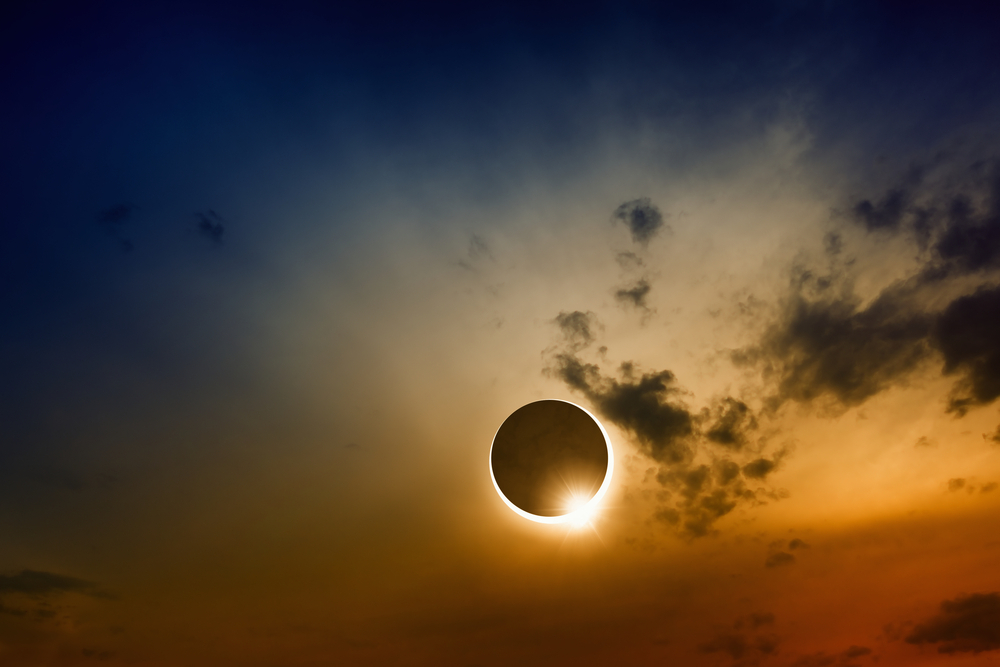
When the skies over Mexico and North America darken on April 8, all eyes will be drawn upward to behold a celestial phenomenon that only happens once in a generation: a total solar eclipse. This stunning phenomenon, in which the moon passes squarely between Earth and the sun, offers an awe-inspiring exhibition of nature’s magnificence.
Increased visibility and broader reach
While similar to the 2017 eclipse, the forthcoming event has unique aspects that make it a must-see for skywatchers and scientists alike. One key difference is in accessibility. Nicola Fox, associate administrator for NASA’s Science Mission Directorate, emphasizes in a statement that “this year’s total solar eclipse will be at least partially visible to all in the contiguous United States, making it the most accessible eclipse this nation has experienced in this generation.”
The path of totality, in which the moon’s shadow totally obscures the sun, will be broader this time, ranging from 108 to 122 miles (174 to 196 kilometers). Furthermore, the eclipse in 2024 will pass through more densely populated areas and major cities, allowing millions of people to view this celestial marvel directly.
Longer and brighter
One of the most anticipated parts of the 2024 eclipse is the extended length of totality. Because of the moon’s proximity to Earth, totality can endure more than four minutes in some areas. This extended period allows plenty of opportunity to admire the sun’s corona—the dazzling outer atmosphere visible only during a total solar eclipse.
In 2017, the longest totality was two minutes and 42 seconds, but this year, spectators in Torreón, Mexico, will see totality for four minutes and 28 seconds. Even those in Texas and Indiana can expect durations longer than four minutes, ensuring a memorable heavenly experience.
Scientific opportunity
Beyond its aesthetic appeal, the eclipse provides a unique opportunity for scientists to examine the sun in unparalleled detail. The 2024 eclipse, which occurs at a period of increased solar activity known as solar maximum, provides a unique view of the sun’s dynamic behavior.
During totality, researchers will concentrate on capturing detailed characteristics of the sun’s corona, such as loops, streamers, and dazzling curls. These measurements can potentially reveal mysteries about the sun’s magnetic field and its impact on space weather.
The great solar experiment
NASA’s engagement with the 2024 eclipse goes beyond observation to active study. High-altitude research planes outfitted with specialized instruments will soar above the eclipse’s path, studying the sun’s corona at various wavelengths of light. These investigations seek to understand the complexity of the sun’s outer atmosphere, paving the path for advances in solar science.
As excitement grows for the approaching eclipse, both amateurs and scientists eagerly anticipate the chance to view this celestial display and explore the mysteries of our nearest star.
Finally, the 2024 solar eclipse promises to attract people with its grandeur while also providing scientists with a one-of-a-kind opportunity to investigate the workings of our sun. With increased visibility, extended totality, and cutting-edge research activities, this event will surely create an unforgettable impression on the scientific community and everyday people alike.