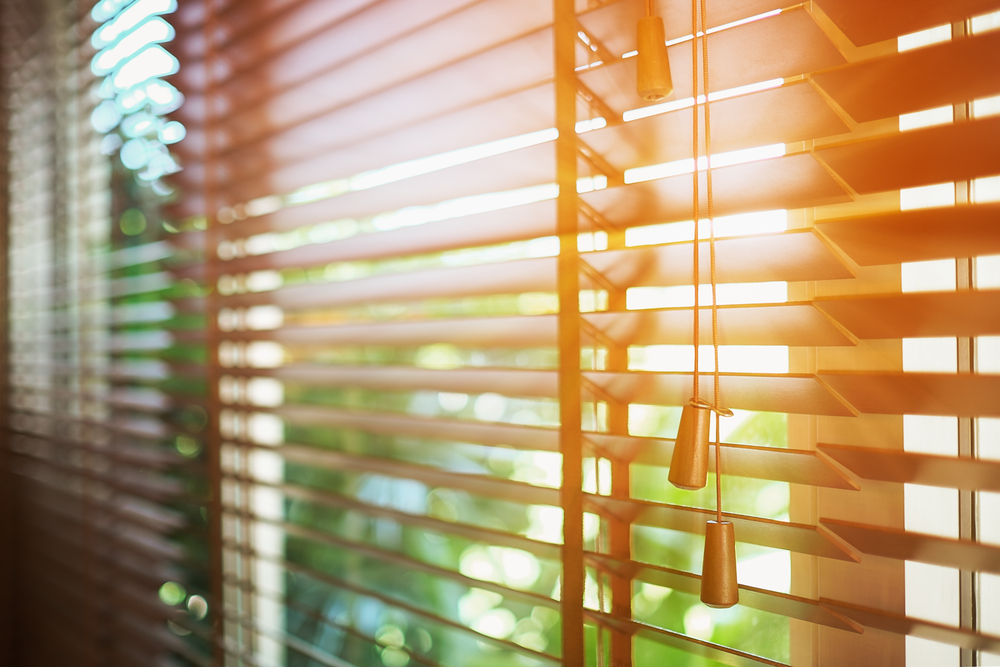
What’s a room without windows? Windows are undoubtedly an important feature in our homes, offices, cars, and public spaces. They provide views and natural light, but they also contribute to heat input, which increases energy usage for cooling, a problem in an era of rising temperatures.
When the weather is hot, up to 87 percent of heat gain in our homes is through windows. UV radiation from sunlight passes easily through glass, heating the room and increasing the likelihood that you need to turn on the air conditioner or else forgo any light (and, again, that view) by closing the curtains or lowering the blinds. However, researchers at the University of Notre Dame have developed a game-changing solution: a transparent window coating that prevents heat-producing UV and infrared rays while allowing visible light through. This idea has the potential to reduce both room temperature and cooling energy demand.
Quantum physics and machine learning: introducing the next generation window coating
Researchers led by Tengfei Luo from the MÖNSTER Lab (Molecular/Nano-Scale Transport and Energy Research Laboratory) at the University of Notre Dame used quantum physics and machine learning to create a cutting-edge window coating. Using planar multilayered (PML) photonic structures, the researchers developed a transparent coating that outperformed conventional heat-reducing coatings. This new coating uses multiple refractive indices inside stacked ultrathin layers to selectively transmit or reflect light based on its wavelength. Luo goes on to say, “Like polarized sunglasses, our coating lessens the intensity of incoming light, but, unlike sunglasses, our coating remains clear and effective even when you tilt it at different angles.”
Overcoming angle limitations: a solution for dynamic sunlight
Traditional window coatings fail to remain effective when sunlight strikes windows at an oblique angle. To overcome this issue, the researchers used a quantum computing-assisted machine learning model. This novel approach optimized the PML structure arrangement, ensuring consistent performance independent of the sun’s position in the sky.
Real-world performance: testing and energy saving
Testing produced very astounding results. Coated windows outperformed conventional glass, lowering temperatures by up to 7.2 °C (12.9 °F) across a variety of incident angles. Energy simulations utilizing EnergyPlus software predicted significant cooling cost savings in a variety of locations around the world, demonstrating the potential for universal energy efficiency gains.
Towards a cooler future: possible applications and scalability
This revolutionary window coating has numerous applications, including residential and commercial structures, as well as cars. Luo envisions it used in car windows, sunroofs, and windshields to provide transparent heat reduction without sacrificing visibility. While scalability is still an issue, Luo is certain that the coating can be mass-produced at a low cost utilizing conventional materials and industrial-scale procedures.
Source study: Cell Reports Physical Science—Wide-angle spectral filter for energy-saving windows designed by quantum annealing-enhanced active learning