


BY THE OPTIMIST DAILY EDITORIAL TEAM
Insects, the often-overlooked building blocks of our ecosystems, are disappearing at an alarming rate. “Of all the mass extinctions we have experienced in the past, the one affecting insects is happening a thousand times faster,” cautions Maxim Larrivée, director of the Montreal Insectarium.
The stakes could hardly be higher. Insects pollinate crops, break down organic materials, and provide the foundation for food webs. Nonetheless, habitat loss, climate change, and pesticides have pushed many species to their limits. Tracking this rapid decline is practically impossible with current methods, leaving governments and conservationists scrambling for answers.
Antenna, a cutting-edge project in Canada, is using artificial intelligence (AI) to address this challenge head-on. Researchers want to understand and reverse insect losses by integrating AI with innovative data collection methods.
Turning science fiction into reality
Some of the most exciting work is taking place under the roof of Montreal’s Insectarium, where researchers are keeping track of thousands of butterflies, ants, and praying mantises in a controlled environment. Outside the lab, solar-powered camera traps deployed from the Canadian Arctic to Panama’s rainforests take insect photographs every 10 seconds.
The sheer amount of data collected is extraordinary. “Innovations like high-resolution cameras, low-cost sensors, and AI models could double the amount of biodiversity information collected over the last 150 years in just two to five years,” Larrivée exclaimed, excited by the prospects. “Even for us, it sounds like science fiction.”
Cracking the biodiversity code
There are an estimated 10 million insect species on Earth, of which only a million have been researched, leaving an immense quantity of biodiversity unknown. David Rolnick, a biodiversity expert at the Quebec AI Institute, is developing AI models to bridge the gap.
“When we went to Panama and tested our sensor systems in the rainforest, within a week we found 300 new species,” Rolnick revealed. “And that is just the tip of the iceberg.”
The project’s present focus is on moths, a diverse group of approximately 160,000 species that are visually identifiable and have a low food chain position. “This is the next frontier for biodiversity monitoring,” Rolnick said, noting that artificial intelligence could help discover new species, analyze population trends, and even identify agricultural pests.
Data for action
Antenna’s ultimate goal is to use this vast amount of data to inform conservation policy. Researchers want to restore insect populations and the ecosystems they support by developing tools to assist governments and environmentalists in making decisions.
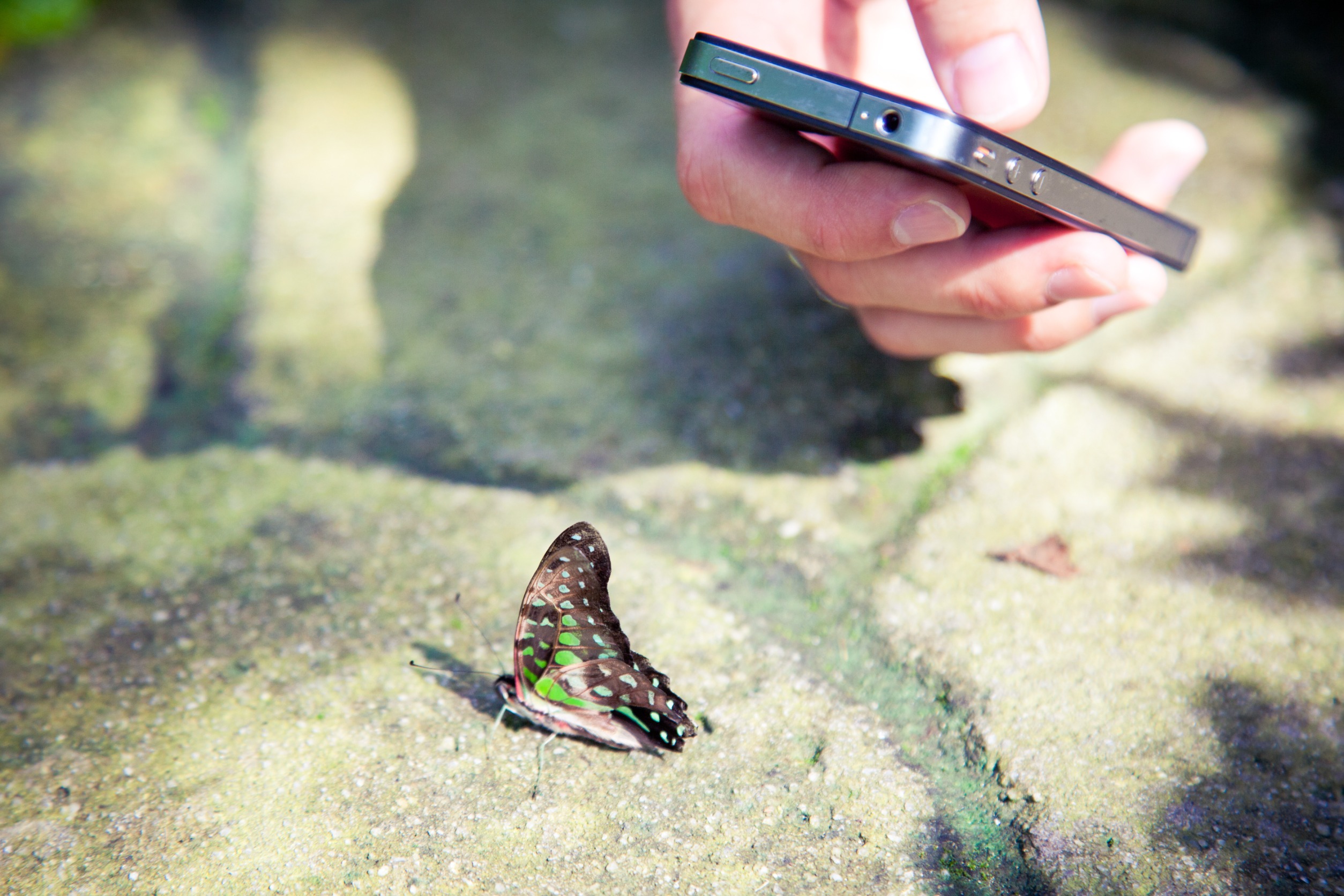
However, the endeavor is not only about scientific advances. Public education is also a focus. Visitors to the Insectarium can use an app to identify butterfly species in real-time, which combines artificial intelligence with hands-on learning.
For Larrivée, the link between knowledge and action is clear: “If we don’t know nature, we can’t ask citizens to change their behavior.”
Balancing hope and caution
Despite its potential, the application of AI in conservation is not without criticism. Camille Clement, a French tourist visiting the Insectarium, expressed a common concern: “I support using AI to protect ecology, provided we use it meticulously.”
This warning note rings true as researchers broaden their goals, including hopes to utilize their models in deep-sea exploration and agricultural pest management. The stakes are enormous, and accuracy will be required to translate AI’s potential into real-world results.
A bright light amid a darkening crisis
The world is witnessing its largest extinction event since the dinosaurs, and insects are at the forefront. However, projects like Antenna provide a ray of optimism. Researchers are developing the tools necessary to rescue the natural environment by using AI to document and analyze it.
As Larrivée stated, “This is about turning the tide.”






