BY THE OPTIMIST DAILY EDITORIAL TEAM
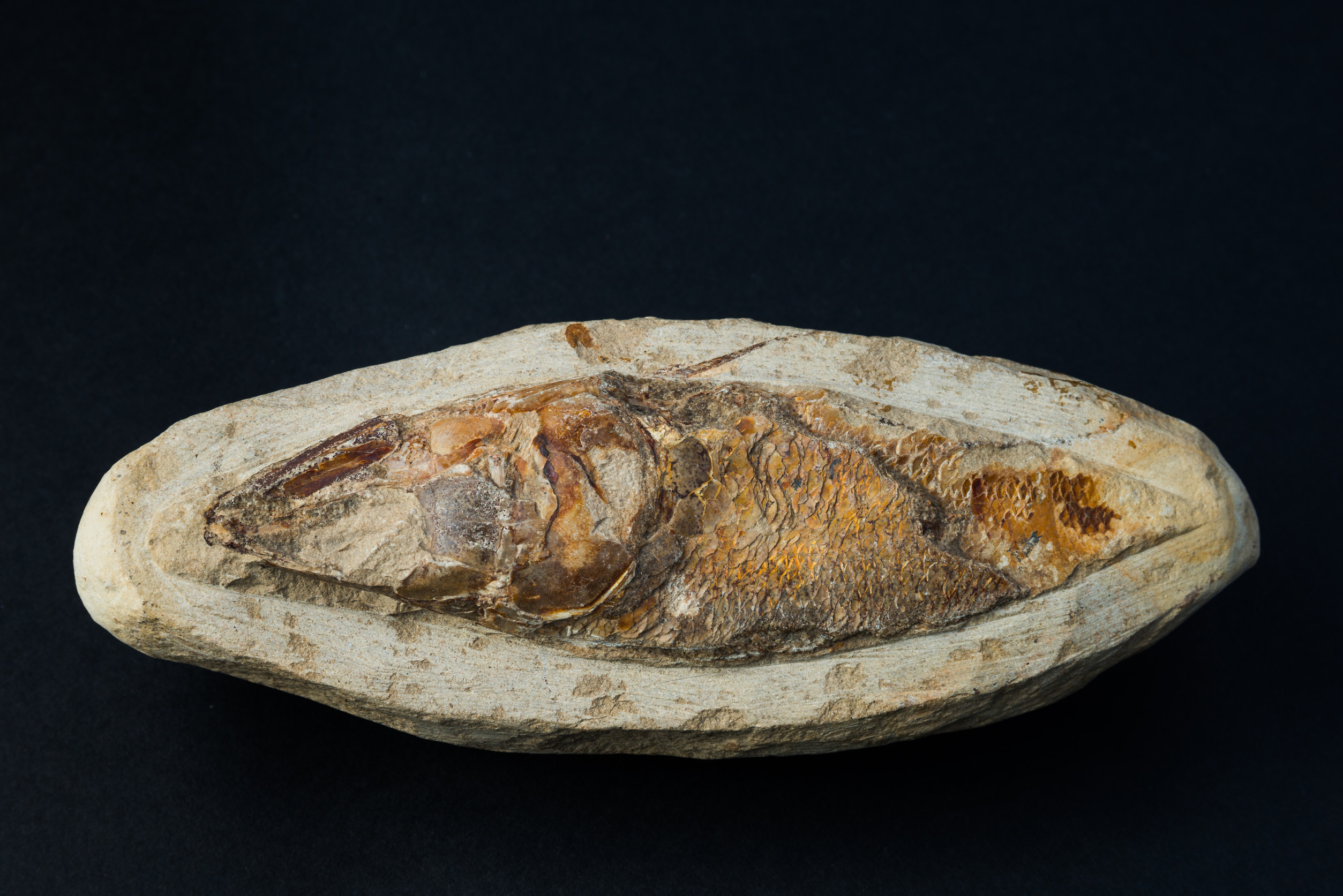
A team of Australian paleontologists has uncovered exceptionally well-preserved fish fossils that reveal new details about ancient life and challenge conventional fossil preservation methods. These fossils, dating back 15 million years, contain remarkable details, including the last meals of the fish before they died.
The fossils, belonging to a newly identified species called Ferruaspis brocksi, were discovered at McGraths Flat in central New South Wales, a site that was once a lush, temperate rainforest during the Miocene epoch but is now mostly arid farmland. Researchers were initially exploring another fossil site when they decided to take a chance at McGraths Flat—and their gamble paid off.
“It was a complete fluke,” Jochen Brocks, an earth scientist at the Australian National University, told the Australian Broadcasting Corporation. “Just because we had nothing else to do, we looked at those rocks.”
An extraordinary find: fossils in iron-rich rock
One of the most surprising aspects of this discovery is how the fossils were preserved. The fish were encased in goethite, an iron-rich mineral that typically does not yield well-preserved fossils. Yet, these specimens were so detailed that researchers could see their last meals, including phantom midge larvae, bivalves, and insects. One fish even had a parasite— a juvenile freshwater mussel—still attached to its tail.
“We tend not to think of iron-rich rocks as containing great fossils,” said Kate Trinajstic, a paleontologist at Curtin University, who was not involved in the study. “So the fact that they’ve recovered it opens up a new area for people to investigate.”
The unexpected preservation potential of goethite suggests that paleontologists may need to rethink where they look for fossils, opening up new opportunities for discovery.
A glimpse into prehistoric Australia
These fossilized fish provide a window into the shifting ecosystems of Australia during the Miocene epoch. Ferruaspis brocksi belonged to the Osmeriformes order, a group of ray-finned freshwater fish that includes modern species like the Australian smelt. However, until now, scientists had never found a fossilized Osmeriformes fish in Australia, making it difficult to determine when these species first arrived and how they evolved.
“At the time these fish died and were preserved, that was a transitional period for Australia,” explained Michael Frese, a virologist at the University of Canberra and study co-author. “Basically, it’s a history lesson, or a geological lesson, of what happens if the climate changes fundamentally.”
Decoding prehistoric color patterns
Beyond the fossils’ structural preservation, researchers used a scanning electron microscope to examine the fish remains. They found melanosomes, the cellular structures that produce melanin, which allowed them to reconstruct the color patterns of Ferruaspis brocksi—an unprecedented feat for a long-extinct fish.
Their findings suggest that F. brocksi had two lateral stripes along its body, a lighter-colored stomach, and a darker back—color patterns that may have helped it camouflage in its freshwater lake environment.
Paleontologists have previously used fossilized melanosomes to determine the colors of ancient birds and dinosaurs, but this is the first time the technique has been applied to reconstruct the color patterns of a prehistoric fish.
The impact of Ferruaspis brocksi’s discovery
This remarkable find at McGraths Flat is more than just a paleontological breakthrough—it highlights the value of exploring unexpected geological formations and demonstrates how ancient fossils can inform modern understandings of climate change.
The fish’s name, Ferruaspis brocksi, reflects both its iron-rich fossilization process (Ferru from the Latin for iron) and Jochen Brocks, who discovered the first specimen. With its discovery, scientists have a new data point in the history of freshwater fish evolution, as well as a potential new method for finding fossils in iron-rich deposits.
As the research continues, paleontologists hope that F. brocksi and other fossils from McGraths Flat will shed further light on how Australia’s ecosystems adapted to climate shifts—a lesson that remains relevant in today’s world.
Source study: Journal of Vertebrate Paleontology— The paleobiology of a new osmeriform fish species from Australia